
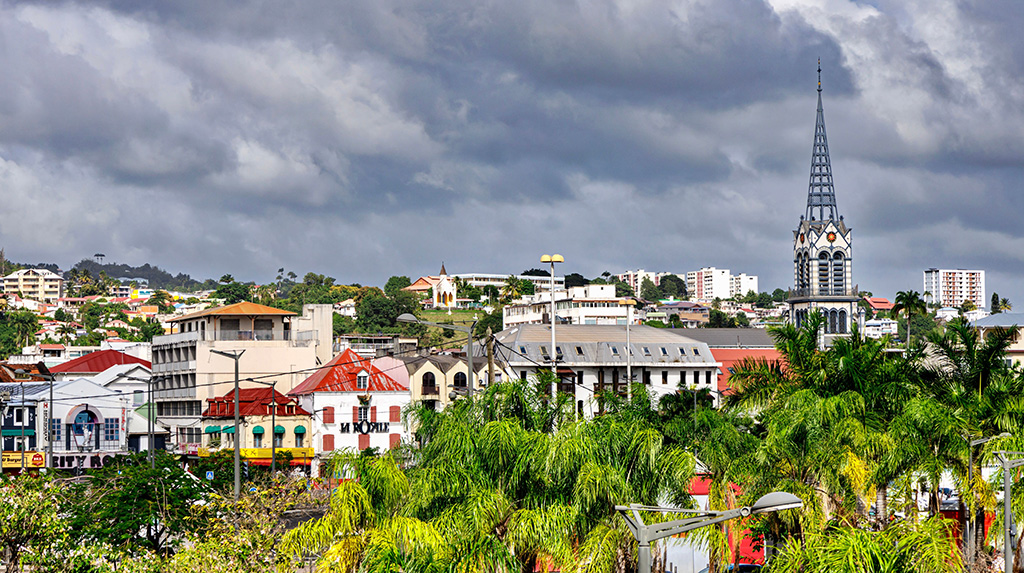
Invest Offshore launches a new series examining overlooked cities where economic transformation, infrastructure investment and international capital are creating unexpected real estate opportunities. Our first destination is Georgetown, Guyana—the tropical capital being rapidly reshaped by one of the most important offshore oil discoveries of the century.
For decades, international real estate investors searching the Caribbean basin looked toward Miami, the Cayman Islands, the Bahamas, Barbados and increasingly the Dominican Republic. Few looked toward the muddy mouth of the Demerara River, where the wooden colonial buildings, canals and tropical gardens of Georgetown quietly faced the Atlantic Ocean.
Then Guyana discovered oil.
The first major offshore discovery was announced in 2015, and commercial production began in late 2019. By 2026, production from the ExxonMobil-led Stabroek Block had climbed above 900,000 barrels per day. Guyana’s offshore resources are estimated at approximately 11 billion barrels, placing this small English-speaking country of roughly one million people among the world’s most consequential new petroleum producers. (ExxonMobil)
The result is not merely an oil story. It is the rapid creation of an entirely new urban economy—and Georgetown is its command center.
From Forgotten Capital to Energy Headquarters

Georgetown does not resemble Dubai, Houston or Singapore. At least, not yet.
Its appeal lies precisely in the fact that it is still early. This is a low-rise, tropical capital where nineteenth-century architecture, drainage canals and traditional residential districts now share the streets with international hotels, modern offices, construction cranes and suburban-style housing developments.
Guyana’s gross domestic product more than quadrupled between the beginning of oil production in 2019 and 2024, reaching approximately US$27.5 billion, according to World Bank data reported by Reuters. The IMF currently projects real GDP growth of 16.2 percent for 2026, while its medium-term outlook anticipates average annual growth of roughly 14 percent, supported by rising oil production and strong non-oil activity. (Reuters)
Growth of that magnitude changes the value of land.
It brings petroleum companies, engineering firms, lawyers, accountants, bankers, logistics operators, diplomats, consultants and returning members of the Guyanese diaspora. All of them require offices, residences, hotel rooms, warehouses, restaurants and secure places to conduct business.
This is why Georgetown may become one of the most interesting emerging real estate markets in the Western Hemisphere.
The Real Estate Demand Behind the Oil Boom
The most immediate pressure has appeared in residential rentals.
Foreign specialists and corporate employees frequently require furnished properties with reliable electricity, water, internet, security, parking and professional management. Yet the supply of residences meeting international expectations remains relatively limited. Local reporting has documented sharp rent increases, with some tenants arguing that prices have risen much faster than the quality of the available housing. (oilnow.gy)
That imbalance creates an opening for carefully designed apartments, townhouses and managed residential communities—not necessarily extravagant mansions, but dependable housing constructed and operated to international standards.
Commercial property is undergoing a similar transition. Reuters observed new modern office buildings, upscale hotels and rows of suburban-style homes appearing around Georgetown as oil revenues and private investment move through the economy. (Reuters)
International hospitality brands are also establishing a larger presence. The AC Hotel by Marriott near Eugene F. Correia International Airport in Ogle offers 152 rooms designed for business and leisure travelers, adding another globally recognized property to the Georgetown market. (Marriott Bonvoy)
These developments tell investors something important: Georgetown is no longer serving only domestic demand. It is being adapted for a growing international business population.
Georgetown Is Becoming a Metropolitan Market
The most compelling opportunities may not be limited to Georgetown’s traditional downtown.
The wider metropolitan area is expanding along several corridors:
Ogle and the East Coast are attracting hotels, corporate housing and airport-related services. Eugene F. Correia International Airport is particularly important to offshore energy operations and regional aviation.
Eccles, Providence and the East Bank are evolving into residential, logistics and commercial districts. Warehouses, industrial facilities, retail centers and new housing are increasingly appearing along this corridor.
The western side of the Demerara River gained better access following the October 2025 opening of the new four-lane Demerara River Bridge. The approximately 2.9-kilometer crossing was designed to improve traffic movement, increase navigational capacity and connect development on both sides of the river more efficiently. (Xinhua News)
New roads and bridges can change a real estate market more dramatically than almost anything else. Land previously considered inconvenient can suddenly become viable for housing, warehousing, retail and industrial development.
The Georgetown opportunity should therefore be viewed as a metropolitan growth story—not simply a bet on a few expensive blocks in the historic city center.
Where the Opportunity May Be
The strongest Georgetown investment thesis is not based on buying any property and waiting for oil money to raise its price. The market is already attracting speculation, and poorly located or badly documented land can become an expensive problem.
The more defensible opportunities are properties that solve identifiable shortages.
Corporate and Extended-Stay Housing
Professionally managed apartments with backup power, water storage, security, parking and dependable internet may command a premium from corporations and long-stay business travelers.
Modern Office Space
Energy companies and professional-service firms need efficient office layouts, meeting facilities, reliable utilities and secure access. Buildings designed for yesterday’s Georgetown may not satisfy tomorrow’s tenants.
Logistics and Warehousing
The petroleum industry requires equipment storage, transportation, maintenance, food services and countless supporting activities. The East Bank corridor and properties with strong road access may benefit as the supply chain expands.
Climate-Resilient Development
Georgetown’s geography makes drainage, elevation and construction quality fundamental investment considerations. The city lies on Guyana’s low-lying coastal belt, and an Inter-American Development Bank assessment warns that intensive urban development, sea-level rise and flooding create substantial risks. It also estimates that demand for new housing in Georgetown could increase by 50 percent by 2040. (Commonwealth)
In this market, resilience is not merely an environmental slogan. Elevated construction, proper flood drainage, water management and reliable utilities can directly influence occupancy, insurance, maintenance costs and resale value.
The Risks Nobody Should Ignore
Every boomtown creates excitement, but boomtown investing requires discipline.
First, property title must be independently verified. The U.S. Department of Commerce specifically warns that private land transactions in Guyana are negotiated directly with owners and that title verification and due diligence are crucial. State-owned land follows a separate process administered by the Guyana Lands and Surveys Commission. (Trade.gov)
Second, investors must understand whether the property has legal access, drainage, approved use, utility capacity and any outstanding claims or encumbrances. A respected Guyanese attorney and independent surveyor should be involved before money changes hands.
Third, construction costs can be volatile in an economy attempting to build roads, bridges, hotels, homes, hospitals and energy infrastructure simultaneously. Imported materials, skilled labor and specialized equipment can affect project budgets.
Fourth, Georgetown remains exposed to the economic concentration that accompanies an oil boom. If petroleum development slows, corporate demand and government spending could weaken. Reuters has also noted that electricity, sewage and other infrastructure have struggled to keep pace with Guyana’s extraordinary growth. (Reuters)
Finally, investors should resist buying solely on dramatic appreciation claims. The best projects will be those supported by real tenants, durable infrastructure and conservative financial assumptions.
Why Georgetown Fits the Invest Offshore Investor
Guyana occupies a distinctive position between South America and the Caribbean. It is English-speaking, a member of the Commonwealth and home to the headquarters of the Caribbean Community. Its legal and business culture carries familiar elements for investors accustomed to Commonwealth jurisdictions, even though local legal advice remains essential. (Wikipedia)
Georgetown also offers something increasingly difficult to find: a capital city entering a major economic transformation before its real estate market has become fully institutionalized.
This is not yet a market dominated by massive public real estate funds or an endless supply of standardized luxury towers. Relationships, local knowledge, construction execution and title diligence still matter enormously.
That creates risk—but it can also create opportunity.
The Tropical Oil Boomtown Has Arrived
Georgetown was not supposed to become one of the fastest-changing capitals in the Americas.
It was not widely discussed at international property conferences. It was not promoted as the next global financial center. It did not have the polished skyline normally associated with an energy boom.
But oil has placed Guyana on an entirely different trajectory.
The next phase will be measured not only in barrels produced offshore, but in offices occupied, apartments rented, bridges opened, hotels completed and entirely new districts created around the capital.
Georgetown is still tropical, unpredictable and unmistakably Guyanese. It is also becoming more valuable, more international and more strategically important with every passing year.
The investors who understand the difference between speculative excitement and genuine urban demand may find themselves participating in one of the most unexpected real estate transformations of this generation.
Georgetown, Guyana, is no longer a market nobody is watching. The question is how much of the opportunity remains before everyone else arrives.
This article is for general information and does not constitute investment, tax or legal advice. International investors should obtain independent local legal, engineering, environmental and financial due diligence before purchasing or developing property in Guyana.
Leave a Reply