
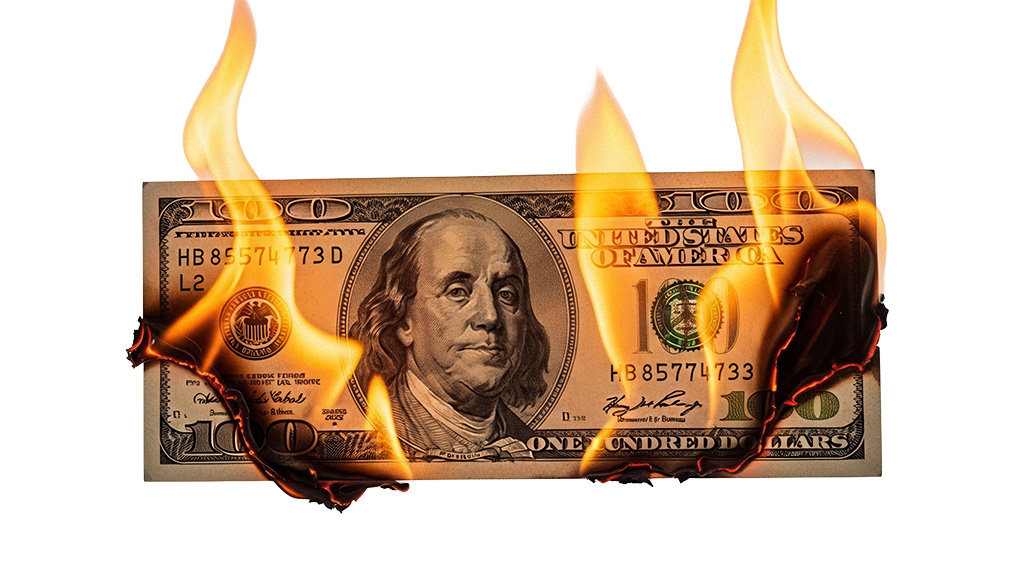
The major banks are no longer whispering about gold. They are putting numbers on the board that would have sounded radical only a few years ago.
Goldman Sachs has reaffirmed a 2026 year-end gold target of $5,400 per ounce, citing central bank demand, diversification away from traditional reserve assets, and the possibility of lower real rates. (Barron’s) JP Morgan has gone even further, forecasting gold could reach $6,300 per ounce by the end of 2026, driven by central bank and investor demand. (Reuters) UBS has raised its 2026 gold target to $6,200 per ounce for much of the year, while other market commentary has reported a UBS upside scenario as high as $7,200 if geopolitical and monetary stress intensify. (Reuters)
This is not a normal commodity cycle. This is the repricing of money itself.
In late April 2026, spot gold was trading near $4,600 per ounce, with Reuters reporting spot gold at $4,600.61 on April 28 after a sharp pullback. (Reuters) GoldPrice.org showed gold closing near $4,595.99 on April 29, with silver around $73.32 and the gold-to-silver ratio above 62. (Gold Price) These are not theoretical prices. This is the live market telling investors that the purchasing power of paper currency is being questioned in real time.
Silver: The Wild Card in the Monetary Reset
Silver may be the more explosive story.
Bank of America’s metals team has reportedly floated silver scenarios from $135 to $309 per ounce before the end of 2026, based largely on gold-to-silver ratio compression. The $309 figure is not a base case; it is an extreme bull case based on the kind of ratio last seen during historical silver stress events. (TheStreet)
That distinction matters. Silver is not simply “cheap gold.” It is both a monetary metal and an industrial metal. It is used in electronics, solar infrastructure, electric vehicles, medical applications, military systems, and high-efficiency energy technologies. Unlike gold, much of the silver consumed by industry is difficult or uneconomic to recover.
The Silver Institute expects the silver market to remain in deficit in 2026 for the sixth consecutive year, with a projected shortfall of about 67 million ounces, even as total global supply rises to an estimated 1.05 billion ounces. (The Silver Institute) That is the key: even higher prices are not instantly producing enough new physical metal.
The Banks Are Not Forecasting Gold. They Are Forecasting Trust.

When Goldman, JP Morgan, UBS, and Bank of America raise precious metals targets, they are not merely forecasting a stronger commodity market. They are acknowledging something deeper: the market is losing confidence in fiat currency as a long-term store of value.
Gold does not have earnings. It does not pay a dividend. It does not issue guidance. It simply sits there, outside the liability structure of the banking system.
That is precisely why central banks are buying it.
The World Gold Council reported that central banks purchased 244 tonnes of gold on a net basis in Q1 2026, up year-over-year, while global gold demand rose to 1,231 tonnes and the value of demand reached a record $193 billion. (World Gold Council) This is not retail panic. This is official-sector accumulation.
Central banks understand what many investors are only beginning to rediscover: gold is no one else’s debt.
Physical Metal vs. Paper Promises
The most important divide in the precious metals market is not gold versus silver. It is physical metal versus paper exposure.
Paper markets can expand almost without limit. Futures contracts, ETFs, derivatives, unallocated accounts, and synthetic exposure can multiply claims on metal far beyond immediately available physical supply. That works in normal conditions, when investors are content to settle in cash and trust the machinery.
But when confidence weakens, the question changes.
It is no longer: “What is the price?”
It becomes: “Can you deliver?”
That is where physical gold and silver separate themselves from financial instruments. A gold bar in custody is not the same thing as a promise to receive gold. A silver coin in hand is not the same thing as a leveraged paper contract. In a monetary stress event, the premium belongs to certainty.
Why the Forecasts Matter
The new major-bank targets are important not because they are guaranteed, but because they show how far the institutional conversation has moved.
A $5,400 Goldman gold target says the old range is broken.
A $6,300 JP Morgan target says reserve demand is now structural.
A $7,200 UBS bull case says monetary stress is no longer fringe analysis.
A $309 silver scenario says the paper market may not be properly pricing physical scarcity.
Investors should not treat these numbers as promises. Forecasts can fail. Markets can reverse violently. Silver, in particular, can punish late speculation. But the direction of institutional thinking is unmistakable.
The banks are not discovering gold. They are rediscovering why gold was money before paper became policy.
The Offshore Investor’s View
For offshore investors, the message is clear: precious metals are no longer just portfolio ballast. They are geopolitical insurance, currency insurance, and banking-system insurance.
The world is moving from a paper-confidence cycle into a collateral-confidence cycle. In that world, hard assets matter. Jurisdiction matters. Custody matters. Counterparty risk matters.
Gold and silver are not rising because they suddenly became more useful. They are rising because fiat money is becoming less trusted.
That is the real story behind the 2026 price targets.
Not gold at $5,400.
Not gold at $6,300.
Not gold at $7,200.
Not silver at $309.
The real story is this: the world’s largest financial institutions are now openly pricing the decline of paper money.
And for investors who understand offshore structures, sovereign risk, physical collateral, and jurisdictional diversification, that may be the most important signal of all.
Invest Offshore continues to track opportunities in hard assets, strategic commodities, and infrastructure finance, including investment opportunities in West Africa seeking investors for the Copperbelt Region.
Leave a Reply