
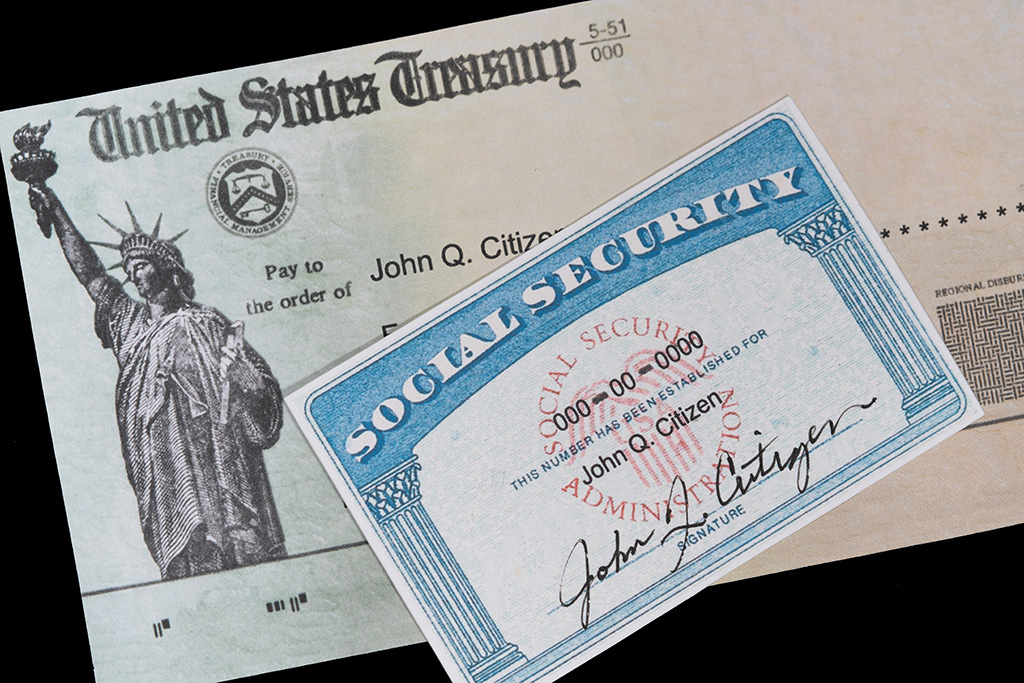
A new line is forming in America’s immigration battle, and it does not run through the border. It runs through the bank. Bloomberg reported on April 14 that Treasury Secretary Scott Bessent said an executive order requiring banks to collect citizenship information from customers is “in process.” That matters because, as of now, published federal bank identification rules do not require a universal proof-of-citizenship test for every customer, and the Federal Register’s published 2026 executive-order list did not yet show such a banking order as of April 14. (Bloomberg)

That is why this story hits so hard. If Washington moves from identity verification to citizenship-gated banking, the checking account stops being a convenience and becomes a checkpoint. Supporters of the idea will say that is exactly the point. Cut off unverifiable identities. Narrow the space for fraudulent account opening. Make it harder to draw benefits or operate inside the formal economy without legal status. Increase the pressure to leave voluntarily rather than remain financially rooted in the country. In that reading, this is not just a compliance tweak. It is structural enforcement through finance.
And here is the deeper shift: the administration has already shown its appetite for citizenship-based gatekeeping in other systems. On March 31, the White House signed an executive order on citizenship verification in federal elections, framing citizenship checks as central to election integrity. A banking order would take that same logic out of the voting system and into daily economic life. One governs the ballot. The other would govern the bank card, the payroll deposit, the transfer, the savings account, the wires. Put the two together and you can see the outline of a broader doctrine: citizenship must be verified before access to core civic and financial rails is granted. (The White House)
Today’s baseline is different. Federal Customer Identification Program rules require banks to collect identifying information and to form a reasonable belief they know the customer’s true identity. For non-U.S. persons, the rules explicitly contemplate documents such as a passport, alien identification card, or other government-issued proof of nationality or residence. In plain English, the current framework is built to identify non-citizens, not automatically exclude them. That is why a citizenship-proof order would be a real break with the existing banking architecture, not a mere clarification of what banks already do. (eCFR)
Supporters will love the simplicity of the message. No verified citizenship, no easy normalization inside the system. No seamless banking, no smooth payroll integration, no frictionless economic presence. The political appeal is obvious because it turns the financial system into leverage. It is cleaner than mass raids, quieter than a public crackdown, and potentially more powerful than either. A person can ignore a speech. It is much harder to ignore a frozen path to everyday financial life.
But this is where serious investors and offshore readers should pay attention. Once a government turns domestic banking into an identity-enforcement instrument, the blast radius rarely stops with the original target. Lawful non-citizens, foreign workers, international students, visa holders, dual residents, cross-border entrepreneurs, and legitimate global investors can all get caught in the administrative dragnet if the rule is written broadly or implemented clumsily. The banking sector is not built to process this kind of political sorting without cost, delay, friction, and mistakes. Even before any final order is published, the direction of travel is enough to tell you something important: the United States is experimenting with a tighter fusion of finance, citizenship, and enforcement. (Bloomberg)
For Invest Offshore readers, the real lesson is bigger than this single headline. Jurisdictional diversification is no longer just about tax, yield, or asset protection. It is also about access. Access to banking. Access to payment rails. Access to lawful continuity when political systems decide to turn institutions into filters. If Washington is preparing to make the bank account part of the immigration battlefield, then international banking strategy becomes even more relevant for anyone living a cross-border life.
The order is not final. The words that matter most right now are still Bessent’s: “in process.” But that may be enough. Because when a Treasury Secretary starts talking this way, smart money does not wait for the full machinery to arrive before reading the direction of the tracks. America may be entering a phase where the bank is no longer just where you keep your money. It is where the state decides who fully belongs.
That is when offshore stops looking optional and starts looking like foresight.
Leave a Reply