
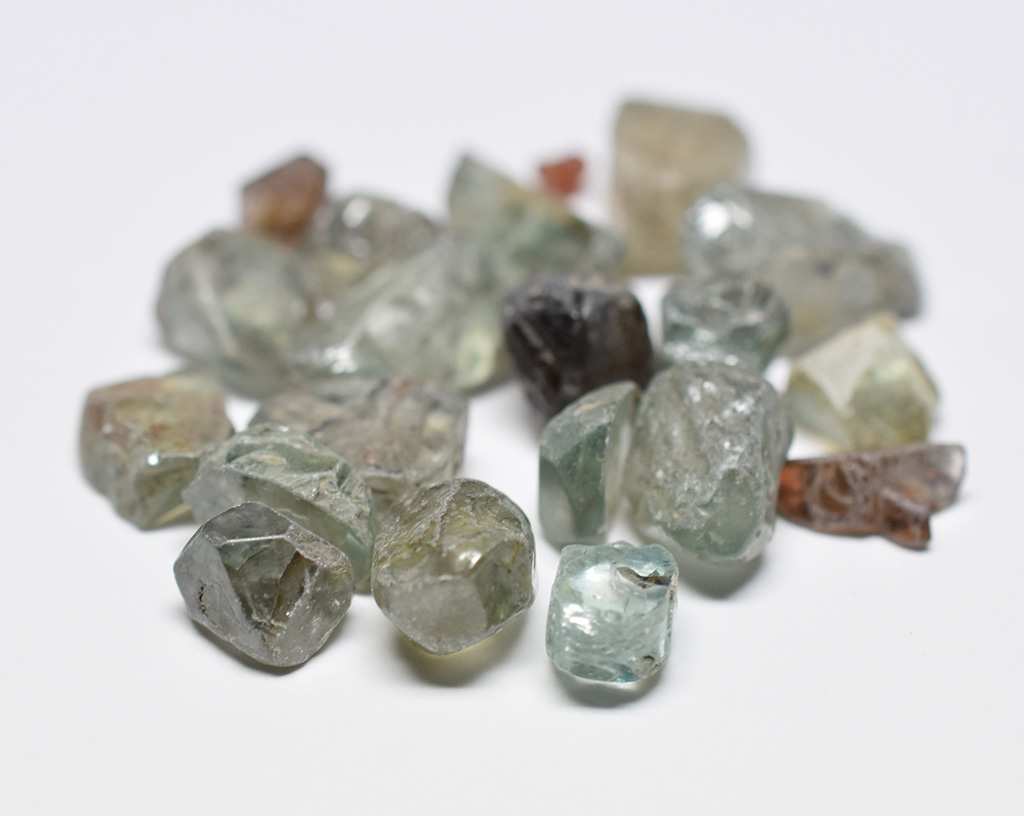
Meta Description: Two Primary Mining Licenses near Maganzo and Mwadui in Tanzania’s Shinyanga Region sit in one of Africa’s most storied diamond belts, with historic sampling, placer gravels, kimberlite indicators, and proximity to the famous Williamson/Mwadui diamond mine.
Tanzania has long held a special place in the global diamond story. In the Shinyanga Region, near the historic Mwadui diamond field, two Primary Mining Licenses — PML 0009458 and PML 0009459 — are presented in the attached geological assessment as part of a diamond-bearing environment with compelling historic indicators, prior sampling work, and proximity to one of the world’s best-known kimberlite systems. The assessment concerns diamond Primary Mining Licenses at Maganzo, Mwadui, Shinyanga Region, Tanzania, and includes geological discussion, field exploration summaries, maps, and recorded transfer pages for the two licenses.
Why Location Matters: Maganzo, Mwadui and the Shinyanga Diamond Belt
The first thing serious resource investors look for is geological address. These licenses are not being discussed in isolation. They sit near Mwadui, home to the famous Williamson diamond mine, a deposit historically associated with one of the largest kimberlite pipes in the world.
According to the assessment, the license area is located near the Mwadui mine, approximately 25 kilometers from Shinyanga town, with road access, rail connection, telephone, and electricity available in the vicinity. In frontier mineral development, infrastructure is not a luxury — it is often the difference between a geological curiosity and a mineable asset.
The report places the area within Tanzania’s diamond field and describes a setting shaped by kimberlite pipes, paleodrainage channels, gravels, calcrete, and weathered surface materials. This matters because diamonds in such regions may occur not only in primary kimberlite sources, but also in secondary placer deposits where stones have been liberated, transported, and concentrated over time.
The Two Licenses: PML 0009458 and PML 0009459
The attached documentation includes transfer recording pages showing two Primary Mining Licenses:
PML 0009458
PML 0009459
Both pages record the transfer of 100% shares from Fedilia Khalfan to Omary Hussein Mkongo, dated 13 March 2015, under Tanzania’s Mining Act No. 14 of 2010 and recorded through the Central Western Zone mining office.
For investors, this is not the end of due diligence — it is where due diligence begins. Any party reviewing these licenses should confirm current license standing, renewal status, ownership, encumbrances, regulatory compliance, environmental obligations, local community requirements, and export rules directly with Tanzanian authorities and qualified local counsel.
But as a geological story, the licenses sit inside an area with serious diamond pedigree.
Historic Sampling: New Alamasi and the Gravels
One of the most important parts of the assessment is the discussion of New Alamasi sampling and field exploration.
The report references pitting and trenching work conducted to confirm the continuation of diamondiferous gravels near the Mwadui kimberlite pipe. A summary of prior exploration work by Williamson Diamonds Limited describes:
A program of 30 sample pits, each measuring approximately 2.0 meters by 1.0 meter, covering about 0.5 square kilometers.
Three trenches totaling approximately 325 meters excavated along a paleodrainage channel.
Approximately 895 tonnes of gravels treated through the Williamson mine plant.
Recovery of 59.35 metric carats of diamonds.
An average reported grade of approximately 6.63 carats per hundred tonnes, or cpht.
The report also mentions notable stones, including a 10.10 carat light pink diamond, and references earlier recovery of larger special stones in the area.
For diamond investors, grades are only part of the story. Stone quality, size distribution, color, recovery method, mining cost, dilution, continuity, and marketability matter enormously. Still, the presence of recovered diamonds from historic sampling gives the property a stronger foundation than a purely conceptual exploration target.
Resource Potential: Placer Diamonds and Kimberlite Upside
The assessment describes the area as having both placer diamond potential and possible kimberlite-related upside.
That is important.
A placer diamond opportunity can sometimes be advanced through relatively straightforward bulk sampling and near-surface gravel evaluation. Kimberlite potential, by contrast, may represent deeper and larger-scale upside, but it typically requires more technical exploration: geophysics, indicator mineral chemistry, drilling, petrography, bulk sampling, and grade modeling.
The report notes that gravels, calcrete, and kimberlite in the broader Mwadui/Maganzo area have yielded diamonds, and that paleodrainage channels may act as natural traps for stones. In plain English, this means the ancient drainage system may have done some of the work of concentrating diamonds into mineable pockets.
The assessment also refers to a broader estimate of superficial reserves in the New Alamasi area, including figures totaling approximately 1.7 million tonnes at an average grade of 6.70 cpht, representing approximately 114,026 carats in the table shown in the report. These figures should be treated as historical report data and not as a modern compliant resource estimate unless independently verified under current reporting standards.
Why These Licenses Could Interest Offshore Investors
The investment case is not simply “there may be diamonds.” The more compelling case is that the licenses appear to combine several ingredients investors like to see:
First, they are located in a known diamond district near the historic Mwadui mine.
Second, the attached assessment includes prior field work, including pitting, trenching, processing, and recorded diamond recovery.
Third, the geology includes both placer-style gravels and possible primary kimberlite influence.
Fourth, the area benefits from relatively practical access compared with many remote African mineral targets.
Fifth, the report includes maps, coordinates, exploration observations, and official transfer documentation for the two PMLs.
That combination does not guarantee commercial success. Mining never does. But it does create a starting point worthy of serious review.
The Proper Next Step: Modern Due Diligence
A disciplined investor should not rely solely on historic assessment material. The correct path forward would include:
Independent legal verification of both licenses.
Confirmation of current ownership and standing.
A modern geological review by a qualified diamond geologist.
Fresh sampling, especially bulk sampling of gravels.
Ground-truthing of old maps, trenches, pits, and paleodrainage features.
Geophysical work to refine kimberlite targets.
Review of environmental, community, and permitting obligations.
Diamond valuation work based on recovered stones, not just carat counts.
The phrase “diamond license” can attract dreamers. But real value is built by paperwork, geology, sampling, recovery, valuation, and clean title — in that order.
Tanzania’s Strategic Diamond Position
Tanzania remains one of Africa’s most geologically significant mineral jurisdictions. Gold has taken much of the international spotlight, but the country’s diamond history is deep. The Mwadui field is not an accidental address. It is part of a long-recognized diamond province, and the presence of kimberlite systems, placer gravels, and historical production gives the region enduring relevance.
For offshore investors seeking hard-asset opportunities, diamond projects offer a different profile than gold, copper, or oil. They are highly specialized. They require technical expertise. They require careful chain-of-custody controls. They require marketing relationships and valuation discipline. But when a diamond project works, it can produce concentrated value from relatively small volumes of material.
Conclusion: Two Small Licenses Beside a Big Diamond Story
The two Tanzanian Primary Mining Licenses — PML 0009458 and PML 0009459 — deserve attention because they sit beside one of Africa’s great diamond narratives: the Mwadui/Shinyanga diamond field.
The attached assessment points to historic diamond recovery, paleodrainage gravels, kimberlite indicators, and a geological setting that has already proven capable of producing diamonds. The opportunity now is not hype. The opportunity is verification.
In offshore investing, the best deals are rarely the loudest. They are the ones with documents, geology, history, location, and a clear path to due diligence. These two Tanzanian diamond licenses may fit that profile — provided the next investor does the hard work properly.
Invest Offshore continues to review select hard-asset opportunities across Africa, including mineral, energy, and infrastructure projects. We also have investment opportunities in West Africa seeking investors for the Copperbelt Region.
Leave a Reply