
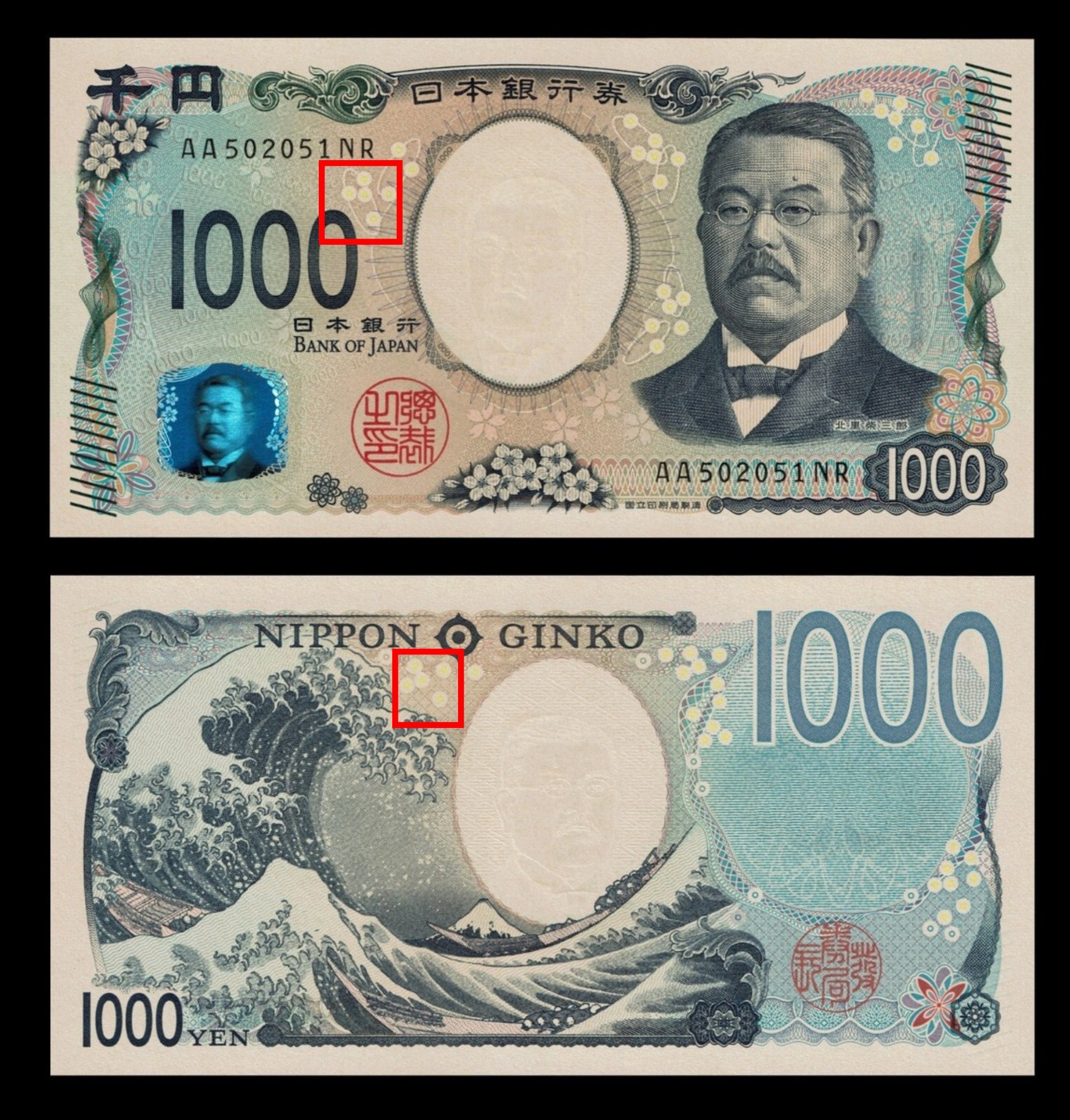
Most people look at a banknote and see art, national symbols, and a portrait. Security professionals see something else entirely: a layered defense system. One of the most fascinating of those defenses is the EURion Constellation, sometimes called “Omron rings”—a subtle pattern built into modern currency to help stop digital copying before it starts.
Researchers have identified the pattern on the Japanese ¥1,000 note and on many other banknotes around the world, while Adobe confirms that Photoshop includes a banknote counterfeit deterrence system developed at the request of the Central Bank Counterfeit Deterrence Group. (Adobe Help Center)

The name itself is a clue. “EURion” combines EUR, the currency code for the euro, with Orion, because the arrangement resembles a small constellation of stars. It was first widely noticed on euro notes, but it is not a euro-only feature. In practice, it has become one of the most recognizable anti-copy patterns in banknote design, even though central banks do not usually advertise the technical details. (Wikipedia)
On the Japanese 1000 Yen note, the pattern is especially elegant. As your image highlights, the constellation appears as a cluster of small pale yellow or cream-colored circles that blend into the floral design rather than shouting for attention. That is what makes it so effective. It does not look like a warning label. It looks like part of the artwork. Yet to imaging systems, that tiny repeated pattern can act as a red flag that the document is currency. Researchers specifically note that on Japanese yen, these circles can appear as flower-like elements rather than obvious dots. (Wikipedia)
Why does this matter? Because the EURion pattern is not there for human eyes alone. It was designed to help copiers, scanners, and imaging software detect banknotes and interfere with casual reproduction attempts.

Adobe states plainly that Photoshop contains a Counterfeit Deterrence System (CDS) that prevents users from opening detailed images of banknotes, and that this technology was included at the request of the CBCDG, a consortium of central banks.
In other words, the battle against counterfeiting is not fought only with paper, ink, and holograms. It is also fought in software. (Adobe Help Center)

What makes the EURion Constellation so interesting is how widely it appears across the monetary world. Researchers have documented it on the euro, Japanese yen, U.S. dollar, Bank of England notes, Australian dollar, and many more. The euro uses it across its banknote family, while U.S. notes such as redesigned $10, $20, and $50 bills incorporated the pattern in later series.
In Britain, the rings were famously disguised within note artwork, sometimes resembling musical notes or background design elements. The result is a quiet global design language of financial self-defense. (Wikipedia)
There is no single official master list that the public can point to and say, “These are the only currencies that use it.” Banknote series change, new designs are released, and some countries use slightly different five-ring variants of the same basic anti-copy concept. That is why it is more accurate to say the EURion pattern is near-universal in modern paper money rather than pinning everything on one permanent number.

Still, the available research shows that it has appeared on roughly dozens of currencies worldwide and remains a standard reference point in banknote security discussions. (Wikipedia)
For investors and offshore thinkers, this tiny pattern carries a larger message. Money today is not just value printed on paper. It is a fusion of design, trust, machine-readability, and institutional control. The modern banknote is a financial instrument wrapped in art and protected by a hidden conversation between central banks and technology systems.
The EURion Constellation is one of the clearest symbols of that quiet alliance. (Adobe Help Center)
And that brings us to the practical side of high-level cash-related opportunity. U.S. Cash Pallet owners, we introduce you to the U.S. Cash Pallet Redemption Permit Holder (buyer). For parties seeking a serious institutional-side introduction, Invest Offshore can facilitate contact, subject to documentation, compliance review, and proper verification.
In a world where even a tiny pattern of circles can determine whether money is recognized as real, serious transactions still come down to one thing: access to the right gatekeeper.
Leave a Reply