
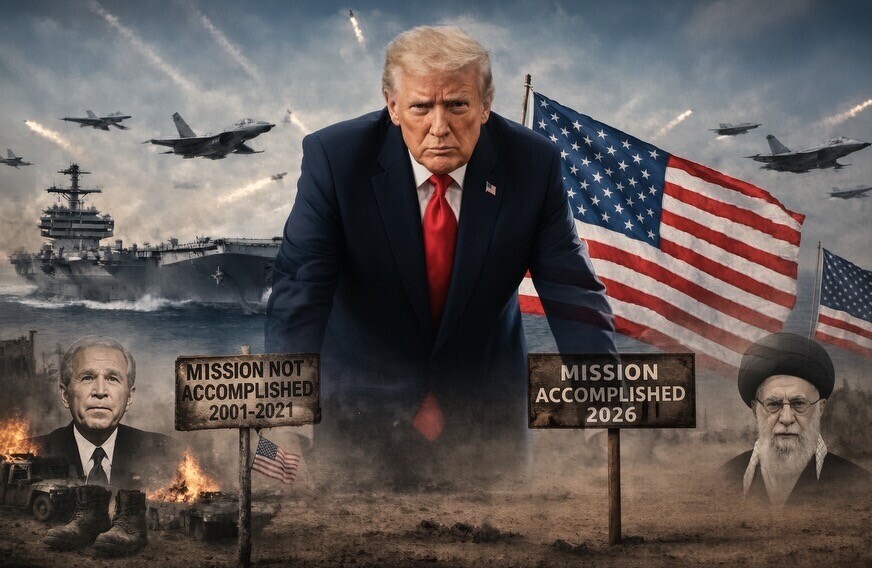
President Donald Trump has announced what he calls “the biggest oil deal in world history”: majority U.S. control over more than 65 billion barrels of Venezuela’s proven petroleum reserves. If the agreement survives the enormous legal, political and engineering challenges ahead, this is much bigger than an oil transaction. It represents a potential restructuring of energy power across the Western Hemisphere.
President Donald Trump dropped an extraordinary geopolitical announcement Friday evening: the United States has reached an agreement with Venezuela that he says gives America majority control over more than 65 billion barrels of proven Venezuelan oil reserves.
This is not an internet rumor. Reuters, the Associated Press and other major outlets have confirmed Trump’s announcement. What has not yet been released is equally important—the detailed agreement explaining precisely what “control” means, which fields are included, which private companies will operate them and what legal structure will govern the arrangement. Reuters
Trump called it:
“THE BIGGEST OIL DEAL IN WORLD HISTORY!”
That description may sound characteristically Trumpian, but the number behind it genuinely is extraordinary.
65 Billion Barrels Changes the Arithmetic
According to the U.S. Energy Information Administration, the United States held approximately 46 billion barrels of proved crude oil and lease-condensate reserves at the end of 2024. Adding economic control over another 65 billion barrels would therefore give the United States access to a resource base exceeding 111 billion barrels—more than twice the current domestic proved-reserve figure, broadly supporting Trump’s claim that the arrangement could “more than double” American reserves. U.S. Energy Information Administration
But Venezuela is playing in an entirely different league.
The country possesses approximately 303 billion barrels of proven crude reserves, representing roughly 17% of the world’s total and making Venezuela the largest holder of proven oil reserves on Earth. The 65 billion barrels covered by Trump’s announcement represent roughly one-fifth of Venezuela’s entire proven reserve base. U.S. Energy Information Administration
That alone explains why this agreement belongs in a category larger than an ordinary energy investment.
This is strategic-resource geopolitics.
This Is Not 65 Billion Barrels Sitting in American Tanks
There is an important distinction.
The United States has not suddenly deposited 65 billion barrels into its Strategic Petroleum Reserve. Nor has Venezuela apparently transferred sovereign ownership of 65 billion barrels of underground petroleum directly to Washington.
Trump says the United States has secured “majority control” through an arrangement involving Venezuela and private business.
Reuters reports that weeks of negotiations centered on giving American companies long-term access to Venezuelan oilfields, with production ultimately directed toward the United States. A lease model has reportedly been discussed, although Trump has not yet disclosed the fields, participating companies or mechanism through which American majority control will operate. Reuters
That distinction matters enormously.
What America may have acquired is something arguably more strategically useful than simply buying crude: long-duration influence over production itself.
Oil in a tanker is inventory.
Oilfields are infrastructure.
Oil reserves under contractual control can influence supply for generations.
Nearly $100 Billion of Private Capital
The second half of the announcement may ultimately prove as important as the reserve number.
Secretary of State Marco Rubio says the agreement could generate nearly $100 billion in private investment, create thousands of high-paying jobs and help rebuild Venezuela’s economy. Reuters
That explains Trump’s insistence that the arrangement comes at “no cost to the American taxpayer.”
The apparent model is not Washington writing a gigantic check to Caracas. Rather, the government provides geopolitical and contractual architecture while private energy companies provide the capital, technology, drilling expertise, equipment and operating infrastructure necessary to rehabilitate Venezuela’s petroleum industry.
And Venezuela desperately needs all of them.
Despite holding 303 billion barrels underground, the country currently produces only around 1.25 million barrels per day, according to Reuters—a fraction of what its enormous resource base theoretically could support. Reuters
That is the paradox of Venezuela:
the world’s greatest oil endowment has been trapped inside one of the world’s most impaired petroleum infrastructures.
Why American Refineries Want Venezuelan Oil
There is another piece of the story that tends to disappear beneath the staggering reserve numbers.
Venezuelan crude has a natural customer: the U.S. Gulf Coast refining complex.
Much of Venezuela’s petroleum—particularly from the vast Orinoco Belt—is extra-heavy crude. Producing it requires substantial capital, technical expertise and diluent, and refining it requires sophisticated equipment.
American Gulf Coast refineries were built to process exactly these heavier grades.
The EIA notes that Venezuelan heavy crude historically was particularly well suited for U.S. refineries before sanctions disrupted the relationship. U.S. Energy Information Administration
That means geography and existing infrastructure work in America’s favor.
Instead of moving crude halfway around the planet from the Persian Gulf, tankers can transport Venezuelan petroleum north through the Caribbean directly to America’s enormous Texas and Louisiana refining system.
It potentially creates something approaching a Western Hemisphere energy loop:
Venezuelan reserves.
American capital.
American technology.
Caribbean shipping.
Gulf Coast refining.
North American consumers.
The China Factor Is Impossible to Ignore
There is also a geopolitical dimension that may ultimately dwarf gasoline prices.
For years, China played an increasingly important role in Venezuela’s energy economy. Beijing extended tens of billions of dollars in financing to Caracas, frequently structured around future petroleum deliveries.
The EIA has estimated Chinese loans to Venezuela at close to $50 billion, with significant crude exports historically used for debt repayment. U.S. Energy Information Administration
Now Washington is attempting to place American companies—and potentially the American government itself—at the center of Venezuela’s most valuable strategic asset.
Seen through that lens, the 65-billion-barrel agreement becomes part of a much broader struggle.
America is not merely seeking more petroleum.
It is attempting to pull one of the world’s greatest natural-resource inventories back into a U.S.-centric commercial and financial orbit.
The consequences could reach oil trading, shipping, insurance, commodity finance, dollar settlement and ultimately the geopolitical relationship between Latin America and China.
Hormuz Makes Venezuela Even More Valuable
Timing matters.
The announcement arrives while the six-month conflict involving Iran has severely disrupted normal energy flows through the Middle East. Before the conflict, roughly one-fifth of globally traded oil and natural gas moved through the Strait of Hormuz. AP News
Brent crude recently closed around $89 per barrel and WTI around $83 as markets continued wrestling with uncertainty surrounding Middle Eastern supply. Reuters
Against that backdrop, Venezuela suddenly looks very different.
For decades Washington treated Venezuelan petroleum primarily as a sanctions and foreign-policy issue.
Today it increasingly looks like an energy-security asset sitting a short tanker voyage from Texas.
The strategic logic is obvious.
Reducing America’s exposure to Persian Gulf chokepoints while increasing control over massive petroleum resources inside the Western Hemisphere would represent one of the most consequential shifts in U.S. energy policy in decades.
But 65 Billion Barrels Cannot Be Turned On Like a Faucet
Anyone expecting gasoline prices to collapse next month should temper expectations.
Venezuela’s oil industry has endured years of insufficient investment, deteriorating electrical infrastructure, export bottlenecks, loss of skilled personnel and political instability.
Its extra-heavy crude can also require upgrading or blending before transportation.
Reuters notes that rebuilding sufficient production, transportation and refining infrastructure could take years, which means the agreement’s impact on gasoline prices may be limited in the immediate term. Reuters
Chevron and other American companies are reportedly discussing billions of dollars of new Venezuelan investment, while oil-field-services giant Halliburton is also involved in negotiations. ExxonMobil and ConocoPhillips, however, remain more cautious following earlier Venezuelan expropriations. The Wall Street Journal
In other words, geology is not the problem.
Bankability is.
Then Comes the Constitutional Question
The largest unresolved issue may be legal rather than geological.
Venezuelan petroleum has been nationalized since the 1970s, with PDVSA occupying the central position in the country’s oil economy.
Reuters reports that analysts are already questioning whether a U.S. government lease or comparable arrangement controlling Venezuelan oilfields is permissible under the country’s constitution and hydrocarbons legislation. Reuters
We therefore need to see the actual contracts.
Investors should watch for five things in particular: the duration and jurisdiction of any leases or concessions; which companies own the operating entities; how production and profits are divided between Venezuela and American interests; whether contracts contain international arbitration protections; and whether future Venezuelan governments can revoke the arrangement.
Those details will determine whether 65 billion barrels represent a durable commercial asset or an extraordinary political agreement vulnerable to future governments.
A $5 Trillion Headline—But Not a $5 Trillion Asset
At roughly $80 per barrel, 65 billion barrels would carry a headline gross petroleum value exceeding $5 trillion.
That number should not be confused with economic value.
Oil underground has enormous costs attached to it: development, wells, pipelines, power systems, upgrading, transport, royalties, taxation, financing, security and decades of operating expenses.
Nevertheless, it puts the scale into perspective.
Washington is discussing control over a resource base whose potential gross production revenue could ultimately be measured in trillions rather than billions of dollars.
That is why describing this simply as another foreign investment agreement misses the point.
The Birth of a Western Hemisphere Energy Bloc?
The larger Invest Offshore question is whether Venezuela becomes the cornerstone of something new.
Imagine the Western Hemisphere petroleum map several years from now.
The United States remains the world’s dominant shale producer. Canada provides enormous oil-sands reserves. Guyana continues emerging as a major offshore producer. Brazil expands its deepwater production. And Venezuela—with American capital rehabilitating the world’s largest proven petroleum reserve base—returns as a major exporter.
That would represent an extraordinary concentration of energy resources inside the Americas.
And unlike Middle Eastern supplies traveling through Hormuz, most of these barrels could move through Atlantic, Caribbean and North American infrastructure largely insulated from the world’s most dangerous petroleum chokepoint.
Trump’s Venezuela strategy may therefore be about more than obtaining another source of crude.
It could be the beginning of a deliberate attempt to establish Western Hemisphere energy supremacy.
From Sanctions to Ownership Economics
There is something especially remarkable about how rapidly the U.S.–Venezuela relationship has changed.
Washington spent years attempting to isolate Venezuela’s petroleum industry through sanctions.
Now the United States is attempting to bring American private capital directly into its heart.
That is a profound transition from sanctions economics to ownership economics.
Instead of preventing Venezuela’s oil from reaching markets, Washington wants to determine who finances it, who produces it, where it is refined and ultimately where the barrels go.
For offshore investors, commodity traders and geopolitical observers, that is the real story.
The physical oil has always been there.
What changed is who may control the infrastructure connecting those underground reserves to the world monetary system.
The Invest Offshore View
Trump’s announcement should be regarded as historic—but not yet as a completed transformation.
The 65-billion-barrel number is real enough to demand attention. Venezuela’s 303-billion-barrel reserve base is real. America’s need for secure heavy crude is real. The proposed $100 billion private-capital reconstruction effort could become one of the largest energy-development programs of the modern era. Reuters
But the contracts, operating companies, financing structures and constitutional protections will determine whether this becomes what Trump promises.
If those pieces fall into place, however, history may remember August 28, 2026 not simply as the day America signed a giant oil agreement.
It may be remembered as the moment when the world’s largest petroleum reserve was substantially redirected toward the American economic sphere—and the global energy map pivoted west.
That would indeed be a very big deal.
Leave a Reply