
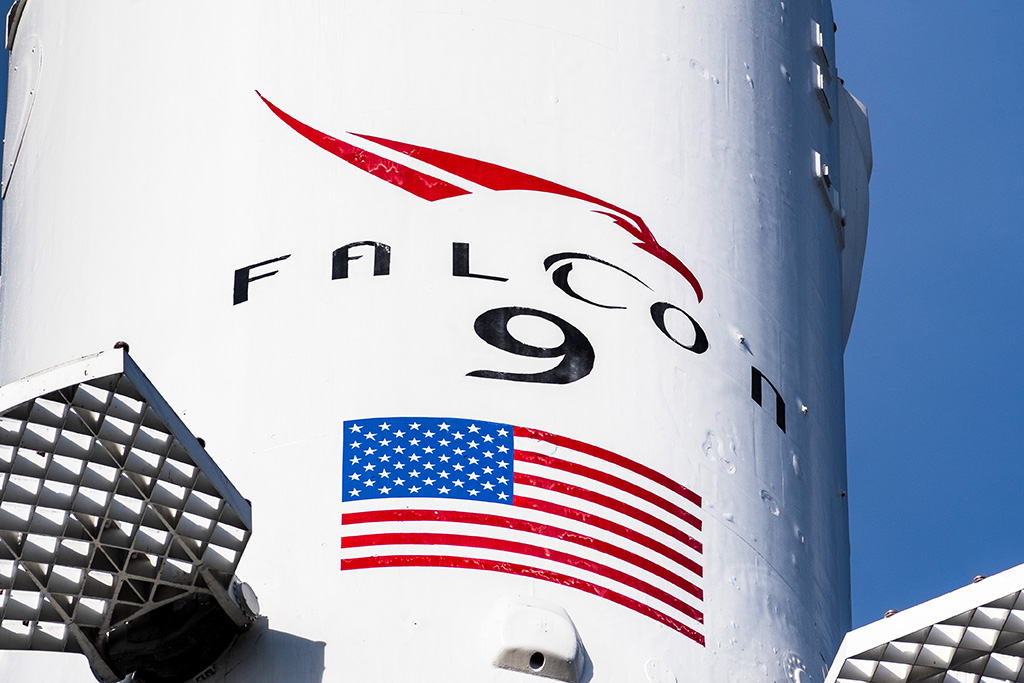
- Space Exploration Technologies Corp. is a equity in the USA market.
- The price is 185.0 USD currently with a change of -6.63 USD (-0.03%) from the previous close.
- The latest open price was 188.36 USD and the intraday volume is 272126781.
- The intraday high is 194.82 USD and the intraday low is 172.12 USD.
- The latest trade time is Thursday, June 18, 17:15:00 PDT.
SpaceX IPO: The Rocket Launch That Could Mint 4,000 Millionaires — and the World’s First Trillionaire
By Invest Offshore
The SpaceX IPO may be remembered as the moment when the private-market era finally broke open for the public.
For years, SpaceX was the company everyone wanted to own but few could access. Venture funds, sovereign wealth, family offices, insiders, and select private-market platforms had the opportunity. Ordinary investors mostly had to watch from the sidelines as SpaceX became the dominant force in reusable rockets, Starlink satellite broadband, military-grade space infrastructure, and now the larger AI-and-orbital-compute narrative.
That changed when SpaceX came public under the ticker $SPCX.
The numbers are almost difficult to process. SpaceX priced at $135 per share, raising roughly $75 billion at an IPO valuation near $1.77 trillion. After the underwriters exercised the greenshoe option, total IPO proceeds reportedly rose to approximately $85.7 billion, making it not only the largest IPO in history, but larger than the previous record by a staggering margin.
Saudi Aramco once held the crown. SpaceX took it into orbit.
4,000 New Millionaires
The most human part of the story is not the valuation. It is the wealth creation inside the company.
According to reporting circulating through Bloomberg and other financial media, the IPO is expected to create roughly 4,000 new millionaires among current and former SpaceX employees. That includes not only engineers, executives, and early technical staff, but also employees in ordinary operating roles — even cafeteria workers whose compensation packages included stock options or equity participation.
This is the hidden power of equity culture.
A paycheck pays the bills. Equity changes the family tree.
SpaceX employees did not simply work for a rocket company. Many of them helped build a national infrastructure asset: a launch business, a satellite network, a defense platform, a broadband utility, and perhaps one day an orbital AI infrastructure layer. The IPO is the moment when years of long hours, technical risk, and private-market illiquidity converted into public-market wealth.
In Silicon Valley history, this is how legends are made.
Google created millionaires. Facebook created millionaires. NVIDIA created fortunes. But SpaceX is something different because it sits at the intersection of space, defense, telecom, AI, data centers, and sovereign infrastructure. It is not just another tech IPO. It is a financial event with geopolitical meaning.
Elon Musk and the Trillionaire Threshold
Then there is Elon Musk.
Based on estimates of his economic interest in SpaceX, Musk’s stake at the IPO price has been calculated near $765 billion. Combined with his other holdings, the SpaceX IPO pushed him into an entirely new category: the world’s first trillionaire.
That title will attract criticism, celebration, envy, political debate, and endless commentary. But from an investor’s perspective, the more important question is what the market is actually pricing.
Is SpaceX a rocket company?
Is it a satellite company?
Is it a defense contractor?
Is it a telecom company?
Is it an AI infrastructure company?
Or is it the first true “sovereign-grade private corporation” — a company whose capabilities increasingly resemble those once held only by nation-states?
That is the reason investors are willing to assign SpaceX a valuation that would have seemed impossible only a few years ago.
The Case for the Bulls
The bullish case is simple.
SpaceX dominates reusable launch economics. Starlink has become a global satellite broadband platform. Governments rely on SpaceX for strategic access to orbit. Starship, if fully realized, could change the cost structure of space transportation. And the next frontier may involve placing data infrastructure, AI compute, and communications capacity beyond traditional terrestrial constraints.
The market is not valuing SpaceX on yesterday’s revenue alone. It is valuing SpaceX on the possibility that the company becomes the backbone of the next phase of civilization-scale infrastructure.
That is why this IPO matters.
It is not merely a liquidity event. It is a repricing of the future.
The Case for the Bears
But every launch has risk.
At this valuation, SpaceX has very little margin for disappointment. A company valued in the trillions must deliver not just growth, but historic growth. It must execute across rockets, satellites, regulators, defense contracts, capital markets, and public-company scrutiny.
That is where the contrarians enter.
Michael Burry, famous for “The Big Short,” has publicly questioned the valuation. Recent reporting indicates that Burry is not currently long or short SpaceX, but he has made clear that he views the valuation as extreme and has discussed the temptation of put options.
That may be the perfect symbol of the moment.
The bulls see the next NVIDIA.
The bears see the next bubble.
Both may be right at different times.
Why This IPO Changes the Market
The SpaceX IPO also changes the market structure around mega-cap technology.
An $85 billion-plus capital raise absorbs enormous institutional attention. It forces index managers, ETFs, pension funds, hedge funds, and retail investors to decide whether SpaceX belongs in their portfolios. It also raises the bar for every other private giant waiting behind it.
OpenAI, Anthropic, xAI-linked vehicles, advanced robotics firms, quantum computing companies, and defense-tech platforms will all be measured against the SpaceX standard.
This is no longer a normal IPO market.
This is a capital-market arms race.
The Offshore Investor’s View
For offshore investors, the SpaceX IPO is a reminder that the largest wealth events are increasingly tied to infrastructure that crosses borders: satellites, payments, communications, AI, energy, defense, and sovereign access.
SpaceX is American by origin, but global by function. Starlink operates across continents. Launch services serve governments and corporations. Satellite networks touch remote communities, war zones, shipping lanes, aviation corridors, and emerging markets.
That makes SpaceX more than a stock. It is a signal.
The next generation of wealth will not only be built in banks, oil fields, and real estate. It will be built in orbital infrastructure, AI capacity, private defense systems, energy security, and communications networks that operate above the reach of conventional borders.
Final Thought
The SpaceX IPO may have created 4,000 new millionaires and the world’s first trillionaire, but the bigger story is what it says about the market.
Capital is no longer simply chasing companies.
Capital is chasing control of the future.
SpaceX now trades publicly under $SPCX, and the world gets to decide what the future of space, AI, telecom, and sovereign infrastructure is worth.
The rocket has launched.
Now comes the harder question:
Does it stay in orbit?
Source basis: Reuters reported SpaceX priced the IPO at $135/share, raising $75B at a $1.77T valuation, while later reporting said total proceeds rose to $85.7B after the greenshoe. People reported analysis estimating more than 4,400 current and former employees could become millionaires, and Business Insider reported Burry’s actual position as “neither short nor long” while skeptical of the valuation. (Reuters)
Leave a Reply