
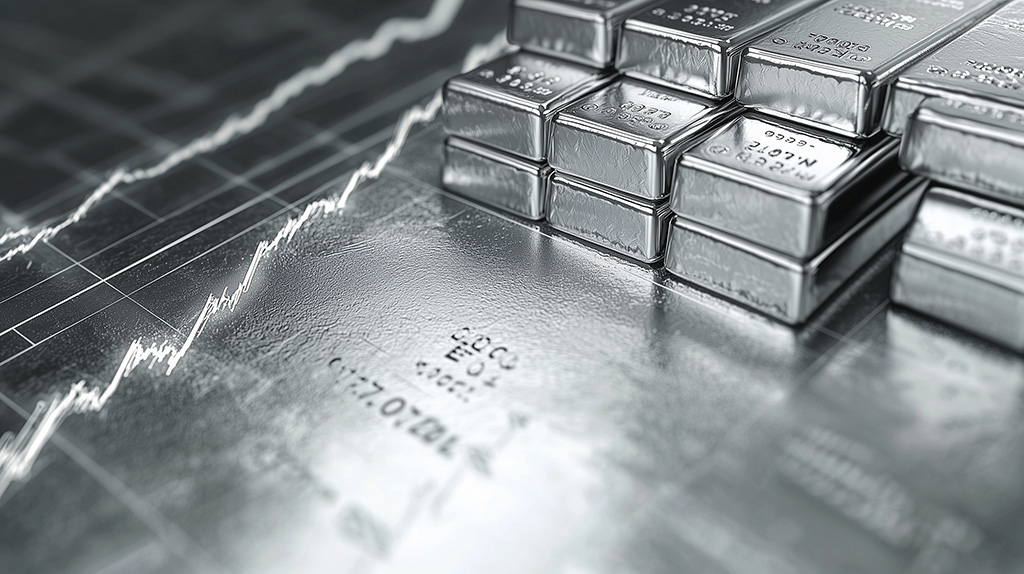
Most Wall Street silver forecasts are cautious. They move by inches. A bank raises its target from $45 to $55, or from $60 to $65, and the market nods.
Bank of America just did something different.
According to TheStreet, Bank of America’s metals team has floated a silver price range of $135 to $309 per ounce before the end of 2026. That is not a normal forecast. That is a flare in the night sky. It says the silver market may no longer be priced as just another industrial metal. It may be repricing as money. (TheStreet)
The logic is simple, but explosive. Silver has historically traded in relation to gold. That relationship is known as the gold-to-silver ratio. When gold rises hard and silver lags, the ratio stretches. When silver catches up, the ratio compresses. Bank of America’s Michael Widmer reportedly used historical ratio compression to model two potential outcomes: a move toward the 2011 ratio low near 32:1, which implies silver around $135, and a more extreme 1980-style ratio near 14:1, which implies silver near $309. (TheStreet)
That does not mean silver is guaranteed to hit $309. It means the old assumptions may be broken.
For years, silver has lived with an identity crisis. It is both an industrial metal and a monetary metal. It is used in solar panels, electronics, electric vehicles, medical applications, defense systems, and advanced manufacturing. But it is also a store of value, a crisis hedge, and a form of private money for investors who distrust paper promises.
That dual identity is now becoming the story.
The silver market is already tight. Reuters reported that the global silver market is projected to enter its sixth consecutive year of structural deficit in 2026, with the deficit expected to widen to 46.3 million ounces, up from 40.3 million ounces in 2025. Since 2021, roughly 762 million troy ounces have been drawn from inventories, according to research from the Silver Institute and Metals Focus. (Reuters)
That is the kind of slow squeeze that can stay quiet for years — until it suddenly is not quiet anymore.
The mainstream investor still thinks of silver as gold’s cheaper cousin. That may be the mistake. Silver is not just a poor man’s gold. It is the metal sitting at the intersection of monetary fear, industrial demand, green energy, electronics, and supply discipline. Gold is hoarded by central banks. Silver is consumed by industry.
That distinction matters.
Gold can sit in a vault for 100 years. Silver gets used. It gets soldered, layered, wired, embedded, and installed. It disappears into the machinery of modern civilization. When supply tightens, investors are not just competing with other investors. They are competing with factories, solar manufacturers, refiners, mints, and industrial users.
That is why Bank of America’s forecast is so powerful. It is not merely saying silver may go up. It is suggesting that silver may be deeply mispriced relative to gold.
J.P. Morgan’s 2026 silver view is much more conservative, with its Global Research team seeing silver averaging around $81 per ounce in 2026, still more than double its 2025 average. (JPMorgan Chase) That contrast is important. Wall Street is not united around $300 silver. But the direction of the conversation has changed. The debate is no longer whether silver can break old highs. The debate is how far the repricing can run.
For offshore investors, family offices, and holders of hard assets, the lesson is clear: silver is entering the strategic conversation.
Not as a trade.
As an allocation.
The world is moving through debt stress, currency debasement fears, geopolitical realignment, energy transition demand, and a broad loss of confidence in paper assets. In that environment, silver offers something rare. It is tangible, liquid, globally recognized, historically monetary, and industrially necessary.
But this is not a market for amateurs chasing headlines. Silver is volatile. It can rise like a rocket and fall like a stone. The higher it goes, the more violent the corrections can become. A smart investor should not read Bank of America’s $309 scenario as a promise. It is a warning. The physical market may be tighter than the paper market understands.
If silver reaches $135, it will not be because retail investors suddenly discovered coins. It will be because institutions, industrial buyers, and monetary investors all arrive at the same door at the same time.
If silver reaches $309, it will mean something bigger has happened. It will mean silver has stopped trading as a commodity and started trading as a monetary panic asset.
That is the real message.
Silver is no longer asleep.
And when silver wakes up, it does not ask permission.
Invest Offshore continues to monitor hard-asset, commodity, bullion, and infrastructure opportunities for international investors. We also have investment opportunities in West Africa seeking investors for the Copperbelt Region.
Leave a Reply