
The lesser-known emirate may be developing one of the Gulf’s biggest luxury-property stories—powered by tourism, branded residences and a landmark integrated resort scheduled to open in 2027.
For decades, Dubai has dominated the international image of UAE real estate. Its skyline, tax environment, luxury developments and global connectivity have made it one of the world’s most recognizable property markets.
Yet a quieter transformation is unfolding roughly 50 minutes from Dubai International Airport.
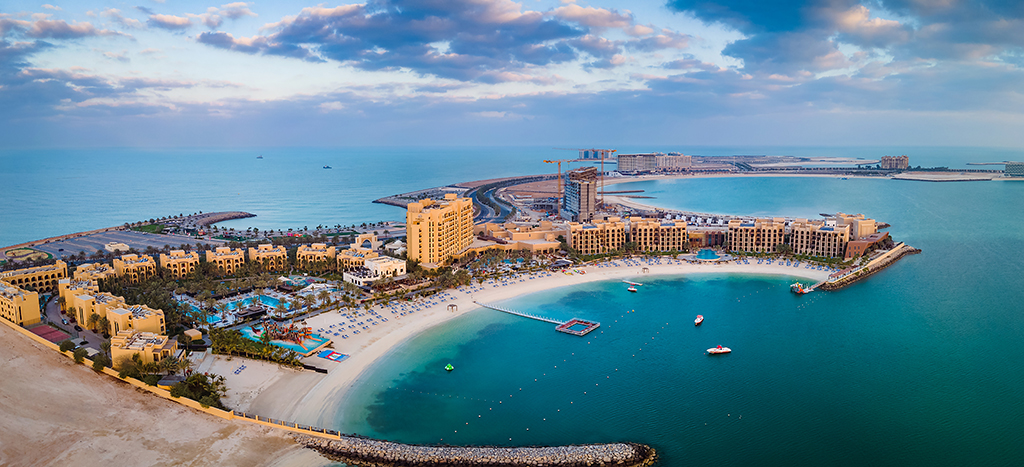
Ras Al Khaimah—widely known as RAK—is emerging as a new centre for beachfront property, resort communities and branded residences. The emirate is not attempting to recreate Dubai’s dense metropolitan model. Instead, it is building a differentiated identity around coastlines, mountains, tourism and lower-density luxury living.
The numbers suggest investors are beginning to notice.
Residential capital values across Ras Al Khaimah increased 14.9% year over year in the third quarter of 2025, according to ValuStrat. Apartments rose 15.5%, while values on Al Marjan Island—the centre of the emirate’s resort-development boom—increased 16.8% from the previous year. (LinkedIn)
That performance raises an important question: is Ras Al Khaimah becoming the UAE property market that nobody saw coming?
The Wynn Effect
The most important catalyst is Wynn Al Marjan Island, the UAE’s first integrated resort.
Scheduled to debut in 2027, the development is under construction on a 60-hectare island in the Arabian Gulf. Wynn says the resort will include 1,530 rooms and suites, 22 restaurants, lounges and bars, a theatre, beach club, shopping promenade, spa and events facilities. (Wynn Newsroom)
The scale of the project makes it far more than another luxury hotel.
It is an economic anchor capable of generating employment, international tourism, conference traffic, hospitality demand and sustained global attention. Marjan, the master developer behind Al Marjan Island, says the resort is already accelerating development across the island and surrounding districts. (Marjan)
This is what might be called the Wynn Effect: investors and developers are positioning themselves ahead of the resort’s opening, expecting the project to reprice surrounding land, residences and hospitality assets.
Savills has observed that construction of the resort has strengthened confidence in Ras Al Khaimah and encouraged neighbouring luxury hotel and residential launches. (Savills Impacts)
The property market is therefore not waiting until 2027. It is attempting to price the expected transformation in advance.
Al Marjan Island Becomes the Epicentre
Al Marjan Island is a collection of man-made islands extending into the Arabian Gulf. It has become the focal point for Ras Al Khaimah’s new generation of waterfront developments.
Apartment values on the island rose 16.8% year over year and 6.3% during the third quarter of 2025 alone, outperforming other major residential communities in the emirate. (Khaleej Times)
The island’s appeal combines several characteristics international buyers commonly seek:
- Waterfront residences and private beach access
- Resort-style amenities and managed properties
- Proximity to Wynn Al Marjan Island
- New-build inventory with modern specifications
- Recognizable hotel, fashion and automotive brands
- Access to Dubai without living inside Dubai
The result is a real estate proposition that differs from the skyscraper-centred lifestyle associated with Downtown Dubai or Dubai Marina.
Ras Al Khaimah is selling space, coastline and resort living.
The Rise of Branded Residences
Branded residences are becoming one of the defining features of the RAK market.
These properties are typically developed through a partnership between a real estate developer and a recognized hotel, fashion, design or luxury brand. Owners may receive access to hotel-style services, concierge support, managed rental programs and exclusive amenities.
Al Marjan Island’s growing pipeline includes projects associated with brands such as Fairmont, Elie Saab, DAMAC, JW Marriott and Nobu. (Visit Ras Al Khaimah)
The concept is particularly attractive to international owners who may spend only part of the year in the UAE. A professionally managed residence can offer greater convenience than independently maintaining a foreign property.
Brand affiliation can also give an unfamiliar destination immediate credibility. An overseas investor who knows relatively little about Ras Al Khaimah may still recognize a global hotel or luxury name.
However, the brand itself should not replace fundamental due diligence. Buyers must examine the developer, completion guarantees, management agreement, service charges, rental restrictions and the duration of the brand affiliation.
A famous name can support a sales premium. It does not guarantee investment performance.
Tourism Is Becoming the Demand Engine
RAK’s property expansion is being supported by genuine growth in tourism.
Ras Al Khaimah welcomed a record 1.35 million overnight visitors in 2025, representing a 6% annual increase. Tourism revenue increased by 12% during the year. (Ras Al Khaimah Tourism Authority)
The emirate’s tourism authority is targeting more than 3.5 million annual visitors by 2030. Its strategy combines beach resorts with mountain activities, desert experiences, cultural tourism, meetings and events. (Ras Al Khaimah Tourism Authority)
Air connectivity has also expanded. During the first half of 2025, Ras Al Khaimah International Airport added or maintained direct connections with cities in Poland, Romania, Russia, Uzbekistan and the Czech Republic, contributing to visitor growth. (Ras Al Khaimah Tourism Authority)
This diversification matters because the real estate thesis depends on more than speculative buying.
Hotels need guests. Holiday residences need tenants. Restaurants and retail space need spending. Branded residences need a destination capable of sustaining international demand.
Ras Al Khaimah’s tourism growth provides a foundation for that demand—but the planned volume of new construction means growth will need to continue.
Residential Inventory Could Double
Savills projects that Ras Al Khaimah’s residential stock will approximately double by the end of 2030.
More than 11,000 additional homes were scheduled for completion based solely on projects launched through the end of 2024. Further announcements since then could add more inventory to the eventual pipeline. (Savills)
This creates both the opportunity and the principal risk.
The opportunity is clear: Ras Al Khaimah is being transformed into a much larger residential and tourism market. Early buyers may gain exposure to new infrastructure, international hospitality brands and increasing recognition of the destination.
The risk is equally clear: doubling the housing supply requires demand to rise at a comparable rate.
If tourism, employment and permanent-resident growth meet expectations, the new stock could be absorbed gradually. If they disappoint, investors could face rental competition, developer incentives, slower resale markets and pressure on prices.
The pipeline is therefore evidence of confidence—but not proof of future scarcity.
Off-Plan Property Dominates the Market
Much of Ras Al Khaimah’s recent activity has occurred in off-plan property.
ValuStrat reported that off-plan registrations represented 84% of residential sales during the first nine months of 2025. (LinkedIn)
This is typical of a rapidly developing market. Buyers are purchasing units before construction is complete, often using staged payment plans and expecting appreciation as the project approaches delivery.
Off-plan investing can provide access to new projects at early-stage pricing, but it adds a different set of risks:
- Construction or handover delays
- Changes to specifications
- Developer credit risk
- Limited rental income before completion
- Large numbers of similar units completing simultaneously
- Difficulty assigning or reselling contracts before handover
The quality of the developer may matter as much as the location.
Investors should also distinguish between a unit bought for personal use and one bought as a financial asset. A residence that offers an exceptional lifestyle may not automatically produce the strongest rental yield or resale liquidity.
Is Ras Al Khaimah Really Competing With Dubai?
Ras Al Khaimah is unlikely to replace Dubai—and that may not be its objective.
Dubai is a diversified international city with major financial, commercial, logistics and technology sectors. Its real estate demand comes from businesses, residents, tourists and global capital.
RAK is developing from a smaller base and is more heavily focused on tourism, hospitality and lifestyle property.
Its opportunity lies in being different.
An investor might choose Dubai for urban liquidity and business activity, while choosing Ras Al Khaimah for beachfront exposure, lower-density living and access to a younger resort market.
In that sense, RAK is not necessarily stealing Dubai’s role. It is stealing some of its attention.
What Investors Should Examine
The strongest opportunities may be projects where tourism demand, infrastructure, beach access, management quality and limited local supply converge.
Before purchasing, offshore investors should independently verify:
- Whether the property is in an approved foreign-ownership area
- The developer’s completion record and financial strength
- Construction progress and escrow arrangements
- Annual service and resort-management charges
- Rental-program commissions and owner-use restrictions
- The exact rights attached to the branded-residence agreement
- Transfer fees, registration costs and financing conditions
- Expected competition from neighbouring projects
- Realistic resale liquidity after completion
- The consequences of delayed delivery or brand withdrawal
Projected rental returns should be treated cautiously, particularly when provided by parties involved in selling the property.
A Gulf Property Story Still Being Written
Ras Al Khaimah has several of the ingredients that can create an unexpected real estate market: a major international resort, rising visitor numbers, expanding air connectivity, branded residences and significant government-backed destination development.
Its recent price appreciation shows that the discovery phase has already begun.
The next phase will determine whether RAK becomes a durable international property destination or a market that constructed too much, too quickly.
Wynn Al Marjan Island may place the emirate permanently on the global luxury map. The growing residential pipeline could create opportunities around that transformation—but it also means investors must be selective.
Dubai built its reputation by becoming a global city.
Ras Al Khaimah is attempting something different: becoming the Gulf’s next great resort economy.
For offshore property investors searching beyond familiar markets, that makes RAK one of the most compelling—and consequential—real estate stories to watch through 2030.
Leave a Reply