
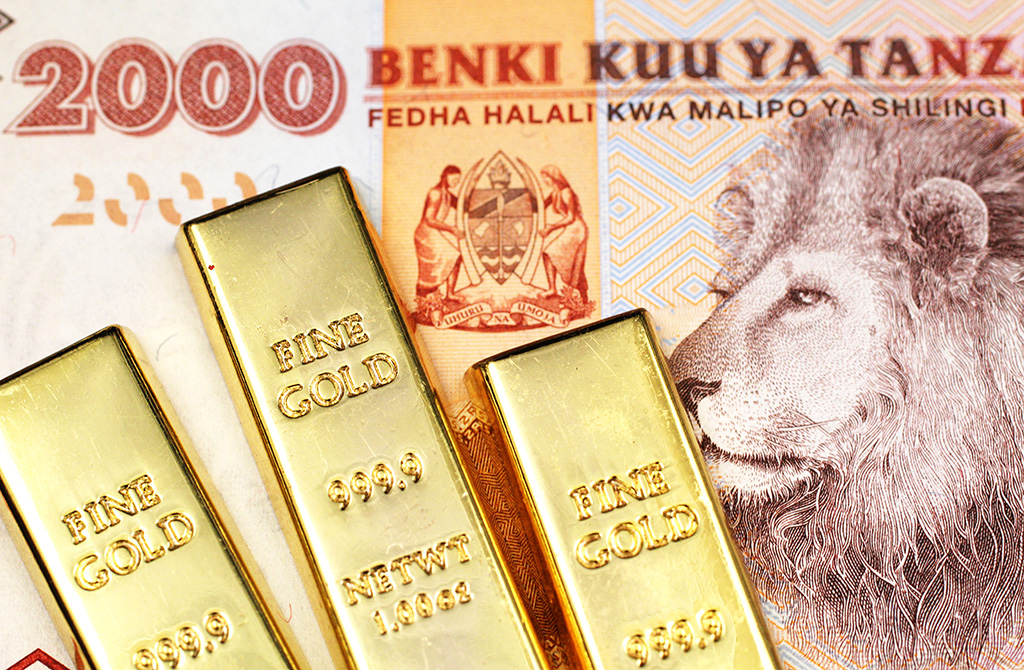
The Kibara Project offers prospective investors a substantial historical exploration footprint, high-grade gold and copper discoveries, and two principal targets awaiting deeper exploration.
A gold-copper exploration opportunity with a reported asking price of US$165 million is being presented to international investors. Located in Tanzania’s Lake Victoria Goldfields, the Kibara Project combines an extensive historical land package with significant surface mineralization and a geological setting associated with several of East Africa’s established gold mines.
The property’s historical exploration area covers approximately 375.91 square kilometres in the Bunda District of Tanzania’s Mara Region, roughly 145 kilometres southwest of the North Mara gold mine. The 2009 technical report recorded six granted prospecting licences and five approved licence applications.

A strategic position in Tanzania’s gold country


The Kibara property lies within the Musoma–Mara Greenstone Belt, part of the Archaean geological formations surrounding Lake Victoria. Its geology includes ancient mafic volcanic rocks, granite intrusions, quartz veins and structures that provide potential hosts for gold and copper mineralization.
The historical technical report was prepared by Martin J. Taylor, P.Geo., in October 2009 for Tanzanian Royalty Exploration Corporation. It documents exploration undertaken from 2002 onward, including geological mapping, surface sampling, trenching, biogeochemical surveys and induced-polarization geophysics.
The property’s principal exploration targets are Nyakona Hill and the Namhula artisanal workings.
Nyakona Hill: high-grade gold and copper at surface
Nyakona Hill is the principal gold-copper target identified in the historical exploration program.
Approximately 410 metres of trenching across 16 trenches exposed mineralized quartz veins, gossan and malachite associated with felsic volcanic rocks and feldspar porphyry. Fifty-two samples from 11 trenches were submitted for gold analysis.
The reported results included a gold assay of 14.80 grams per tonne and a copper assay of 29.15% in a mineralized trench sample. Silver values reached 87 grams per tonne in another sample. Twenty trench samples returned at least 1.22 g/t gold, while 17 samples exceeded 1% copper.
KIBARA MINERAL EXPLORATION REPORT SUMMARY.pdf
Subsequent exploration outlined a broader gold-copper geochemical anomaly extending approximately 1,800 metres north–south and more than 1,000 metres east–west. The anomaly remained open to the east, where deeper sediments near Lake Victoria prevented further surface sampling.
Importantly, the mineralized strike demonstrated by trenching was approximately 160 metres. The larger geochemical anomaly represents an exploration target, not an established orebody. Drilling is required to determine mineralization continuity, thickness and depth.
Namhula: a second gold target
The Namhula area provides another exploration opportunity within the historical property.
Sampling around abandoned artisanal workings identified gold values of up to 18.75 grams per tonne in selected grab samples. Geophysical surveys also detected an induced-polarization chargeability anomaly, although soil and biogeochemical sampling did not establish the extent of mineralization.
Together, Nyakona Hill and Namhula offer two distinct targets for further exploration, with additional licence areas providing broader regional prospectivity.
The next phase: proving the deposit
The 2009 technical report recommended a phased exploration program focused on additional trenching and drilling. Its proposed program included 4,100 metres of rotary air blast drilling and 4,500 metres of reverse-circulation drilling, with a historical budget of approximately US$835,000. Those costs would need to be recalculated for any present-day exploration campaign.
The central objective would be to establish whether the high-grade surface discoveries extend into economically meaningful mineralized zones at depth.
For prospective investors considering the reported US$165 million asking price, updated technical information will be essential. The supplied documentation establishes historical exploration results but does not provide a current mineral resource estimate, reserve statement, feasibility study or producing-mine financial model.
Likewise, the historical licence information cannot establish the project’s present ownership, mineral tenure or permitting status. Prospective buyers should obtain updated licence records, subsequent exploration results, independent technical verification and a documented basis for the asking price before proceeding.
An opportunity for international mining investors
Kibara brings together a sizeable historical exploration footprint, documented gold-copper occurrences and two targets identified for initial drilling within Tanzania’s Lake Victoria Goldfields.
Its investment proposition will ultimately depend on what updated exploration, title verification and economic studies establish about the scale and commercial potential of its mineralization.
The reported asking price is US$165 million. Investors, mining companies and prospective joint-venture partners interested in the Kibara Project can contact Invest Offshore to inquire about the opportunity and request current technical and transaction documentation.
Editorial note: The supplied technical report is dated October 31, 2009, and the accompanying summary describes an early-stage exploration asset, not an operating gold mine. The US$165 million asking price was supplied for this article and is not independently substantiated by either attached document. Current ownership, sale authorization, licence validity and any exploration completed since the report remain to be verified.
Leave a Reply