
There is a collector for everything.
Some people collect Ferraris. Others collect watches, rare coins, antique tractors, vintage aircraft, or old banknotes. But one of the most overlooked collector markets may also be one of the most practical: vintage fire engines.
At first glance, the idea sounds eccentric. A red, brass-trimmed, open-cab fire truck from the 1920s does not fit the normal profile of a private wealth asset. It is too large for the average garage, too specialized for the casual car collector, and too unusual for the standard classic-car auction catalog. That is exactly why the category is interesting.
A collectible fire engine is not merely a vehicle. It is civic history on wheels, mechanical sculpture, parade equipment, museum-grade Americana, and—under the right circumstances—a potentially useful private-estate asset.
The Collector’s Logic: Scarcity, Story, and Spectacle

Collectibles become valuable when they combine rarity, condition, provenance, beauty, and emotion. Vintage fire engines check all five boxes.
The best examples were built in low numbers, often for a specific city, volunteer company, industrial plant, or historic fire department. Many spent decades in public service before being retired, restored, and preserved. Their identities are usually traceable through department records, registration plates, factory numbers, old photographs, and local history.
Unlike a anonymous sports car, a fire engine often comes with a great story: a town, a firehouse, a crew, a bell, a ladder, a siren, a badge, and a civic memory.
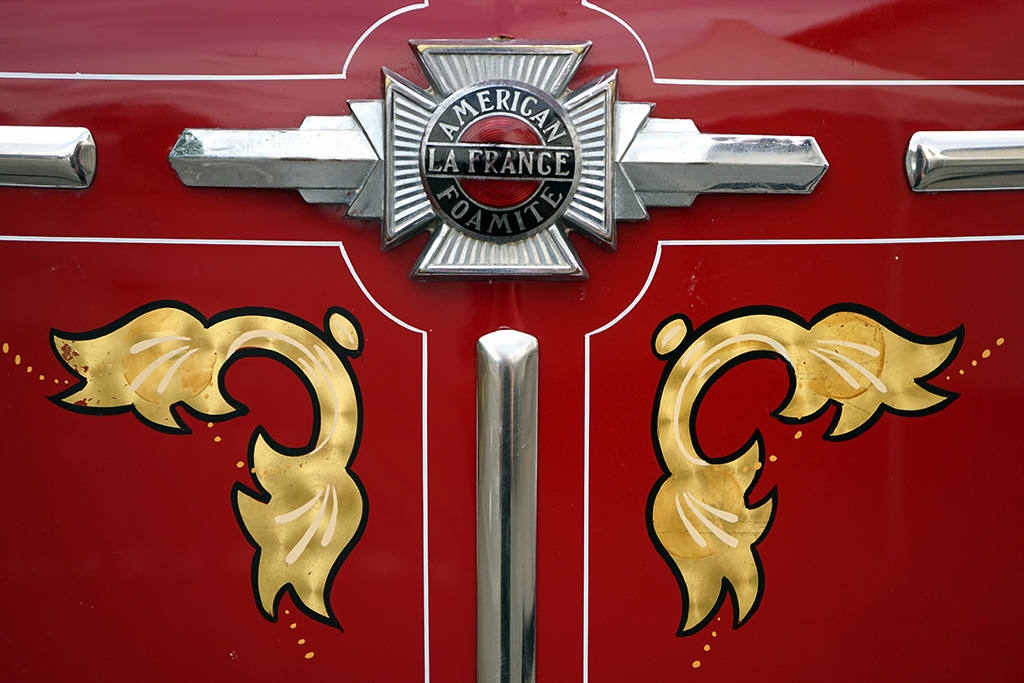
They also have presence. A brass-era Ahrens-Fox or American LaFrance does not sit quietly in a collection. It dominates the room. The long hood, exposed pump, polished fittings, gold-leaf lettering, wood ladders, and bright red paint make it one of the most visually dramatic objects a collector can own.
From Parade Piece to Private Estate Asset

Here is where the category becomes especially intriguing for high-net-worth collectors.
A vintage fire engine may be among the most practical investments for a person who already owns other valuables. Consider the owner of a private estate, ranch, vineyard, warehouse, museum, or significant car collection. The greatest risk to those assets may not be market volatility. It may be fire.
A properly maintained fire engine is not a substitute for professional emergency services, and private owners must follow all local laws, insurance requirements, training standards, and safety regulations. But as a private estate preparedness asset—especially where water storage, acreage, or remote buildings are involved—a functioning fire apparatus can add a layer of resilience.
That makes collectible fire engines unusual. They can be enjoyed as historic vehicles, displayed as sculptural investments, used in parades and events, and potentially maintained as part of a broader property-protection plan.
For a collector with a warehouse of cars, a vintage pumper parked beside the collection is not just decoration. It is a statement: the collection is valuable enough to defend.
What Rare Fire Engines Sell For

The market is wide. Project trucks can trade for only a few thousand dollars, while rare, restored, historically important apparatus can reach six figures.
Recent and historic auction results show the spread:
A 1911 American LaFrance Metropolitan Steam Fire Engine sold for $246,400 at RM Sotheby’s Miami 2026. This was not merely a truck; it was a steam-era monument from the American LaFrance Corporate Collection.
A 1925 Ahrens-Fox N-S-4 Triple Combination Pumper sold for $198,000. Ahrens-Fox is one of the blue-chip names in antique fire apparatus, famous for its engineering, imposing front-mounted pump, and distinctive spherical air chamber.
An 1894 Silsby Fourth Size Horse-Drawn Steam Pumper sold for $396,000, showing that the highest end of the market is not limited to motorized fire engines. Museum-quality steam pumpers can command serious collector money.
A 1920 American LaFrance Type 40 Triple Combination sold for $61,600. This is the type of result that makes the market accessible to collectors who understand historic vehicles but are not chasing seven-figure automobiles.
A 1927 American LaFrance Type 75 Triple Combination sold for $50,400, while a 1956 American LaFrance 700 Series pumper sold for $29,120. These prices show that a collector can enter the market at levels comparable to many ordinary classic cars—yet acquire something far rarer and more visually commanding.
At the lower end, unrestored or project fire trucks can sell for surprisingly modest prices. That creates opportunity, but also risk. Large apparatus can be expensive to transport, store, insure, title, restore, and maintain. A cheap fire truck can become expensive quickly if it lacks documentation, mechanical integrity, or usable storage.
The Blue-Chip Names

The most collectible names include American LaFrance, Ahrens-Fox, Mack, Seagrave, Silsby, Button, and early steam or horse-drawn apparatus makers. Within those categories, collectors look for originality, restoration quality, complete equipment, working pumps, documented service history, attractive department lettering, brass fittings, and strong visual appeal.
Ahrens-Fox is often considered one of the crown jewels of antique fire apparatus. American LaFrance has one of the deepest collector followings. Mack pumpers appeal to truck enthusiasts as well as fire-apparatus collectors. Steam pumpers appeal to museums and serious mechanical-history buyers.
As with classic cars, provenance matters. A truck delivered to a famous city, preserved by a known firehouse, restored by a recognized specialist, or retained in a corporate or museum collection can carry a premium.
Why the Market Remains Inefficient
Vintage fire engines occupy a strange corner of the collector universe. They are too big for many car collectors, too mechanical for some antique collectors, and too specialized for mainstream investors. That keeps the market inefficient.
For the right buyer, inefficiency is opportunity.
A collector with acreage, a private warehouse, a museum building, or a commercial property can store what others cannot. A buyer with access to mechanics, restoration talent, transport, and insurance can underwrite costs that scare away casual bidders. A family office or private collector who already maintains a fleet of cars may find that adding one historic fire engine is less complicated than it appears.
The buyer is not just purchasing a vehicle. They are purchasing a conversation piece, a heritage asset, an event magnet, and potentially a practical layer of private property resilience.
Investment Rules for Collectible Fire Engines

The first rule is to buy quality. The second is to buy completeness. Missing ladders, pumps, bells, lights, gauges, badges, and original fittings can be difficult to replace.
The third rule is to verify title and registration status. Some fire engines sell on bill of sale only, which may be acceptable for display but problematic for road use or resale.
The fourth rule is to budget realistically. Transport can be costly. Storage must be secure and dry. Mechanical recommissioning should be performed by qualified specialists. Insurance must reflect both collector value and liability risk.
The fifth rule is to understand the intended use. A museum display, parade truck, private estate showpiece, and functional emergency-preparedness vehicle are four different ownership models.
The Final Thought

There is a collector for everything, but the best collectibles are the ones that make people stop, smile, ask questions, and remember them.
A vintage fire engine does all of that.
It carries history. It commands attention. It can anchor a private collection. It can become the centerpiece of a museum, ranch, winery, estate, or car barn. And in a world where real assets, preparedness, and private collections increasingly overlap, the collectible fire engine may be one of the most practical alternative investments hiding in plain sight.
For the investor who already owns the cars, the watches, the art, and the estate, the next acquisition may be the one with a bell, a pump, a ladder, and a purpose.
Note 107; I used real market examples: RM Sotheby’s records show a 1911 American LaFrance Metropolitan Steam Fire Engine sold for $246,400, a 1925 Ahrens-Fox N-S-4 Triple Combination Pumper sold for $198,000, and an 1894 Silsby horse-drawn steam pumper sold for $396,000. More accessible examples include a 1920 American LaFrance Type 40 at $61,600, a 1927 Type 75 at $50,400, and a 1956 American LaFrance 700 Series pumper at $29,120. (RM Sotheby’s)
Leave a Reply