
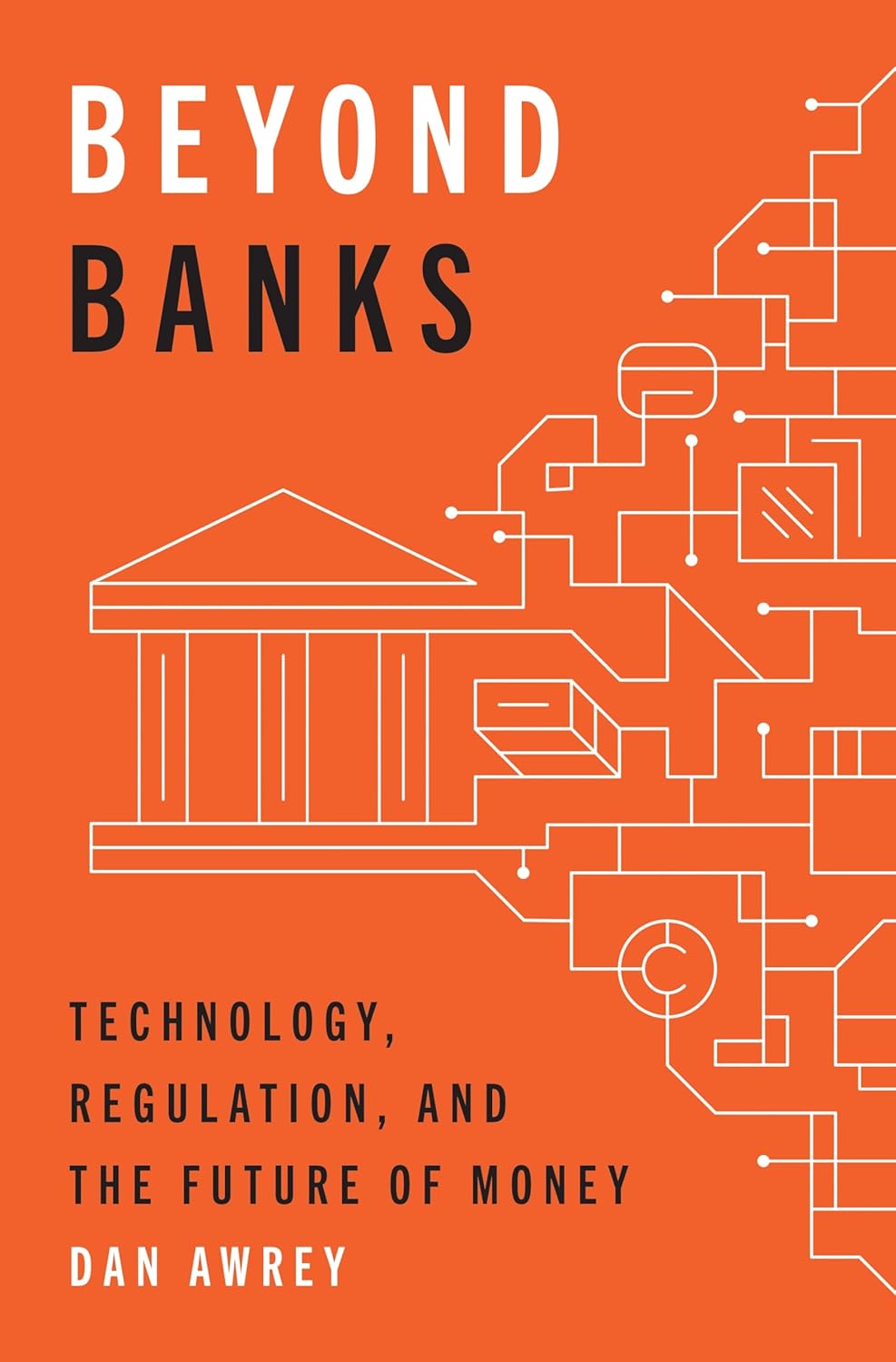
Money is changing. Not slowly. Not politely. Not by committee.
It is being pulled apart, rebuilt, digitized, tokenized, regulated, de-risked, re-risked, and reimagined in real time. The old banking system was built around branches, deposits, correspondent accounts, central banks, paper signatures, and permission. The new system is being built around payment rails, digital wallets, APIs, stablecoins, custody, compliance architecture, tokenized assets, and trust.
That is why Beyond Banks: Technology, Regulation, and the Future of Money by Dan Awrey deserves serious attention from investors, bankers, entrepreneurs, regulators, and anyone trying to understand where the financial system is heading.
This is not another casual fintech book worshipping disruption for its own sake. It is a serious work about the collision between technology, regulation, banking, and the future of payments. The book explains how new platforms and payment technologies are rapidly changing the nature of money itself — how it is held, transferred, promised, redeemed, and trusted.
That is the key word: trusted.
Money is not merely code. Money is not merely a balance on a screen. Money is a promise. It is a claim. It is a social contract. It only works when the person receiving it believes it can be held safely, transferred cleanly, and redeemed reliably.
The great danger in the next phase of finance is not innovation. Innovation is inevitable. The danger is innovation without credible structure. Fast money without trust becomes bad money. Digital money without legal clarity becomes fragile money. Payment platforms without fiduciary responsibility become systemic weak points.
That is the central lesson of Beyond Banks.
Beyond Banks Does Not Mean Beyond Trust
The title should not be misunderstood.
The future is not beyond trust.
It is not beyond regulation.
It is not beyond custody.
It is not beyond documentation.
It is not beyond fiduciary duty.
It is beyond the idea that only traditional banks can provide monetary confidence.
That distinction is everything.
Banks are no longer the only actors in the monetary system. Payment companies, digital asset platforms, stablecoin issuers, custodians, fintech applications, private fiduciaries, tokenized securities platforms, and non-bank financial institutions are all becoming part of the new monetary landscape.
But only those with discipline will survive.
Technology alone is not enough. Everyone has technology now. The competitive edge will belong to platforms that combine speed with structure, privacy with compliance, custody with clarity, and innovation with serious governance.
The next generation of finance will not be won by the loudest disruptors. It will be won by the quiet architects.
The New Question: Where Is the Trust Architecture?
For Invest Offshore readers, the message is unmistakable.
Offshore finance has always been about more than tax planning. At its highest level, it is about jurisdictional intelligence, asset protection, international settlement, custody, privacy, mobility, and the lawful movement of capital across borders.
The digital transformation of money does not make offshore finance obsolete. It makes it more important.
In the old world, the question was: “Where is the bank account?”
In the new world, the better question is: “Where is the trust architecture?”
Who holds the assets?
Who verifies the parties?
Who controls the payment rail?
Who has custody?
Who has regulatory responsibility?
Who can settle?
Who can document?
Who can protect the client?
Who can execute?
Those are the questions that matter now.
The future of money will require more than an app. It will require secure onboarding, verified counterparties, proper custody, escrow discipline, paymaster logic, cross-border awareness, regulatory intelligence, and a culture that understands both old-world banking etiquette and new-world execution speed.
That is where the serious opportunity lives.
Swiss Discipline, Digital Velocity
One of the most important themes raised by Beyond Banks is that the monetary system is becoming unbundled. Payments, deposits, custody, settlement, credit, identity, and compliance are no longer locked inside the same old institutional container.
This creates both risk and opportunity.
The risk is fragmentation. Too many platforms, too many promises, too many tokens, too many payment schemes, and not enough trust.
The opportunity is specialization. The best platforms of the next era will not try to be everything to everyone. They will focus on the parts of finance where trust, settlement, custody, and credibility matter most.
Swiss discipline still matters. Documentation still matters. Fiduciary culture still matters. Regulatory fluency still matters. So does speed. So does technology. So does the ability to close.
The winning model will not be reckless fintech, and it will not be sleepy legacy banking. It will be something cooler, sharper, and more precise — a private architecture for the next monetary age, hidden in plain sight until the moment is right.
Regulation Is Not the Enemy
One of the strongest ideas in Beyond Banks is that regulation is not simply a brake on innovation. In the future of money, regulation becomes part of the product.
That is a powerful insight.
The next generation of serious financial platforms will not treat compliance as decoration. They will build it into the foundation. They will understand that trust is not created by marketing language. It is created by process, documentation, custody, governance, and clear rules of engagement.
This is especially true in offshore finance, where the marketplace is filled with claims, mandates, platforms, instruments, intermediaries, private deals, and cross-border capital flows.
The winners will be those who can separate noise from signal.
The winners will know that privacy is not secrecy.
That compliance is not weakness.
That custody is not paperwork.
That settlement is not a detail.
That trust is not optional.
Why Investors Should Read This Book
Beyond Banks should be read as both a warning and an opportunity.
The warning is that the old financial system is not immune from disruption. Banking is being pulled apart. Payments are being redesigned. Money is becoming more programmable, more mobile, more competitive, and more complex.
The opportunity is that the new system still needs serious institutions.
It needs platforms with discipline.
It needs fiduciaries with judgment.
It needs custodians with credibility.
It needs settlement rails with legal clarity.
It needs entrepreneurs who understand that finance is not a game of slogans. It is a game of trust.
For investors, this book helps explain why the future of money is not simply about crypto, stablecoins, central bank digital currencies, payment apps, or fintech valuations. It is about the deeper restructuring of monetary confidence.
Who gets trusted?
Who gets regulated?
Who gets access?
Who gets to settle?
Who gets to custody?
Who gets to create the next layer of financial infrastructure?
Those are trillion-dollar questions.
The Invest Offshore Endorsement
Invest Offshore endorses Beyond Banks because it provides a clear intellectual framework for understanding the transformation already underway. It explains why payment innovation matters, why regulation matters, why money is being unbundled from traditional banking, and why trust remains the ultimate asset.
This book belongs on the desk of every serious banker, fintech founder, private investor, family office adviser, offshore strategist, and policymaker trying to understand what comes next.
The future is not simply digital.
The future is not simply decentralized.
The future is not simply regulated.
The future is not simply offshore or onshore.
The future belongs to those who can combine trust, technology, custody, settlement, privacy, and governance into one coherent architecture.
That is the real story beyond banks.
And for those who understand it early, that is where the alpha begins.
Leave a Reply