
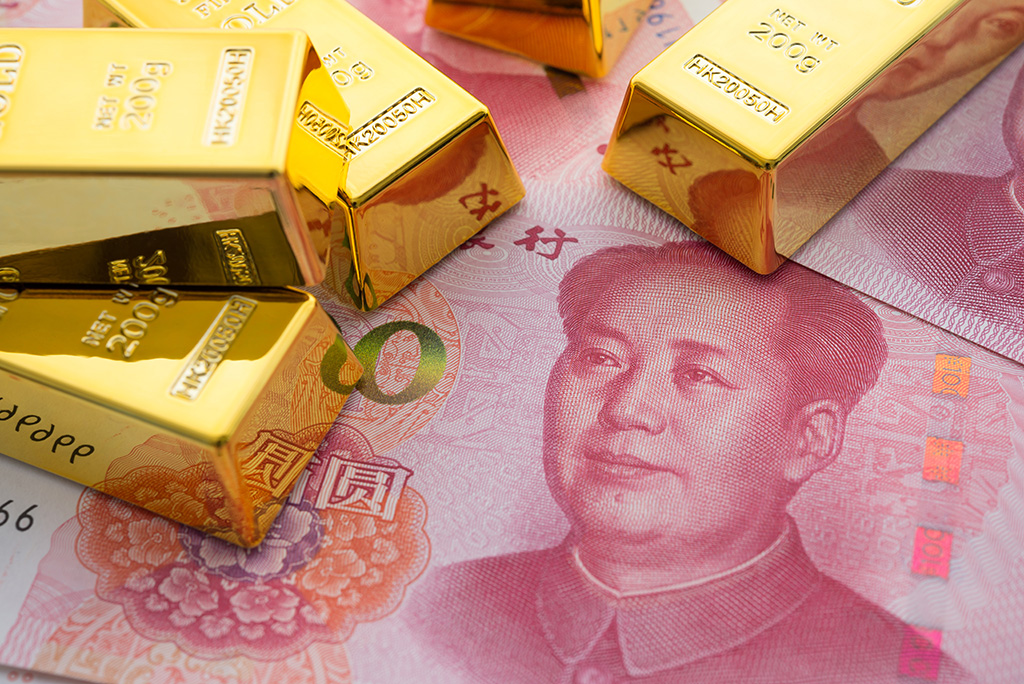
China is preparing to close an important door in the precious-metals market—and every serious gold investor should understand what happens next.
On July 24, 2026, the Industrial and Commercial Bank of China, better known as ICBC, will stop providing individual customers with precious-metals trading services connected to the Shanghai Gold Exchange. Postal Savings Bank of China, Ping An Bank and China Guangfa Bank have announced or begun similar withdrawals from the retail market.
The new episode of The Jay Martin Show, “July 24th: The Day China Reveals Gold’s Real Price”, offers a provocative interpretation of this development. It asks whether China is merely protecting retail traders—or preparing to challenge the paper-dominated system that influences the international gold price.
For Invest Offshore readers, it is highly recommended viewing.
Over the past few months, China's largest banks have quietly moved to end paper gold trading for individual customers across the country. The Industrial and Commercial Bank of China makes it final on July 24.
— Jay Martin (@JayMartinBC) July 20, 2026
The official line is that this protects ordinary people from a… pic.twitter.com/l88pyk8CHS
What China Is Actually Closing
This is not a Chinese prohibition on owning gold. Nor is the Shanghai Gold Exchange shutting down.
The restrictions apply primarily to bank-operated services that allow individual customers to trade precious-metals contracts through the exchange. These include leveraged, deferred-settlement and other margin-based products in which traders gain exposure to gold or silver without necessarily paying for and possessing the underlying metal.
ICBC has instructed affected customers to manage their positions before the July 24 settlement deadline. Depending on the contract, that may involve closing a position, selling the metal represented in the account or arranging physical delivery.
Physical gold bars, coins, jewelry and other non-leveraged gold products remain available. Institutional participation in the Shanghai Gold Exchange is also continuing. The distinction is critical: China is restricting a speculative retail channel, not withdrawing from gold.
The Official Explanation: Risk Control
The most immediate explanation is also the least mysterious: gold became extraordinarily volatile during 2026.
After reaching a record near $5,600 per ounce early in the year, the metal fell below $4,000 in June. Chinese banks responded by warning customers, increasing collateral requirements and reducing access to leveraged products. Some institutions reportedly raised margin requirements as high as 140%.
China has been tightening retail access to risky commodity products since 2020, when the collapse of a Bank of China oil-linked product inflicted substantial losses on individual customers. New retail accounts connected to Shanghai Gold Exchange contracts had already been restricted for several years.
Viewed from that perspective, July 24 is the conclusion of a long risk-reduction process—not the sudden abolition of paper gold.
But the Physical-Gold Question Remains
The deeper question raised by The Truth About Gold is whether the policy could have consequences beyond investor protection.
Paper contracts create price exposure without requiring every buyer to acquire, transport and store physical bullion. That produces liquidity, but it also allows the volume of financial gold trading to become much larger than the quantity of metal changing hands.
When a major market discourages leveraged retail contracts while preserving physical ownership and delivery, the balance between financial exposure and direct ownership may begin to change.
If former paper-gold traders move into bars, coins or fully allocated products, physical demand could rise. If they simply leave the market, however, the effect may be limited. July 24 therefore should not automatically be treated as the date on which China “reveals the real gold price.” It is better understood as a revealing test of investor behavior.
China’s Central Bank Is Buying the Metal
China’s official actions make the debate even more interesting.
While commercial banks are reducing individual access to speculative contracts, the People’s Bank of China continues to accumulate physical reserves. The central bank added approximately 15 metric tonnes in June—its largest monthly purchase since October 2023—and extended its reported buying streak to 20 consecutive months. Its official holdings reached approximately 2,346 tonnes. Reuters and the World Gold Council reported the increase.
That creates a striking contrast:
- Retail customers are being moved away from leveraged precious-metals speculation.
- Physical ownership remains available.
- The Shanghai Gold Exchange continues serving physical and institutional markets.
- China’s central bank is adding bullion to its reserves.
This does not prove that Beijing intends to overthrow Western derivative pricing. It does show that China distinguishes sharply between leveraged speculation and gold held as a reserve asset.
Does This Threaten Paper Gold Pricing?
The international gold price is shaped by several interconnected markets, including London over-the-counter trading, futures exchanges such as COMEX, exchange-traded funds and major Asian physical markets.
China’s policy alone will not dismantle that system. Retail accounts operated through several Chinese banks represent only one part of the much larger global market.
Nevertheless, pricing power can gradually migrate when physical demand, vaulting, refining, settlement and delivery infrastructure migrate with it. China is already the world’s largest gold consumer and producer, while Shanghai has become an increasingly important centre for price discovery and physical settlement.
If Asian buyers continue demanding allocated or deliverable metal while Western markets remain dominated by financially settled contracts, the difference between the paper price and the physical market could become more visible.
That is the possibility explored in the new episode—and why its argument deserves attention even from viewers who do not accept every conclusion.
July 24 Is a Signal, Not a Verdict
Investors should resist both extremes.
It would be premature to declare that China has ended paper gold or that global gold pricing will fundamentally change overnight. The banks’ stated concern about volatility and retail risk is credible, especially following the sharp correction in precious metals.
It would be equally shortsighted to dismiss the decision as routine housekeeping. The world’s largest bank and several other major Chinese institutions are withdrawing individual customers from leveraged gold trading while China’s central bank continues buying bullion.
That contrast reveals something important about the emerging monetary landscape: speculative exposure and strategic ownership are no longer being treated as the same thing.
The latest episode of The Jay Martin Show makes a compelling case for watching July 24 closely. Whether the deadline becomes a turning point or merely another stage in China’s long-running risk controls, it focuses attention on the question at the heart of the gold market:
When confidence is tested, do investors want a contract—or the metal itself?
Invest Offshore recommends the episode as informed market commentary, not personalized investment advice. Gold and leveraged contracts can experience substantial price volatility.
Leave a Reply