
For decades, global silver pricing has been dominated by Western financial centers — primarily London’s LBMA spot pricing and New York’s COMEX futures. But quietly, and steadily, a different pricing center has emerged. One grounded not in leverage and paper contracts, but in physical metal, domestic demand, and real settlement.
That center is China.
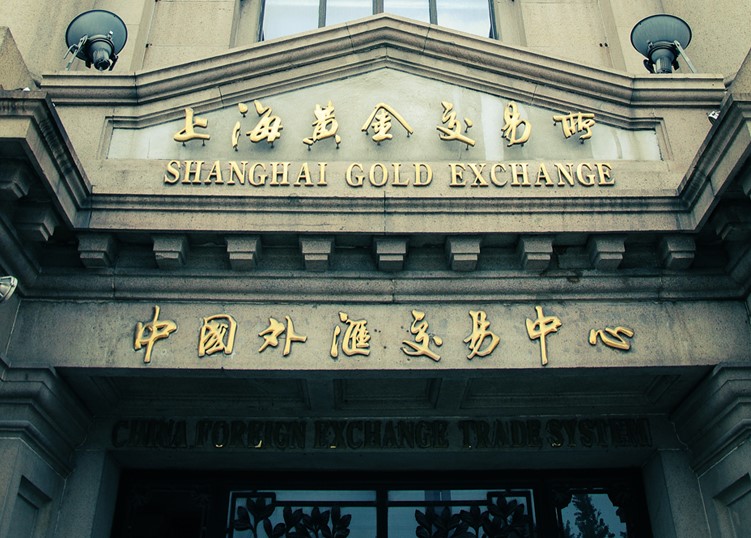
At the heart of this shift is the Shanghai Gold Exchange (SGE) Silver Benchmark, officially published as the Shanghai Silver Benchmark Price (code: SHAG) — now widely viewed by industry insiders as the most accurate reflection of silver’s true market value.
What Is the Shanghai Silver Benchmark (SHAG)?
The SGE Shanghai Silver Benchmark Price (SHAG) is China’s official domestic benchmark for physical silver. Unlike Western benchmarks that are heavily influenced by derivatives and synthetic exposure, SHAG is determined through actual physical supply and demand within the world’s largest metals-consuming nation.
The benchmark is published by the Shanghai Gold Exchange, one of the few major exchanges globally that requires physical delivery and full backing for traded metals. This structure alone sets SHAG apart.
According to an industry review by Thomson Reuters GFMS (via INN), China accounts for approximately 17% of global silver demand when fabrication and investment demand are combined — and that figure continues to rise as silver’s role in solar, electronics, EVs, and advanced manufacturing expands.
SHFE Silver Futures: A Physical Market Anchor
Alongside SHAG, the Shanghai Futures Exchange (SHFE) lists IC-Ag99.99 silver futures, which are widely used by Chinese producers, fabricators, refiners, and institutional traders.
Crucially, these futures are not purely speculative instruments. They are closely tied to physical delivery standards, reinforcing the price discovery mechanism rather than distorting it.
In practice, SHAG acts as the cash price, while SHFE silver futures provide hedging and forward visibility — similar in concept to Western markets, but with far less leverage and far more physical integrity.
Why Many Analysts Say SHAG Is More Accurate Than London or COMEX

A growing number of precious-metals analysts argue that SHAG represents the “real” price of silver, for several structural reasons:
1. Physical Settlement, Not Paper Games
COMEX silver trades at leverage ratios often exceeding 100:1 paper to physical. London’s OTC market is opaque and largely unallocated. By contrast, the SGE requires metal to exist, be delivered, or be deliverable.
In simple terms: no silver, no trade.
2. Demand-Led Price Discovery
China is not a speculative silver market — it is an industrial consumption market. Pricing reflects what manufacturers, refiners, solar producers, and investors are actually willing to pay for metal today, not what hedge funds think silver might do tomorrow.
3. Minimal Algorithmic Distortion
Western silver markets are heavily influenced by high-frequency trading, derivatives arbitrage, and macro hedge positioning. SHAG pricing is driven far more by commercial users and physical inventory flows, reducing volatility unrelated to fundamentals.
4. Transparency and Daily Benchmarking
SHAG is published as a clear, official benchmark, tied to real transactions on a regulated exchange. That transparency contrasts sharply with the fragmented, opaque nature of London silver pricing.
A Shift in Global Silver Price Power
Silver is no longer just a monetary metal — it is a strategic industrial input. Solar panels, EVs, semiconductors, AI infrastructure, and grid modernization all depend on silver, and China dominates many of these supply chains.
As a result, the argument that silver should be priced where it is consumed, stored, and delivered — not where it is most heavily shorted — is becoming harder to ignore.
Just as Shanghai has reshaped gold pricing over the past decade, SHAG may represent the early stages of a long-term rebalancing in silver price discovery, away from leveraged Western paper markets and toward physically anchored Eastern exchanges.
What This Means for Offshore and Global Investors
For offshore investors, traders, and institutions, the rise of SHAG highlights an uncomfortable truth: the headline silver price may no longer tell the full story.
Premiums, delivery delays, East-West price spreads, and strategic stockpiling are all signals that physical silver is tightening — even when COMEX prices appear subdued.
Understanding benchmarks like SHAG is no longer optional. It is essential for anyone serious about precious metals, commodities, or the evolving global monetary order.
At Invest Offshore, we track these structural shifts closely — from precious-metal benchmarks to offshore custody, physical sourcing, and emerging commodity-backed financial structures.
As global price discovery migrates eastward, informed investors position early — not after the paper illusion breaks.
Leave a Reply