
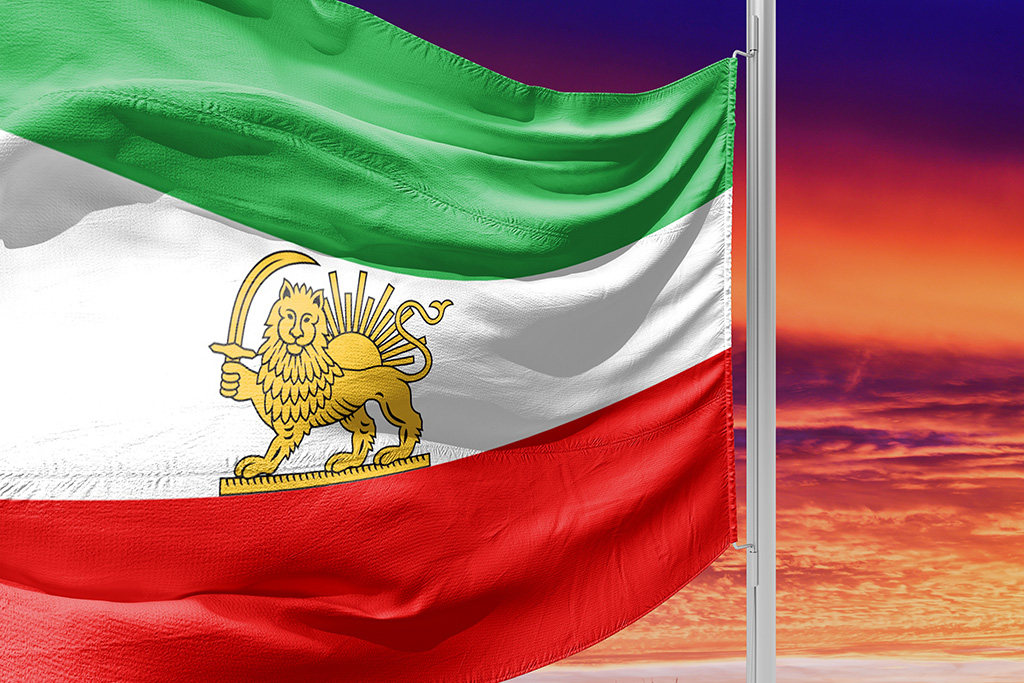
For decades, Iran has been frozen between an ancient civilizational memory and a modern political reality that has delivered neither peace nor prosperity to its people. Yet history has a way of resurfacing—sometimes quietly, sometimes symbolically—before it becomes catalytic.
A growing body of discussion among historians, royal-house enthusiasts, and diaspora commentators is now revisiting a provocative idea: a Persian re-boot anchored not in ideology, but in legitimacy, continuity, and national reconciliation.

At the center of this conversation is Mohammad Hassan Mirza II, widely described as the present heir to the Qajar (Kadjar) dynasty, the last royal house to rule Persia before the Pahlavi era.
The Qajar Line and a Dormant Legitimacy

The Qajar dynasty ruled Persia from 1789 to 1925, presiding over a complex period of modernization, constitutionalism, and geopolitical pressure from imperial powers. While the dynasty ultimately fell, it left behind something enduring: a recognized royal house with internal succession rules—notably male primogeniture and Qajar-origin maternal lineage.
Under those house rules, Mohammad Hassan Mirza II, a great-grandson of Mohammad Ali Shah Qajar, is identified by family and enthusiast sources as the individual who could lay claim to the Qajar throne today. Unlike revolutionary claimants or exile politicians, this is not a self-created title—it is a lineage-based position derived from the dynasty’s own succession framework.
Among followers of Persian royal history, he is informally known as “Prince Mickey.” Reports and popular discussions further note that he resides in the United States, with some specifying Dallas, Texas—a detail that, while informal, underscores the unusual modern reality of ancient legitimacy living quietly in the diaspora.
Importantly, he is also said to have at least one son, Arsalan, viewed under those same house rules as the next crown-prince-in-line, extending the continuity of the Qajar claim into a new generation.
Why a Qajar Re-Boot Resonates Now
The appeal of a Qajar restoration—or more accurately, a Qajar-anchored national reset—is not about nostalgia for monarchy. It is about legitimacy without ideology.
Iran today suffers from:
- Chronic sanctions and capital isolation
- A collapsing currency and brain drain
- Deep internal divisions between state, society, and diaspora
- No neutral national figure capable of convening reconciliation
A constitutional or symbolic monarchy—particularly one untethered from clerical power, military factions, or foreign sponsorship—offers something rare: a non-partisan anchor around which a new political settlement could be built.
In this vision, a Qajar heir would not rule as an autocrat, but rather serve as:
- A unifying civilizational symbol
- A guarantor of constitutional continuity
- A neutral convenor for a national referendum or transitional framework
Think less “return to the past,” and more Japan, Spain, or the UK—where monarchy functions as stabilizer, not sovereign.
Peace, Prosperity, and the Persian Re-Opening

A credible Iranian re-boot—especially one that signals national reconciliation—would have immediate economic implications.
Iran remains one of the most under-capitalized resource economies on earth:
- Top-tier oil, gas, copper, zinc, and rare-earth reserves
- A highly educated population
- Strategic geography linking Central Asia, the Caucasus, the Gulf, and South Asia
What Iran lacks is trust—from markets, investors, and its own people.
A post-sanctions Iran anchored by a legitimate, non-ideological national figure could rapidly:
- Normalize trade and banking relations
- Re-enter global capital markets
- Launch infrastructure and energy PPPs
- Unlock diaspora capital measured in the hundreds of billions
In that context, even a symbolic Sultan of Persia—operating within a constitutional framework—could catalyze one of the largest economic re-openings of the 21st century.
The Power of Quiet Continuity
Perhaps the most striking element of the current Qajar heir narrative is its absence of theatrics. No coups. No declarations. No foreign lobbying campaigns. Just lineage, patience, and quiet acknowledgment among those who study Persian dynastic law.
History suggests that such figures often matter most after systems collapse—not before.
When nations seek a reset, they rarely invent legitimacy from scratch. They reach backward to something older, deeper, and broadly recognized. In Iran’s case, the Qajar house—predating modern ideological fractures—may represent exactly that.
Whether Mohammad Hassan Mirza II ever formally steps forward is unknown. But the idea itself is gaining traction because it answers a question Iran has struggled with for 45 years:
What comes next that belongs to Iran—not to an ideology, not to a faction, and not to a foreign power?
Final Thought
A Persian re-boot under a constitutional, Qajar-anchored framework would not be a return to monarchy as rule—but a return to legitimacy as foundation. Peace first. Prosperity second. Politics rebuilt afterward.
As global investors quietly position for regime change, sanctions relief, and the re-pricing of stranded assets across the Middle East, Iran remains the largest unresolved question on the board.
And sometimes, the future arrives wearing the face of the past.
Invest Offshore continues to monitor geopolitical inflection points where legitimacy, capital, and opportunity converge. We also have active investment opportunities in West Africa, including projects seeking investors across the Copperbelt Region.
Leave a Reply