
Panama has a habit of returning to the foreign buyer’s shortlist. Not always with a frenzy. Not always with headlines about a property boom. But year after year, serious buyers keep circling back. In 2026, that pattern still makes sense.
Panama closed 2025 with international visitor arrivals up 8.2%, tourism income up 9.7% to $6.583 billion, and hotel occupancy around 56.6%. At the same time, Tocumen International Airport says it moves more than 65,000 travelers a day to more than 90 destinations in the Americas and Europe. For property buyers, that combination matters: a lifestyle market is far more compelling when it is also easy to reach. (Autoridad de Turismo de Panamá)
The deeper reason foreign capital keeps looking at Panama is that this is not just a beach play. Panama’s economy is fundamentally service-driven. The U.S. Commerce Department notes that services account for about 80% of GDP, with the Canal, banking, tourism, logistics, ports, insurance, and the Colón Free Trade Zone all playing major roles. The IMF’s 2026 country snapshot projects 4.0% real GDP growth and 2.0% inflation, while its 2025 Article IV says the economy has been recovering from the mine-closure shock, the Panama Canal returned to full capacity in September 2024, and the banking system remains sound, well-capitalized, and liquid. That is exactly the sort of backdrop international buyers like: not perfect, but diversified, connected, and still growing. (Trade.gov)
Another reason Panama stays in the conversation is that property can still be tied to residency strategy. Under Executive Decree 193 of October 2024, Panama’s Qualified Investor route allows permanent residency through real-estate investment starting at B/.300,000, including direct purchases and certain promise-of-sale structures backed by trust or bank-guarantee mechanisms. That matters because many overseas buyers are no longer buying only for yield or vacation use. They are buying optionality: a place to spend part of the year, a second base in the Americas, or a future relocation asset that is not purely speculative.
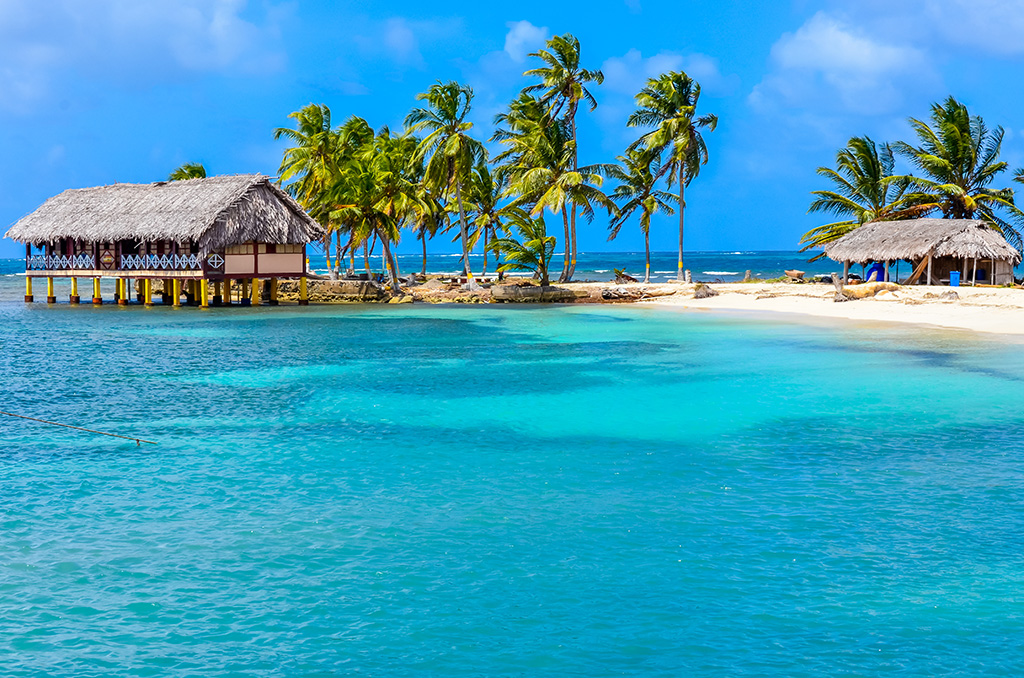
Then there is the lifestyle geometry, which is where Panama quietly outperforms many competitors. Buyers are not limited to one story. They can look at skyline living in Panama City, colonial character in Casco Antiguo, beach exposure on either coast, or cooler highland living inland. Tourism Panama describes Casco Antiguo as a UNESCO World Heritage district opened in 1673, with luxury hotels, restaurants, nightlife, and walkable historic streets. The Panama Tourism Authority also emphasizes that the country has 2,490 kilometers of beaches on the Atlantic and Pacific. That breadth gives Panama a rare advantage: one country can serve the urban buyer, the retiree, the surf investor, the eco-lodge dreamer, and the family looking for a second home with easier year-round access than many island markets. (Tourism Panama)
The income case has also improved, though it is highly neighborhood-specific. Global Property Guide’s 2025 market analysis found average asking rents in Panama City at about $12.96 per square meter for apartments, with gross rental yields averaging 7.83% in Panama City and 6.84% nationwide. It also highlighted stronger rental demand in areas such as Costa del Este and El Cangrejo, while tourism-linked interest continues in places like Bocas del Toro, Playa Venao, and Río Hato. In other words, the old idea that Panama is only a lifestyle purchase is becoming less convincing. In the right micro-market, buyers can still make a sensible income argument alongside the lifestyle one. (Global Property Guide)
What keeps Panama interesting in 2026, though, is that it is not a one-way euphoric market. The same Global Property Guide report, citing Convivienda data, notes that residential sales by participating developers fell 20.31% in 2024, even as the industry forecast a 17% rebound for 2025. Residential completions in 2024 totaled 14,005 units, with 76% in the metropolitan area. That is not the profile of a market where buyers must chase anything at any price. In fact, it may be the opposite. Foreign buyers often like markets where the story is strong but the negotiating environment is still rational. Panama, at least for now, still offers that. (Global Property Guide)
So why do foreign buyers keep circling Panama property in 2026? Because Panama still offers a rare mix of accessibility, economic relevance, residency usefulness, and lifestyle range. It is close enough for North Americans, connected enough for global businesspeople, varied enough for different buyer profiles, and established enough to feel less experimental than many “next big thing” markets. The smart money is not buying Panama blindly. It is getting much more selective about neighborhood, building quality, rental rules, and exit strategy. But that selectivity is not a sign of weakness. It is a sign that Panama has matured into a market worth underwriting carefully.
For Invest Offshore readers, that is the real takeaway. Panama is not merely a postcard jurisdiction. It remains one of the few places in the hemisphere where foreign buyers can still find a workable blend of property ownership, mobility, and long-term optionality. And while you are watching Panama, Invest Offshore continues to spotlight additional cross-border opportunities as well, including investment openings tied to Africa’s Copperbelt region.
Leave a Reply