
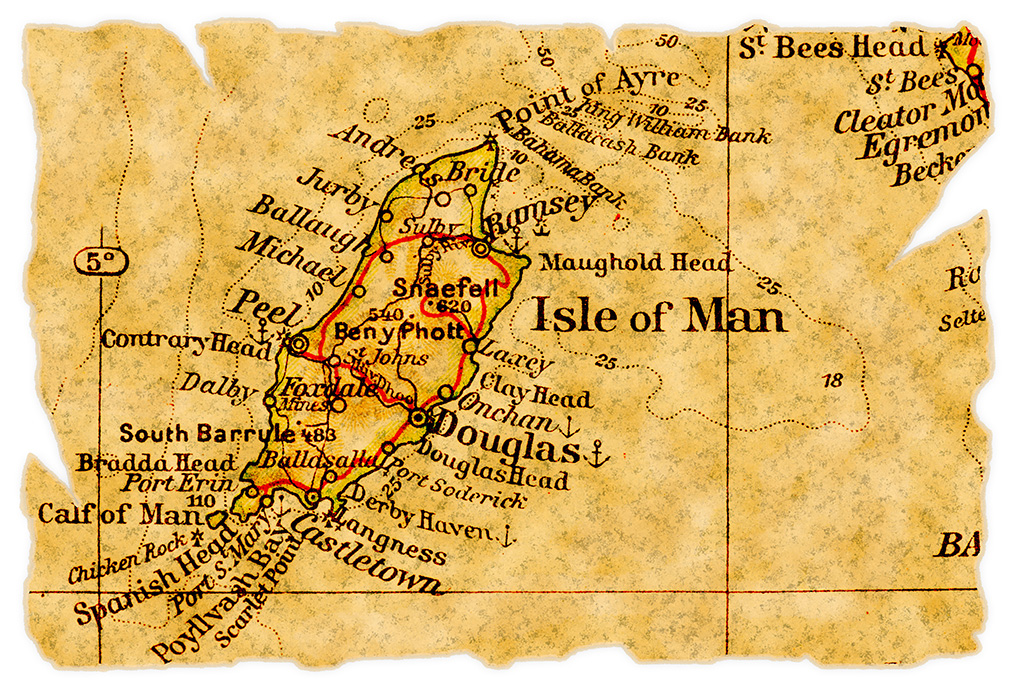
The Isle of Man is making a deliberate bet: invest roughly £1 billion to lift trend growth toward ~3%, create 5,000 new jobs, and expand the working population enough to keep the Island’s public finances, services, and living standards moving in the right direction.
That’s not just “economic development speak.” It’s a survival plan for every small, high-income island economy facing the same trio of pressure points:
- Workforce shortages
- Ageing demographics
- The need to diversify beyond legacy sectors (and avoid being outpaced by larger OECD peers)
PwC’s island-focused research is blunt: Jersey, Guernsey, and the Isle of Man are projected to underperform the OECD average GDP growth in the coming decades unless they solve labour constraints and productivity challenges. (PwC)
So why does the Manx outlook still look bright?
Because the Isle of Man has something the OECD average doesn’t: a “pull” factor for mobile people and mobile balance sheets—especially as Britain’s tax landscape tightens and high-net-worth families rethink domicile.
Where the growth is coming from
1) A “bigger, younger, more skilled” population strategy — on purpose
The Island’s growth math starts with one reality: you can’t hit a higher GDP path without people to do the work.
Economic planning on the Island has explicitly linked growth to inward migration, retention of economically active residents, and recruiting key workers, with targets that include 5,000 new jobs by 2032 and population expansion goals. (financeisleofman.com)
This is not incidental. It’s the core lever.
2) The UK’s wealth-policy shift is creating a real tailwind for “nearshore” alternatives
The UK is experiencing a widely discussed “wealth migration” moment. Henley & Partners’ 2025 figures, for example, estimate a net outflow of ~16,500 UK millionaires in 2025. (Henley & Partners)
To be fair, critics argue the “exodus” can be overstated relative to the UK’s total millionaire base. (Tax Justice Network)
But the Isle of Man doesn’t need a stampede. It just needs a steady stream of:
- founders and finance professionals
- families restructuring estates
- internationally mobile executives
- remote-first earners
And it offers a compelling pitch: close to the UK, business-compatible legal systems, and a notably competitive tax environment that’s frequently highlighted in relocation guidance. (equiomgroup.com)
3) “Diversification with receipts”: finance + digital + specialist services
A small island economy can’t out-manufacture the world. It wins by being a hub.
Manx planners have leaned into sectors where geography matters less than:
- regulation
- talent density
- legal certainty
- time zone
- trusted infrastructure
That’s why the Island’s diversification story keeps circling around digital and specialist services—even when specific subsectors wobble.
4) A short-term dip in e-gaming/ICT doesn’t kill the long-term thesis
Yes, parts of the digital story have softened recently.
Local reporting has flagged a sharp drop in e-gaming employment in recent years, including year-on-year declines in the sector. (Isle of Man Today)
At the same time, official national accounts still show eGaming as a major pillar of economic output, alongside insurance and professional services. (Isle of Man Government)
This is what mature hubs look like: consolidation cycles, license churn, and a shift toward fewer, larger, more compliant operators—especially in regulated industries.

The big anchor: why financial services matter so much
If you want to understand the Isle of Man in one statistic, start here:
- Financial services are commonly cited as ~48% of the Island’s economy (financeisleofman.com)
- Financial & professional services are also described as ~50% of GDP and the “cornerstone” of the economy in sector programme materials (Department for Enterprise)
That concentration cuts two ways:
The upside
- high-value jobs
- strong tax base relative to population
- deep professional ecosystem (law, accounting, fiduciary, compliance)
- resilience through diversification inside finance (banking, insurance, wealth, corporate services)
The risk
- global regulatory shifts
- competition from other IFCs (Channel Islands, Luxembourg, Dublin, Dubai, Switzerland)
- talent constraints
This is why the Island’s growth plan and workforce plan are basically the same document.
Top banks on the Isle of Man
The Isle of Man hosts a mix of major UK/international banking brands and well-known local/offshore specialists. Key names include:
- Isle of Man Bank (NatWest Group / RBS International brand family) (IOMBA)
- Barclays (IOMBA)
- HSBC (IOMBA)
- Lloyds Bank (via islands/corporate markets presence) (IOMBA)
- Santander International (Wikipedia)
- Conister Bank (IOMBA)
- Cayman National Bank (Isle of Man) (Wikipedia)
- Nedbank Private Wealth (Wikipedia)
- Standard Bank / Standard Bank Offshore (Isle of Man) (Wikipedia)
- Capital International Bank (Wikipedia)
(There are additional licensed institutions beyond this shortlist, but the above names capture the most recognizable “top-of-mind” banking brands and major licensed players.) (Wikipedia)
The Invest Offshore takeaway
The Isle of Man is playing a smart “small jurisdiction” game: use targeted investment to unlock population growth, defend the tax base, and widen the economic moat around finance and digital services—all while benefiting from a real-world behavioural trend: high earners and high net worth families re-optimizing domicile and lifestyle in a more aggressive UK tax era. (PwC)
And if you’re thinking bigger than islands: Invest Offshore also has investment opportunities in West Africa seeking investors for the Copperbelt Region.
Leave a Reply