
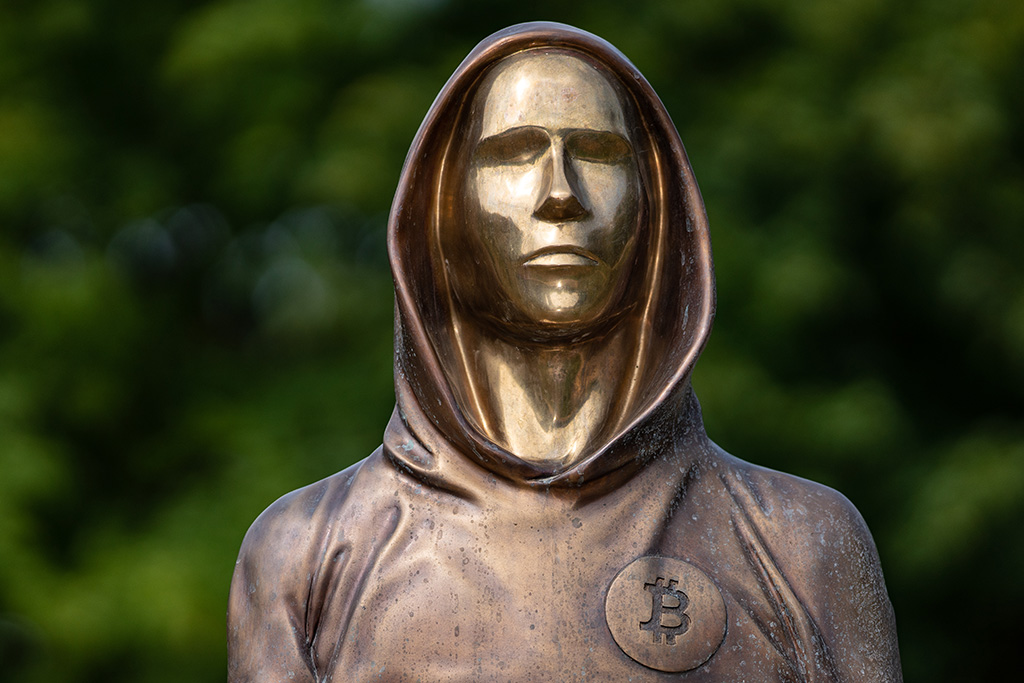
The crypto world never gets tired of chasing ghosts, and this week the oldest ghost of them all came roaring back to life. A fresh media wave built around a New York Times investigation has pointed at Adam Back—the British cryptographer, Hashcash inventor, and Blockstream CEO—as the strongest candidate yet for Satoshi Nakamoto. That is a powerful headline. It is also, at least for now, still an unproven theory. Back has denied being Satoshi, and none of the reporting publicly establishes definitive proof. (New York Post)
Why does the theory sound plausible? Because Back has always been one of the more credible names in the orbit of Bitcoin’s origin story. He created Hashcash in 1997, a proof-of-work concept later formalized in a paper cited directly by Satoshi in the Bitcoin whitepaper. He was active in cypherpunk circles, steeped in privacy technology, and technically capable of building something like Bitcoin long before the world had ever heard the name Satoshi Nakamoto. That background makes him a serious suspect in the eyes of many observers. (Hashcash)
The latest case reportedly leans on linguistic analysis, shared technical vocabulary, punctuation and hyphenation habits, timing overlaps, and the broader fact that Back was moving in exactly the right circles at exactly the right time. In other words, the argument isn’t crazy. But it is still circumstantial. The reporting itself, as echoed by multiple outlets, stops short of presenting the kind of evidence that would settle the matter beyond argument. There has been no public cryptographic signature from early Satoshi-era keys, no definitive documentary admission, and no movement of the dormant coins widely associated with Bitcoin’s founder. (New York Post)
That distinction matters. In today’s media environment, a claim can go from “interesting lead” to “solved mystery” in a matter of hours. A theory becomes a headline, the headline becomes social-media consensus, and suddenly speculation starts wearing the clothes of fact. That is how fake-news dynamics work in the digital age—not always through outright fabrication, but through the inflation of possibility into certainty. On this story, certainty simply does not exist yet. (New York Post)
Back, for his part, has been clear. He has publicly denied being Satoshi and has argued that the mystery itself may actually help Bitcoin. There is a certain logic to that view. Bitcoin’s power has always rested partly in the absence of a living founder who can be subpoenaed, manipulated, celebrated, canceled, or blamed. The less Bitcoin depends on one flesh-and-blood messiah, the more it behaves like a genuine monetary protocol and the less it resembles a founder cult. (New York Post)
That is what makes this latest frenzy so revealing. Investors, journalists, and Bitcoin believers still want an origin myth they can pin to a face. But Bitcoin may have outgrown that need. Whether Satoshi was Adam Back, Hal Finney, Nick Szabo, a small team, or someone the public has barely considered, the network has already escaped its creator. The protocol runs. The market trades. The miners mine. The institutions accumulate. The legend matters, but the system matters more. (The Guardian)
For Invest Offshore readers, the deeper lesson is not merely about Bitcoin history. It is about information risk. In a financial world increasingly driven by narrative, headlines can move faster than proof. That is dangerous. Serious investors should train themselves to separate evidence from atmosphere, allegation from verification, and stylometric intrigue from hard confirmation. Adam Back may indeed be one of the best Satoshi candidates ever put forward. But “best candidate” is not the same thing as “case closed.” (The Times)
So where does that leave us? Right where we were before the latest splashy investigation: with a compelling suspect, an unsolved mystery, and a denial that cannot simply be waved away because the internet prefers drama to uncertainty. Until someone produces undeniable proof, the claim that Adam Back is Satoshi Nakamoto remains exactly that—a claim. Not a verdict. Not a fact. And certainly not the final word. (New York Post)
Leave a Reply