
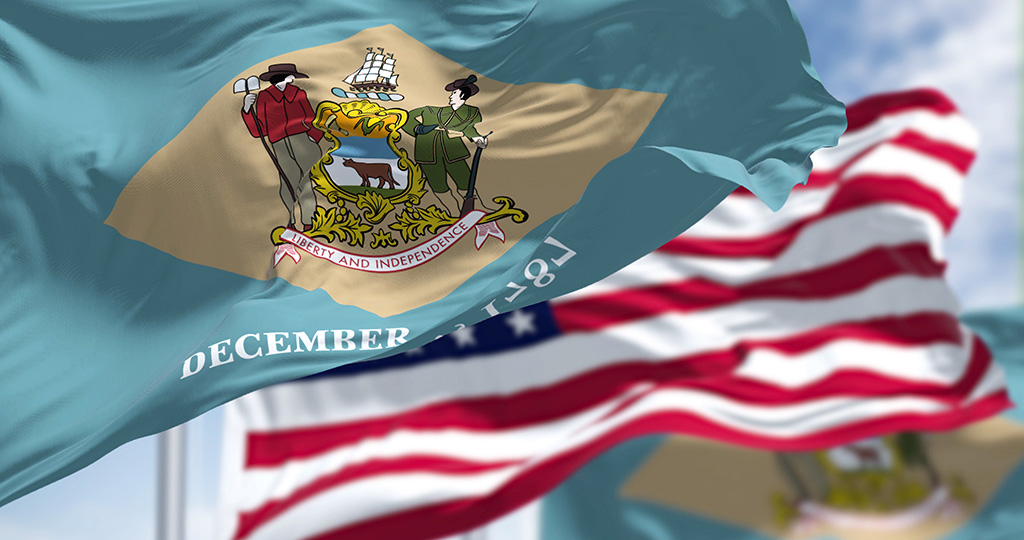
When Larry Page, co-founder of Google and a principal force behind Alphabet, quietly shifts his corporate base to Delaware, it sends a clear signal. For founders, boards, and global investors alike, Delaware remains the safest jurisdiction in America to run a large enterprise with peace of mind.
Delaware’s appeal has nothing to do with size. With a population just over one million, it is one of the smallest U.S. states. Yet it is home to more than 60% of Fortune 500 companies, including Amazon, Apple, Netflix, Meta, Comcast, Morgan Stanley, Bank of America, Goldman Sachs, and Ford. More than 90% of U.S. companies that went public in 2021 were incorporated there.
That concentration is no accident.
The Three Pillars: Convenience, Flexibility, Predictability

As corporate adviser Roy Gilberg explained to CNBC, Delaware’s advantage rests on three pillars: convenience, flexibility, and predictability.
Delaware’s corporate statutes are streamlined and founder-friendly. Incorporation is fast, administrative burdens are light, and corporate structures can be tailored to suit everything from early-stage startups to multinational giants. For executives running complex global operations, this simplicity matters.
But the true crown jewel is Delaware’s legal system.
A Court System Built for Business
Delaware operates what is effectively a separate judicial system for corporate law: the renowned Court of Chancery. Unlike general courts, it focuses almost exclusively on business disputes—mergers, acquisitions, shareholder rights, fiduciary duties, and governance conflicts. Judges are specialists, not juries, which leads to faster decisions and far less uncertainty.
Even more important is Delaware’s vast body of corporate case law. Decades of precedent give lawyers, boards, and investors a strong sense of how disputes are likely to be resolved before they ever reach a courtroom. In a world where regulatory ambiguity can destroy enterprise value overnight, this predictability is priceless.
The 1986 Ruling That Shaped Corporate America
Delaware’s influence on U.S. corporate governance was cemented in 1986, when the state Supreme Court ruled that once a board decides to sell a company or enter a change-of-control transaction, its primary duty is to maximize value for shareholders. Defensive actions designed mainly to protect management—rather than secure the best price—could constitute a breach of fiduciary duty.
That principle became a cornerstone of modern U.S. mergers and acquisitions law and remains the standard by which board behavior is judged today. For shareholders, it offers protection. For acquirers and executives, it offers clarity.
Why This Matters Now
Larry Page’s move comes at a time when regulatory risk, political volatility, and aggressive taxation are pushing founders and investors to rethink where—and how—they structure their businesses. Delaware offers something increasingly rare: legal certainty in an uncertain world.
For global entrepreneurs, multinational boards, and offshore-minded investors, the lesson is clear. While headlines focus on flashy tax havens and exotic jurisdictions, America’s most powerful corporate sanctuary remains a quiet, disciplined, and deeply tested state on the U.S. East Coast.
At Invest Offshore, we view Delaware not as a relic of old-school capitalism, but as a living example of why rule of law, predictability, and institutional memory still matter. As Larry Page’s decision underscores, when the stakes are high, serious business still chooses Delaware.
Leave a Reply