
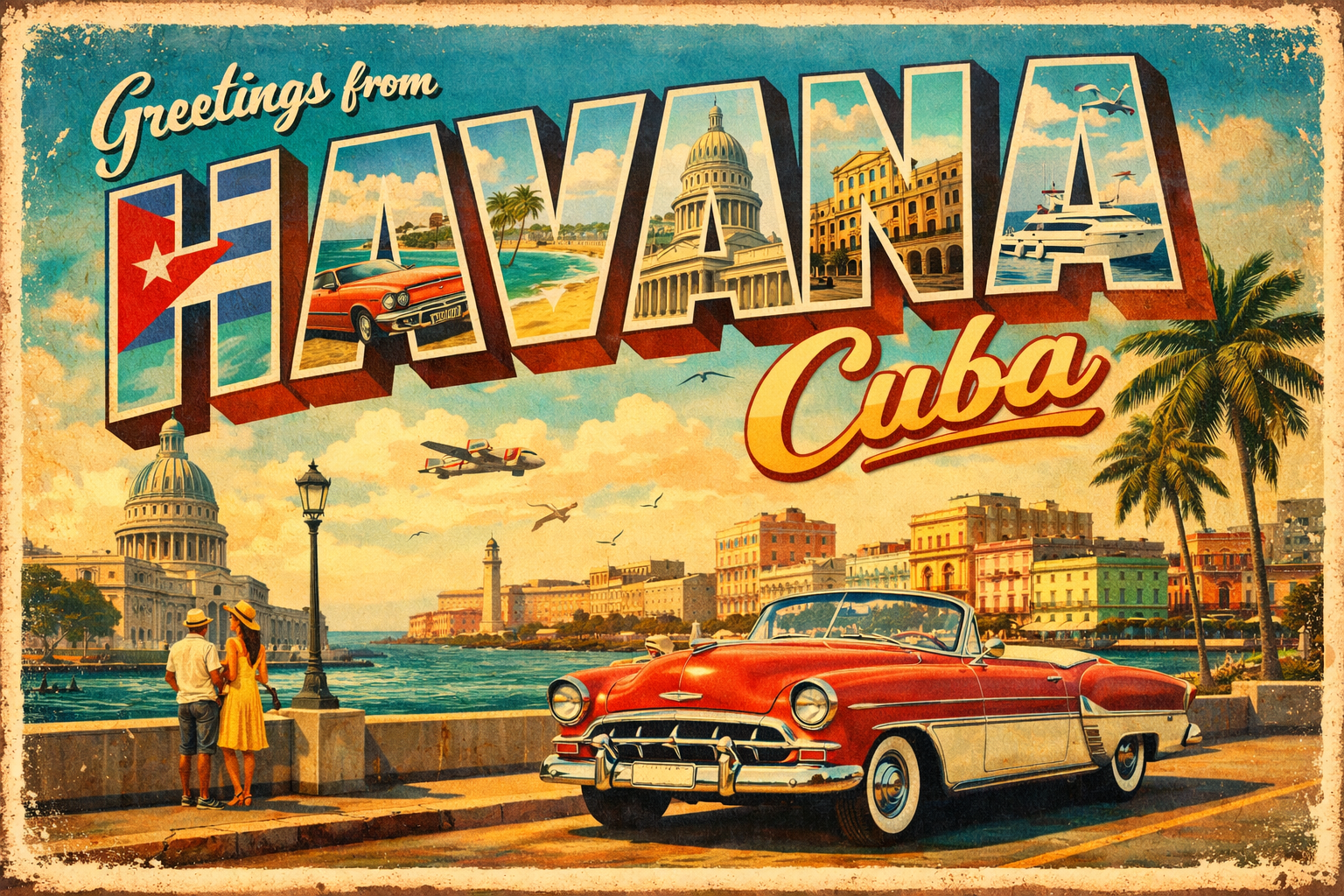
Every serious investor knows the pattern: the biggest real-estate windfalls don’t come from buying what’s already “hot.” They come from buying what’s obviously valuable—but politically, legally, or financially trapped.
That’s the story of Cuba.
For decades, the island’s luxury property potential has been frozen in time: world-class beaches, a globally recognized cultural brand, a postcard coastline, and one of the most architecturally distinctive capital cities in the hemisphere—yet a real estate market that can’t fully price itself because the rules of ownership, capital, and development have never been allowed to behave like a normal market.
If the day comes when Cuba transitions away from communist governance toward a market-based system with secure property rights, transparent title, and open foreign investment frameworks, the luxury real-estate opportunity could be enormous. Not “another Caribbean play.” Something closer to a once-in-a-generation repricing event.
This is speculative—by definition. But it’s exactly the kind of speculation that helps investors prepare early, understand the vectors, and be ready if the window opens.
Why Cuba Has “Luxury DNA” Built In
Some destinations can manufacture luxury with brand partnerships and glossy marketing. Cuba doesn’t need to.
Scarcity you can’t recreate
Cuba has a rare combination: limited high-quality coastal frontage and a globally iconic urban experience. When you can offer both in one destination—beach and culture—you create an ecosystem where high-end hospitality, branded residences, marinas, and private membership concepts can all coexist.
Geography that changes the math
The island sits at a strategic crossroads of the Caribbean. A post-transition Cuba would immediately become a “short-haul paradise” for multiple feeder markets—especially once airline routes, cruise itineraries, and private aviation channels can fully scale.
A capital city with real architectural gravity
Havana is not a generic resort town. It has centuries of layered architecture, grand boulevards, oceanfront promenades, and neighborhoods that—under restoration and modern infrastructure—could support trophy apartments, boutique hotels, private clubs, and luxury retail.
In real estate, narrative matters. Havana has it.
The Repricing Trigger: Property Rights + Capital + Confidence
Luxury real estate doesn’t explode because “people like beaches.” It explodes when three conditions snap into place:
- Clear, enforceable property rights (title, zoning, courts that function predictably)
- Capital mobility (buyers can buy, developers can finance, owners can exit)
- Confidence (brands, lenders, and high-net-worth buyers believe the rules will hold)
A post-communist transition that credibly improves those three pillars could shift Cuba from “romantic curiosity” to “institutional-grade opportunity.”
And once the world believes the rules are real, the first wave isn’t tourists—it’s developers, hotel flags, and diaspora capital.
Where the Luxury Market Could Form First
If Cuba ever opens fully, luxury won’t spread evenly across the island. It will concentrate—fast—in the areas that already have brand gravity, lifestyle demand, and “storybook” visuals.
1) Havana’s heritage core and “trophy neighborhoods”
Expect early attention on:
- Old Havana for boutique restoration plays (hotel conversions, premium rentals, cultural retail)
- Vedado for larger residential stock and redevelopment potential
- Miramar for embassy-era mansions, larger plots, and luxury compound potential
- The waterfront experience around the Malecón—because oceanfront walkability plus history is a luxury recipe that rarely fails
In a transition scenario, the “Paris effect” becomes possible: buyers paying for architecture, story, and lifestyle—not just square footage.
2) Established beach corridors
Beach luxury would scale quickly where the product is already known:
- Varadero as the immediate, recognizable resort market (prime for upgrades, branded residences, high-end all-inclusive reinvention)
Beyond that, you’d likely see new emphasis on marina-linked and low-density beachfront concepts that appeal to higher-spend travelers: privacy, wellness, yachting access, and bespoke service.
3) Boutique cultural destinations
Places with “high charm per square mile” can become luxury magnets because they attract the kind of traveler who pays for experience:
- Trinidad is the archetype: historic beauty, walkability, and a setting that lends itself to ultra-boutique hospitality
The Demand Engines That Could Hit Like a Wave
The diaspora factor
When political transitions happen, diaspora capital often returns first—emotionally motivated, ready to rebuild, willing to pay premiums for the “right” property. That initial wave can reset comps quickly.
Tourism rebound + luxury diversification
Cuba already has global tourism recognition. The shift would be composition: more high-spend tourism, more extended-stay visitors, more second-home demand, more destination weddings, more premium culinary and cultural tourism—each one supporting luxury yields.
Brand invasion: hotels first, residences second
In emerging luxury markets, the sequence is predictable:
- Global hospitality flags arrive (or expand)
- Branded residences follow
- Luxury retail and private clubs cluster around them
Once a few recognizable brands plant flags, the market gets “permission” to go upscale.
Proximity to U.S. demand (if/when allowed)
Miami isn’t just geographically close—it’s a cultural and financial node with deep Caribbean ties. If restrictions ever loosen significantly, U.S.-adjacent demand could become one of the most powerful accelerants on the board.
The “Cuba Premium”: Why Early Luxury Could Trade at Eye-Watering Prices

If Cuba opens credibly, the most valuable luxury assets may not be “new builds.” They’ll be irreplaceables:
- oceanfront heritage buildings with restoration potential
- prime-position condos with unobstructed water views
- marina-adjacent land that enables yacht lifestyle
- walkable historic cores that can’t be replicated
- iconic mansions suitable for private clubs, consulates, or boutique hotels
In other words: scarcity assets. The kind that get bid up because there are only a few—and the world suddenly wants them.
The Hard Truth: The Risks Are Real (and Non-Negotiable)
A sober investor has to say the quiet parts out loud. A post-transition Cuba could be lucrative, but it would also be complex.
Title and restitution risk
In regime-change scenarios, property claims can become the central battleground: pre-revolution owners, state entities, current occupants, and new investors can all collide. Title insurance, claim resolution frameworks, and court legitimacy matter more here than in almost any other property thesis.
Regulatory whiplash
Early reforms can be messy: changing tax rules, changing zoning, changing foreign ownership limits, changing residency rules. That uncertainty can create opportunity—but it also punishes investors who treat “opening” like a guarantee.
Infrastructure constraints
Luxury requires basics: reliable power, water, internet, transport, medical services, and security. Transition capital tends to flow toward these, but the ramp can take time.
Sanctions and compliance
Depending on your nationality and structure, sanctions and restrictions could remain a critical constraint even in a reforming environment. Anyone considering future participation must treat compliance as foundational—not optional.
A Practical “If It Opens” Investor Playbook
You don’t have to gamble today to prepare intelligently. Here’s how serious investors position for optionality:
- Track legal reform signals: property law, foreign ownership rules, banking reform, capital controls
- Study the “first luxury nodes”: historic Havana zones, known resort corridors, marina and golf development plans
- Map comparable transitions in the Caribbean: what happened to pricing and yields in Dominican Republic-style growth arcs, or redevelopment-driven markets like Panama City, or lifestyle rebrands like Puerto Rico
- Build relationships early: legal, hospitality, construction, and on-island operational expertise
- Prioritize structures that can survive volatility: phased development, conservative leverage, exit flexibility
- Decide your lane: trophy assets, boutique hospitality, luxury rentals, land banking, or redevelopment
The opportunity—if it comes—will reward prepared capital, not rushed capital.
The Big Picture: Cuba Could Become the Crown Jewel of Caribbean Luxury
In a functioning market system, Cuba has the raw ingredients for a luxury renaissance:
- a globally iconic cultural brand
- unmatched architectural character
- premium beaches and coastline scarcity
- proximity to major demand hubs
- a powerful emotional pull for diaspora and travelers alike
If credible reforms ever lock in property rights and open capital channels, Cuba’s luxury real-estate market could reprice rapidly—from “trapped value” to “trophy value.”
That’s the speculative thesis.
And it’s exactly the kind of thesis offshore-minded investors track—not because it’s guaranteed, but because when the world changes quickly, being early matters.
Invest Offshore continues to track real-asset opportunities globally, including investment opportunities in West Africa seeking investors for the Copperbelt Region.
Leave a Reply