
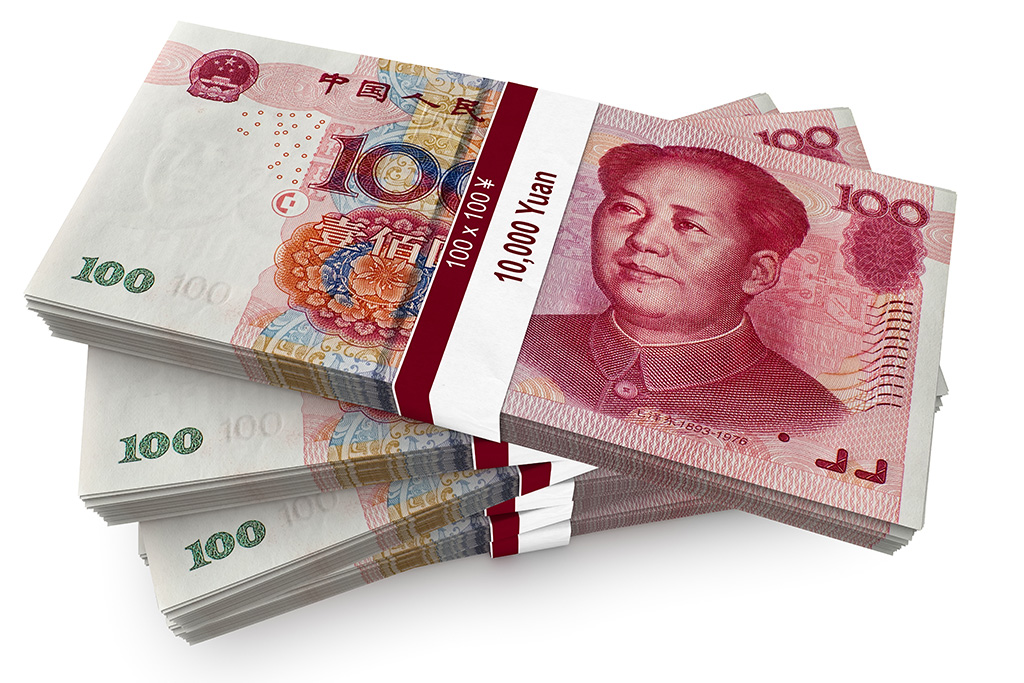
China is quietly executing the largest monetary expansion in its modern history—outside of the COVID emergency years—and the numbers are staggering.
China’s M2 money supply has gone vertical, now sitting north of USD $48 trillion in equivalent terms. To put that into perspective, this is more than double the total U.S. M2 money supply.
This is not a rounding error. It is not a temporary stimulus. It is a systemic response to deep structural problems inside the Chinese economy.
And history tells us exactly where this ends.
When China Prints, the World Feels It
China has a long and well-documented playbook when domestic growth stalls:
- Print aggressively
- Flood the banking system with liquidity
- Suppress yields and prop up credit
- Convert paper into real-world assets
The critical mistake Western analysts often make is assuming this liquidity stays trapped in domestic equities or local property markets.
It doesn’t.
It leaks—and it leaks into hard assets.
Every major Chinese monetary expansion over the past two decades has been followed by a surge in:
- Commodities
- Industrial metals
- Energy assets
- Precious metals
This cycle is no different—except the scale is unprecedented.
Why China Can’t Stop Printing
China is facing a convergence of pressures:
- A collapsed property sector still absorbing losses
- Local government debt quietly rolling over at scale
- Weak consumer confidence
- Slowing export demand
- Capital flight pressure despite strict controls
The solution Beijing has chosen is not reform—it is liquidity.
M2 growth is the easiest lever to pull, especially in a system where:
- State banks dominate credit allocation
- Capital controls mask stress
- Official GDP figures lag reality
But expanding money supply without corresponding productivity growth always has consequences.
Fake Paper vs. Real Resources
Here is the part that matters for global investors.
China understands something the West pretends not to:
Paper currency is a claim.
Physical resources are control.
China is not printing money to speculate on tech stocks.
It is printing money to secure supply.
Gold.
Silver.
Copper.
Energy inputs.
Strategic minerals.
China is effectively converting inflated domestic currency into globally recognized stores of value and industrial necessity.
This is not accidental. It is strategic.
Gold and Silver: The Silent Accumulators
While Western investors debate interest rate cuts and ETF flows, China continues to:
- Accumulate gold through official and unofficial channels
- Encourage domestic bullion demand
- Expand Shanghai pricing influence
- Reduce reliance on dollar-settled trade where possible
Silver, often overlooked, plays a dual role:
- Monetary metal
- Industrial input critical to electrification, solar, and technology
When China injects liquidity at this scale, precious metals are not an afterthought—they are a hedge against the very system China is inflating.
The Global Spillover Effect
This liquidity does not respect borders.
As China prints:
- Commodity prices rise
- Emerging market assets reprice
- Physical supply tightens
- Paper markets lag reality
The West experiences this as “inflation shocks” or “unexpected commodity rallies.”
China experiences it as asset conversion.
This Is Not a Short-Term Trade
China’s M2 explosion is not a one-quarter anomaly. It reflects a structural choice:
Inflate domestically
Accumulate externally
Secure long-term resource control
This is how empires hedge decline.
And it is why hard assets remain the ultimate arbiter of monetary truth.
What Smart Capital Is Watching
Experienced investors are not asking if this liquidity moves into commodities.
They are asking:
- Which assets are still undervalued?
- Where physical supply meets geopolitical necessity?
- Which jurisdictions actually control production, not paper claims?
Gold and silver sit at the center of that equation.
So do emerging resource regions that remain off the radar of mainstream capital.
The Bottom Line
China is printing at historic levels—not to save markets, but to secure reality.
Fake paper money is being exchanged for real things.
Those who understand this cycle position themselves early.
Those who ignore it pay higher prices later.
Invest Offshore continues to identify and structure investment opportunities tied to real assets and strategic resources, including select projects across West Africa and the Copperbelt Region seeking qualified investors.
Paper is temporary.
Resources are permanent.
Leave a Reply