
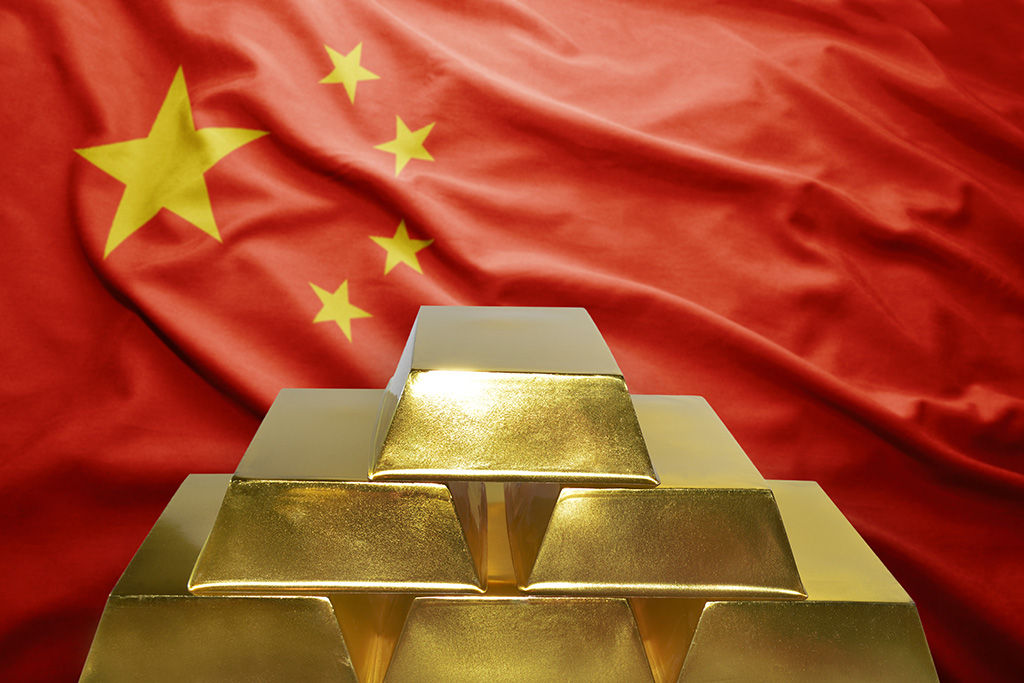
China is producing less gold, importing record quantities and restricting retail access to leveraged precious-metals trading. Together, these developments raise an important question: Is the world’s largest gold market undergoing a structural shift toward physical bullion that could reshape international gold flows and accelerate reserve diversification?
China’s gold market is sending three significant signals simultaneously. One of its largest mining companies has substantially reduced its production target, major banks are withdrawing from retail precious-metals trading, and Chinese investors and monetary authorities continue accumulating gold.
The convergence is striking. Although there is no conclusive evidence of a coordinated strategy to deliberately restrict domestic mine production, the resulting market dynamics could increase China’s reliance on imported gold and influence the availability of bullion internationally.
Shandong Gold announces a major production cut

On September 24, Shandong Gold’s board approved a substantial revision to its 2026 production plan. The company lowered its mine-produced gold target from at least 49 metric tons to 36–38 metric tons, representing a reduction of approximately 22–26.5% against its original minimum target.
The company attributed the revision to safety inspections following accidents elsewhere in the mining industry and increased infrastructure construction at its domestic operations. Development projects in the Yantai mining district, including Jiaojia, Xincheng, Sanshandao and Linglong, have reduced the working areas available for immediate production.
Shandong Gold produced 48.89 tons in 2025. It now expects 2026 output to decline by approximately 11–13 tons year over year, potentially affecting revenue and earnings. The company intends to increase production at its overseas operations to partially offset the domestic shortfall.

China’s domestic gold production falls 14.62%
Shandong Gold’s difficulties are part of a broader industry contraction.
According to the China Gold Association, domestic raw-material gold production fell to 152.908 tons during the first half of 2026, a year-over-year decline of 14.62%. The association identified extensive mine-safety inspections and temporary operational suspensions as important contributing factors.
Meanwhile, China’s production of gold from imported raw materials increased 4.62% to 77.08 tons. This distinction matters: Chinese refining capacity can continue processing foreign material even when domestic mining output declines.
Domestic investment demand tells another part of the story. During the same six-month period, Chinese consumption of gold bars and coins increased 28.42% to 339.336 tons, while jewellery consumption contracted 33.88%.
The numbers reveal a shift in the composition of Chinese demand, away from traditional jewellery and toward bullion investment.
Chinese banks withdraw from leveraged gold trading
China’s banking industry is simultaneously reducing its exposure to retail precious-metals speculation.
Industrial and Commercial Bank of China (ICBC) announced that it would discontinue its agency services for individual precious-metals auction trading on the Shanghai Gold Exchange after July 24, 2026. The affected instruments included deferred gold and silver contracts such as Au(T+D) and Ag(T+D), as well as several spot products. ICBC cited precious-metals risk management and business requirements.
Other major lenders, including China Construction Bank and Bank of China, have also announced withdrawals. By late September, at least a dozen banks were reportedly preparing to end the relevant retail leveraged-trading services.
These changes do not constitute a nationwide prohibition on gold derivatives or paper gold. Exchange trading remains active, while banks are increasingly directing retail customers toward physical bullion, gold accumulation plans and precious-metals ETFs.
For investors, the distinction is fundamental. Leveraged contracts provide exposure to movements in gold prices without necessarily requiring outright ownership of bullion. Physical investment, by contrast, involves the acquisition and storage of the metal itself.
A shift from speculative trading toward physical accumulation could therefore change the composition of China’s gold demand, although the closures also affect spot-trading access and do not guarantee that former leveraged traders will purchase bullion.
The gold black hole: record imports

China’s import statistics provide the strongest evidence that international bullion is increasingly important to its domestic market.
World Gold Council data showed that China imported approximately 764 tons of gold in the first half of 2026, 138% more than in the equivalent period of 2025. By the end of August, customs data indicated that imports had surpassed 1,000 tons, exceeding the total for the whole of 2025.

The expression gold black hole describes a market that absorbs large volumes of internationally traded bullion. As demand rises faster than domestic mine supply, China has greater reason to source gold from international refiners, trading hubs and other producers.
Yet that description requires an important qualification. Imports alone do not establish that China is permanently removing metal from Western vaults. Gold moves through complex international supply chains, and some imports may originate from newly mined or recycled bullion rather than existing Western inventories.
Moreover, demand is not rising uniformly. World Gold Council figures show that Shanghai Gold Exchange withdrawals fell 27% year over year in August, demonstrating that high prices and market volatility can temporarily suppress physical buying.
What does this mean for the U.S. dollar?
China’s central bank is also accumulating bullion.
The People’s Bank of China reported adding approximately 20.2 tons in August, bringing its official holdings to 2,387 tons. Its reported gold reserves had increased for 22 consecutive months, according to the World Gold Council.
Gold provides central banks with a reserve asset that does not depend on the creditworthiness of a foreign government or commercial issuer. That characteristic makes it relevant to countries seeking diversification away from concentrated exposures to individual currencies and sovereign bonds.
However, greater Chinese gold ownership does not automatically diminish the dollar’s international role. Gold continues to be widely priced in dollars, and international currency dominance depends on financial-market liquidity, trade invoicing, settlement infrastructure and confidence in reserve assets.
The measurable development is China’s ongoing reserve diversification. Whether that eventually produces a substantial shift in international monetary arrangements remains an open question.
What international gold investors should watch
For investors, three indicators will help determine whether today’s developments represent a lasting structural change.
The first is the duration of China’s mine-production disruption. If safety improvements and infrastructure construction restore output, the current domestic supply shortage could prove temporary.
The second is the relationship between physical imports, bullion investment and ETF flows. Continued strong imports accompanied by rising bullion purchases would provide stronger evidence of sustained physical demand than import data alone.
The third is central-bank accumulation. Additional reported purchases would reinforce gold’s role in China’s reserve-diversification strategy, particularly if accompanied by observable changes in its other reserve holdings.
Conclusion: A changing international gold market
Shandong Gold’s reduced production target, declining domestic mine output and the withdrawal of major banks from retail leveraged trading are significant developments. Alongside record imports and continued central-bank buying, they illustrate how rapidly the structure of China’s gold market is evolving.
The possibility of a persistent Chinese demand center absorbing substantial quantities of internationally traded bullion deserves close attention. But the evidence currently supports a story of supply disruption, financial risk management and strong investment demand—not a demonstrated coordinated campaign to restrict gold production or dismantle the dollar-based financial system.
For Invest Offshore readers, the central question is whether the combination of lower domestic mine output and sustained physical investment will increase China’s dependence on international gold supplies. The answer could have important implications for global bullion flows, international refiners, mining companies and long-term portfolio diversification.
Invest Offshore will continue following Chinese mine production, international bullion flows and central-bank gold purchases as new data become available.
Leave a Reply