
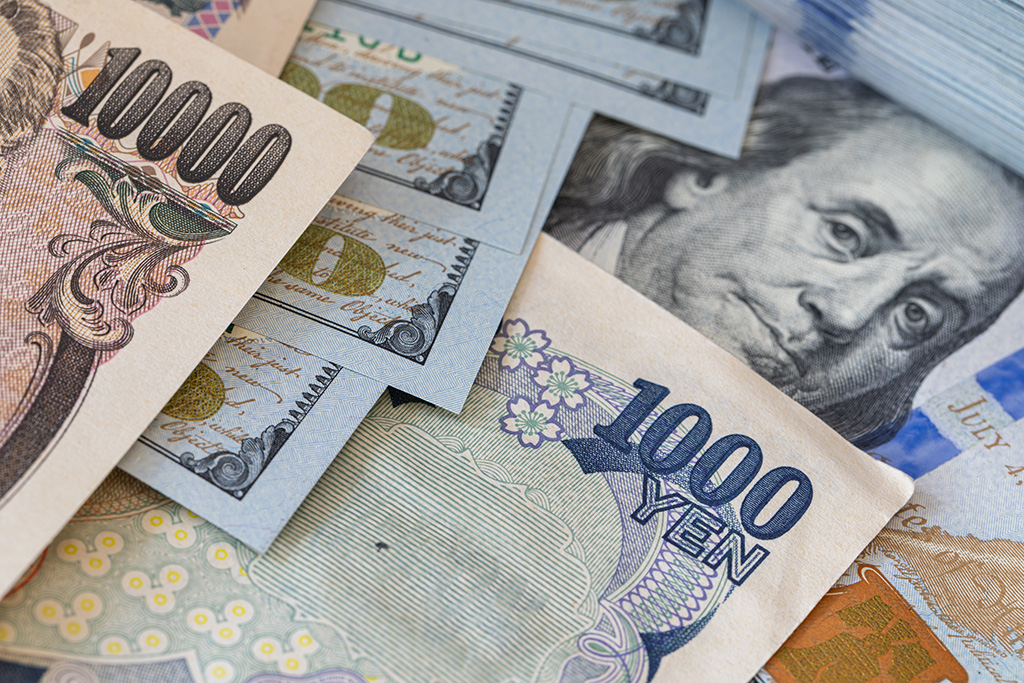
Washington and Tokyo have turned support for the yen into coordinated policy—and a little-known Federal Reserve facility may be the most important part of the story.
The world has just received an unusually direct message from two of its most powerful financial authorities: the collapse of the Japanese yen is no longer Japan’s problem alone.
Japan’s Ministry of Finance confirmed that it purchased yen on July 31 in coordination with the U.S. Treasury Department. Finance Minister Satsuki Katayama said the operation was intended to counter “excessive volatility and disorderly movements” and warned that Japan would not hesitate to conduct further joint intervention. Japan’s official statement removes any doubt that this was coordinated government action rather than another round of market speculation.
It was the first joint currency-market intervention by Japan and the United States since 2011—and the response was immediate.
USD/JPY fell from 163.73 last Thursday to approximately 156.45 in early Monday trading. That represents a 4.4% decline in the currency pair over three sessions and a powerful rebound for the yen.
For a major developed-market currency, that is an extraordinary move.
Trump Confirms Washington’s Role
President Donald Trump personally confirmed the intervention on Sunday.
“They have a weakening yen, and they wanted a little bit of help. And we’re always there for Japan.”
Trump described the operation as a signal of friendship that would also benefit the United States and the wider global economy. U.S. Treasury Secretary Scott Bessent subsequently confirmed Washington’s participation and said the United States would not hesitate to join another coordinated intervention if disorderly market conditions continued. Reuters reported that the announcement briefly pushed the yen as high as 155.20 per dollar—its strongest level since early May.
The political message is as significant as the market transaction.
Japan is no longer standing alone against speculative pressure. Currency traders must now consider the possibility that both Tokyo and Washington could appear on the other side of the market.
That changes the risk calculation behind one of the world’s most crowded macroeconomic trades.
The Opposite of 2011
The historical comparison deserves some clarification.
In 2011, Japan, the United States and other major economies intervened after the devastating earthquake and tsunami caused the yen to rise sharply. Those governments sold yen to weaken the currency and prevent its appreciation from further damaging the Japanese economy.
The latest operation moved in the opposite direction. Japan and the United States bought yen to strengthen it.
While this is the first coordinated Japanese-American currency action in 15 years, the last concerted yen-buying operation occurred in 1998 during the Asian financial crisis. The new intervention is therefore historically rare both because of the cooperation involved and because Washington actively helped defend the yen from depreciation.
Why the United States Stepped In
The immediate objective was to stop a disorderly currency move, but the American interest extends well beyond friendship.
An exceptionally weak yen makes Japanese exports cheaper in international markets. That can reduce the competitive effect of U.S. tariffs and make American products more expensive for Japanese consumers.
There is also a much larger bond-market issue.
Japan manages one of the world’s largest foreign-exchange reserve portfolios and is a major holder of U.S. Treasury securities. To finance conventional currency intervention, Japan can sell dollar-denominated reserve assets and use the proceeds to purchase yen.
Large Treasury sales, however, could put upward pressure on U.S. government borrowing costs—especially during a period when global bond markets are already sensitive to inflation, fiscal deficits and interest-rate uncertainty.
Washington therefore has a strong incentive to help Japan stabilize the yen without forcing Tokyo to liquidate substantial quantities of U.S. government debt.
This is where the Federal Reserve’s FIMA Repo Facility enters the story.
FIMA: Dollars Without Selling the Treasuries
Japan’s Finance Ministry announced that it plans to use the Federal Reserve’s Foreign and International Monetary Authorities Repo Facility in the future.
The FIMA facility allows approved foreign central banks and monetary authorities to temporarily exchange U.S. Treasury securities held at the Federal Reserve for dollars. The transaction is structured as a repurchase agreement: the foreign authority receives dollars now and agrees to repurchase its securities later.
In practical terms, Japan can borrow dollars against its Treasury holdings instead of selling those bonds outright.
The Federal Reserve describes FIMA as a backstop source of temporary dollar liquidity designed to reduce the need for foreign official institutions to sell Treasury securities into stressed markets. Introduced in 2020 and made permanent in 2021, the facility protects both global dollar funding and the orderly functioning of the U.S. government bond market.
That makes FIMA much more than an obscure central-bank program.
It gives Japan additional intervention firepower while helping shield the Treasury market from the consequences of that intervention.
A Warning to the Currency Market
The United States and Japan are not necessarily defending one precise exchange rate. Officials continue to frame their actions around excessive volatility and disorderly market behavior rather than a formal USD/JPY target.
Nevertheless, the intervention has created a psychological line in the market.
The area near 164 yen per dollar is no longer simply a technical price level. It is the region where Japan and the United States demonstrated that they were prepared to act together.
Traders who previously viewed shorting the yen as a one-way position must now account for three risks:
- Further Japanese intervention
- Additional U.S. participation
- Earlier interest-rate increases from the Bank of Japan
The September 2025 U.S.-Japan finance ministers’ agreement provided the policy foundation for this action. It stated that intervention could be appropriate when either depreciation or appreciation became excessively volatile or disorderly. The latest operation transformed that diplomatic language into market force. The U.S. Treasury published the agreement.
Intervention Buys Time—Not Fundamentals
Joint intervention can shock the market, force speculators to close positions and slow a currency decline. It cannot permanently reverse economic fundamentals on its own.
The yen remains affected by the interest-rate gap between Japan and the United States, energy-import costs, Japan’s fiscal outlook and global demand for dollars. If those pressures persist, markets may eventually test the authorities again.
The durability of the rebound will therefore depend on whether currency intervention is followed by monetary and economic changes—particularly additional tightening by the Bank of Japan.
But even if the yen resumes weakening, the environment has changed. Tokyo has demonstrated that it possesses political support, dollar liquidity options and access to coordinated intervention.
The Invest Offshore Perspective
For offshore investors, the significance reaches beyond USD/JPY.
The episode shows how currency reserves, U.S. Treasuries and central-bank liquidity facilities operate as one interconnected financial system. A falling yen can affect Japanese inflation, international trade, Treasury yields, global portfolio flows and the value of unhedged foreign investments.
The FIMA announcement is particularly revealing. Rather than forcing Japan to choose between defending its currency and retaining its Treasury portfolio, the Federal Reserve is providing a mechanism that may allow it to do both.
Japan asked for help. Washington responded. The yen moved 4.4% in three sessions.
The age of coordinated currency intervention has returned—and the world’s largest financial markets are more connected than ever.
This article is for informational purposes only and does not constitute investment advice.
Leave a Reply