
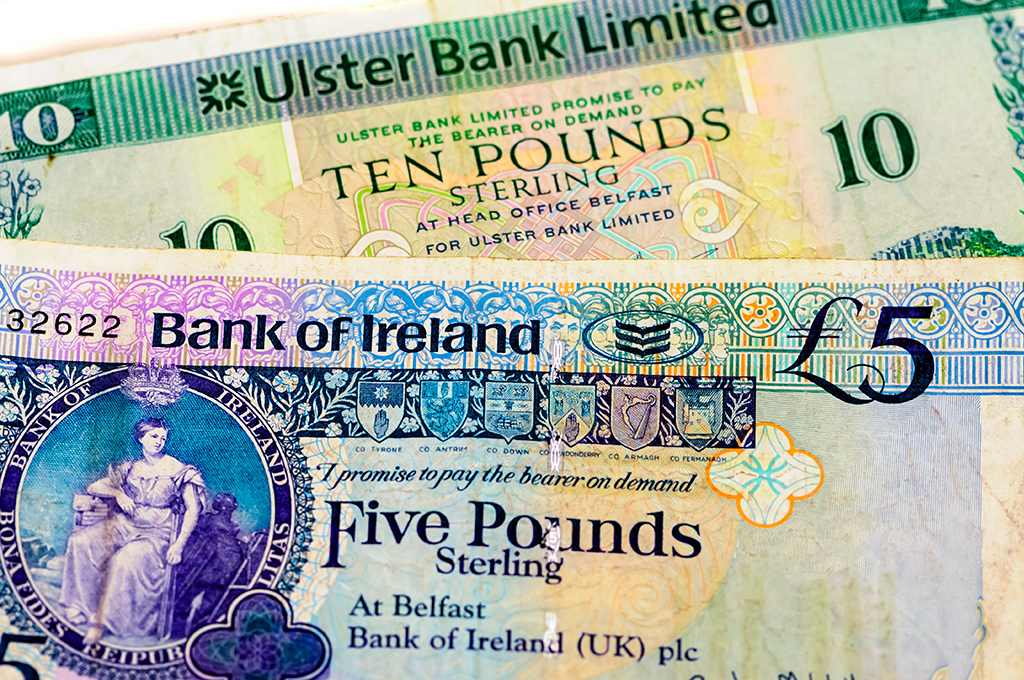
Europe’s banking establishment is moving on-chain — and Ireland just stepped into the room.
Bank of Ireland and AIB have joined Qivalis, the European banking consortium developing a fully regulated euro-denominated stablecoin. That may sound technical. It is not. It is strategic.
This is one of the clearest signs yet that the future of money is no longer being left to crypto exchanges, offshore issuers, or Silicon Valley payment networks. Europe’s major banks now understand the obvious: if value is going to move on blockchain rails, the euro must move there too.
Qivalis is not a fringe crypto experiment. It is an Amsterdam-based initiative backed by 37 European banks across 15 countries, with a planned launch in the second half of 2026, subject to regulatory approval. The project is designed to issue a euro stablecoin under Europe’s regulatory framework, with the ambition of making digital payments and settlement faster, safer, and more efficient.
For Ireland, the entrance of Bank of Ireland and AIB matters. These are not speculative fintech names chasing headlines. They are core banking institutions, deeply embedded in the Irish economy, now joining a continental effort to build regulated digital money infrastructure.
Why This Matters
The global stablecoin market is overwhelmingly dominated by U.S. dollar tokens. USDT and USDC have become the default settlement instruments across digital asset markets, cross-border crypto trading, and increasingly, global payment experimentation.
The euro, despite being one of the world’s most important currencies, has barely registered in stablecoin circulation. That is a strategic problem for Europe.
If tokenized markets grow, and if stablecoins become the working capital of digital finance, then whoever controls the dominant settlement currency controls the rails. Right now, those rails are dollar-heavy. Europe is trying to change that before the next stage of finance becomes permanently dollarized.
Qivalis is Europe’s answer: a bank-backed, euro-native, regulated stablecoin designed to support on-chain payments, settlement, and eventually tokenized financial assets.
From Crypto Speculation to Banking Infrastructure
The important shift here is psychological.
For years, many banks treated blockchain as something to monitor, contain, or cautiously experiment with. That era is ending. The largest banks now see that blockchain is not merely a speculative asset class. It is a settlement technology.
Stablecoins are not just “crypto coins.” At scale, they are programmable payment instruments. They can move value 24/7, settle quickly, reduce intermediaries, and support new forms of digital commerce.
That is why Bank of Ireland and AIB joining Qivalis should be read as a banking infrastructure story, not a crypto story.
This is about who controls the future of payments.
Europe Wants Its Own Digital Monetary Lane
The European Central Bank continues to work on the digital euro, but Qivalis represents something different. It is a commercial bank-led initiative, designed to function inside the regulated financial system while using blockchain technology for settlement.
That distinction matters. A central bank digital euro would be public money. A bank-backed euro stablecoin would be private-sector digital money operating under regulation. The two may eventually coexist, serving different roles.
For businesses, investors, asset managers, fintech platforms, and cross-border payment users, the attraction is obvious. A trusted euro stablecoin could provide euro-denominated digital liquidity without forcing users into dollar stablecoins.
That has implications for foreign exchange, trade settlement, tokenized bonds, tokenized funds, real estate transactions, and institutional digital asset markets.
Ireland’s Signal
Ireland has long positioned itself as a bridge between Europe, North America, technology, banking, and global capital. The country is already a serious hub for international funds, fintech, payments, and corporate treasury operations.
With Bank of Ireland and AIB joining the Qivalis consortium, Ireland is now linked directly into one of the most important European digital money projects underway.
This is not about replacing the euro. It is about upgrading how the euro moves.
The real question is not whether stablecoins will matter. They already do. The question is whether Europe will allow dollar-based private money to dominate the next generation of financial settlement — or whether it will build credible euro rails of its own.
Qivalis is the answer Europe should have started building years ago. But late is better than absent.
The Invest Offshore View
For offshore investors, private banks, trust platforms, corporate treasurers, and international dealmakers, this development should be watched closely.
A regulated euro stablecoin backed by major European banks could become a powerful tool for cross-border settlement, treasury management, tokenized assets, and institutional digital finance. It also points toward a world where offshore structuring, custody, escrow, and settlement increasingly converge with regulated blockchain rails.
The old system moved money through banks.
The new system may move money through bank-backed tokens.
That is not the end of banking. It may be the beginning of banking’s next architecture.
Bank of Ireland and AIB just joined the build.
Source notes: Bank of Ireland confirmed it joined Qivalis, describing the project as a fully regulated euro-denominated stablecoin initiative and noting that euro stablecoins currently represent only 0.2% of global stablecoin circulation. (Bank of Ireland Group Website) AIB’s release says Qivalis brings together 37 leading European banks across 15 countries, is targeting a second-half 2026 launch subject to approval, and will operate under the EU’s Markets in Crypto-Assets framework. ING lists the new members, including AIB and Bank of Ireland, and identifies the founding banks. (ING.com) Reuters frames the move as Europe’s attempt to counter U.S. dominance in digital payments and notes current dollar-stablecoin dominance by Tether and Circle. (reuters.com)
Leave a Reply