
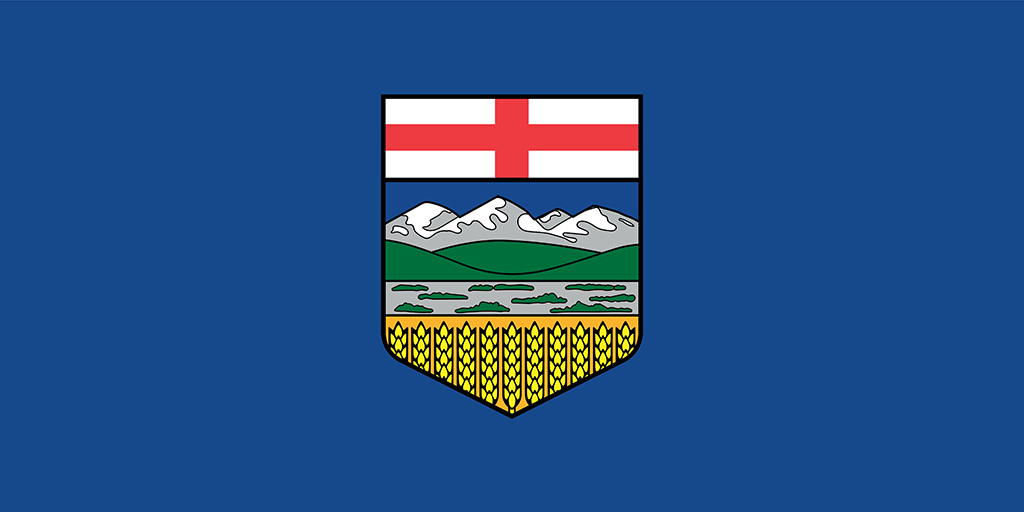
Alberta has placed itself at the center of Canada’s most serious national unity debate in decades.
Premier Danielle Smith has announced that Albertans will vote on October 19, 2026, on a referendum question asking whether the province should remain in Canada or whether the Government of Alberta should begin the constitutional steps required for a future binding referendum on separation. The vote will not itself trigger independence, but it will test whether Alberta’s long-running frustration with Ottawa has moved from political grievance into constitutional action.
Reuters described the proposed vote as non-binding, but politically consequential, especially because it would mark the first time a Canadian province outside Quebec has put such a question to voters. (Reuters)
The question is being added to a broader slate of nine referendum items already planned for October 19, covering immigration policy, provincial powers, and constitutional reform.
Alberta’s official referendum site frames the 2026 vote as a province-wide exercise on immigration and “strengthening the province’s constitutional position within a united Canada.” (Alberta Referendum 2026)
A Referendum on a Referendum
The wording is politically careful. Rather than asking Albertans directly whether Alberta should leave Canada, the question asks whether the province should begin the legal process necessary to hold a future binding vote.
That distinction matters.
A direct separatist petition was recently halted by an Alberta court after First Nations challenged the process, arguing that any move toward separation would affect treaty rights and required consultation.
Reuters reported that Justice Shaina Leonard ruled the referendum petition process should have triggered consultation with Indigenous peoples whose rights could be affected by Alberta’s separation from Canada. (Reuters)
Premier Smith has criticized that ruling and pledged to appeal, but her newly announced referendum route appears designed to sidestep the immediate legal obstacle. In other words, Alberta is not voting on separation yet. It is voting on whether to begin the constitutional path toward a possible future vote.
That may sound procedural, but markets should not dismiss it.
Smith Says She Will Vote Canada
The most interesting part of the announcement is that Premier Smith says she will personally vote for Alberta to remain in Canada.
She has argued that Alberta’s position is strongest as a “sovereign Alberta within a united Canada,” and she has credited improved relations with Ottawa since the departure of Justin Trudeau and the arrival of Prime Minister Mark Carney.
Global News reported that Smith acknowledged the relationship with Ottawa has improved under Carney, while also asking separatists to be patient and to keep fighting for change within Canada. (Global News)
This places Smith in a delicate political position. She is trying to satisfy the demand for democratic expression among independence-minded Albertans while still presenting herself as a Canadian federalist. Independence supporters, however, see the move differently. Some view the new question as a delay tactic — a “referendum on a referendum” — rather than a clean vote on Alberta independence. Reuters reported that Stay Free Alberta criticized the move as ignoring those who wanted a direct vote on independence. (Reuters)
Why Investors Should Care

For Invest Offshore readers, the Alberta referendum is not merely domestic Canadian politics. It is a political risk event involving one of the world’s most important energy-producing jurisdictions.
Alberta is Canada’s oil and gas powerhouse. Its disputes with Ottawa have long revolved around federal environmental policy, pipeline access, carbon regulation, equalization, immigration pressures, and provincial autonomy. A referendum campaign will bring all of these issues into a single political arena.
That creates several implications:
First, Canadian political risk is rising. Investors often treat Canada as a stable G7 jurisdiction, but constitutional uncertainty introduces a new layer of complexity.
Second, energy policy may become more volatile. Alberta’s resource sector will likely be central to the campaign, especially if voters are asked whether Ottawa has overreached into provincial jurisdiction.
Third, capital allocation decisions may be delayed. Large infrastructure, pipeline, LNG, refining, petrochemical, and power projects depend on long-term regulatory certainty. A national unity debate can slow decision-making.
Fourth, the Canadian dollar and bond market may begin pricing regional tension if the referendum becomes a broader debate about fiscal federalism, equalization, and resource sovereignty.
The Indigenous Treaty Question
The constitutional path is not simple.
Any future binding referendum would have to confront Canada’s constitutional framework, federal legislation, and Indigenous treaty rights. The court ruling that halted the direct separatist petition highlighted the treaty issue, with First Nations arguing that their agreements are with Canada, not merely with the Province of Alberta. (Reuters)
This means that even if Alberta voters eventually endorsed separation, the process would not be unilateral. It would require negotiations, legal clarity, and likely years of constitutional conflict.
That is why the October 2026 vote should be understood less as an independence vote and more as a pressure valve. It gives Albertans a formal way to express frustration, while giving Smith political room to argue for stronger provincial powers inside Confederation.
Alberta’s Message to Ottawa
The message from Alberta is clear: the province wants more control.
Whether on immigration, resource development, taxation, judicial appointments, or federal spending power, Alberta’s referendum slate reflects a broader demand for decentralization. The separation question is the most dramatic item, but the deeper issue is the balance of power between Ottawa and the provinces.
Canada may now be entering a new era of constitutional bargaining. Alberta is not Quebec, and Western alienation has a different history, but the political energy is real. The question is whether Ottawa can offer enough flexibility to keep Alberta’s sovereignty movement inside the Canadian tent.
Conclusion: Not Separation Yet — But a Signal
October 19, 2026 will not decide whether Alberta leaves Canada. But it may decide whether Alberta formally begins the process of asking that question.
That alone is significant.
For global investors, Alberta remains one of the most resource-rich jurisdictions in the Western world. But the referendum adds a new dimension: political sovereignty risk in a country usually considered safe, predictable, and institutionally boring.
Boring is no longer the word.
Alberta is forcing Canada to confront a hard question: can a modern federation adapt to the demands of its most resource-rich province, or will constitutional frustration continue to build?
For now, Premier Smith says she will vote Canada. But by putting the question on the ballot, she has made Alberta’s future — and Canada’s unity — a live market issue.
Invest Offshore will continue monitoring the October 2026 referendum, its impact on Canadian political risk, and the implications for energy, infrastructure, currency, and offshore capital strategy.
Leave a Reply