
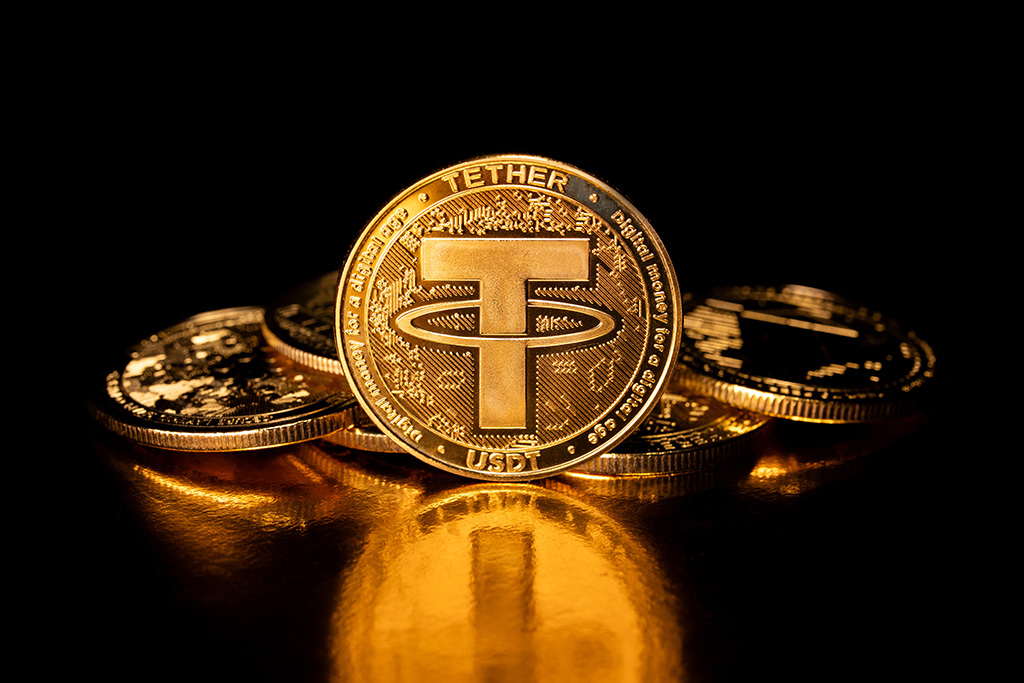
If Bitcoin is digital gold, then USDT Tether is digital cash with a passport.
That is the simplest way to understand why Tether matters. In the world of offshore finance, cross-border trading, crypto markets, and fast-moving private transactions, USDT has become one of the most important instruments in circulation. It is not glamorous. It is not ideological. It is not trying to reinvent money with some utopian manifesto. It does something far more useful: it gives people access to a dollar-linked unit that moves across blockchain rails at internet speed.
USDT is a stablecoin, a digital token designed to track the value of the U.S. dollar. One USDT is intended to equal one U.S. dollar. That promise of stability is what made it so powerful. Traders use it as a safe harbor between positions. Businesses use it to move value internationally. OTC desks use it for settlement. People in banking-fragile regions use it as a digital lifeboat. In many parts of the world, it has become the practical dollar of the street, the screen, and the deal table.
Tether launched in 2014, long before stablecoins became fashionable dinner-party vocabulary. It saw the need early. Crypto markets were volatile, banks were slow, and moving in and out of fiat was a nuisance. Tether stepped into that gap and built a product that gave users the speed of crypto with the accounting familiarity of dollars. That combination changed the game.
Today, USDT exists across multiple blockchain networks, including major rails such as Ethereum, Tron, and Solana. That is where many beginners get their first lesson in digital finance: the token is only half the story — the network is the other half. USDT may be USDT, but sending it on the wrong chain can create delays, incompatibility, or outright loss if the receiving side does not support that route. In this market, one wrong click can turn a smooth transaction into an expensive education.
Why has USDT become so dominant? Because global finance has a speed problem. Traditional wires can be slow, expensive, and hostage to bank hours, compliance delays, intermediary institutions, and geography. USDT gave the market an alternative. It can move 24/7. It settles quickly. It is widely recognized. And unlike volatile cryptocurrencies, it is designed to hold a familiar reference point: the U.S. dollar.
That makes it especially attractive in offshore circles. If you are operating across jurisdictions, dealing with international partners, or moving capital where banking friction is high, USDT is often the first digital tool people reach for. It is the grease in the machinery.
But let’s be clear: stable does not mean risk-free.
USDT is only as useful as the ecosystem around it. Users still face exchange risk, wallet risk, counterparty risk, compliance risk, and operational risk. Tether itself operates under terms that allow it to restrict or suspend services, and the broader stablecoin sector remains under constant regulatory scrutiny. Tether also carries historical baggage from prior regulatory actions over how reserves were described. None of that has stopped USDT from becoming a giant, but it does mean adults should use it with adult caution.
So who uses USDT? Almost everyone in digital finance. Traders, funds, market makers, OTC brokers, remittance users, international businesses, and increasingly, ordinary people who simply want a faster, more portable dollar alternative. But there is a major distinction many newcomers miss: most people do not deal directly with Tether itself. Direct acquisition and redemption through Tether’s own platform generally require verification, compliance onboarding, and large minimum transaction sizes. Most users enter through the secondary market — exchanges, brokers, wallet apps, or counterparties.
That leads to the most important question: how do you get started?
First, decide why you want USDT. Is it for trading, settlement, storage of value, or moving funds across borders? Second, choose a reputable exchange or platform with strong liquidity and support for the network you intend to use. Third, set up a wallet that supports the same chain. Fourth, always do a small test transaction before sending meaningful money. That single habit has saved more people than any white paper ever written.
And finally, understand what you are holding. USDT is not a savings account. It is not insured bank money. It is not a magic escape from risk. It is a highly efficient digital settlement tool built for a faster financial world.
That is why Tether matters. It took the dollar, stripped away the marble columns, and put it on blockchain digital rails. In a century increasingly defined by capital mobility, regulatory arbitrage, and time-sensitive transactions, that is not a side story. That is the crypto story.
Sources: Tether’s official knowledge base and legal pages on supported protocols, acquisition/redemption rules, fees, and user restrictions, plus the CFTC’s 2021 enforcement order against Tether. (tether.to)
Leave a Reply