
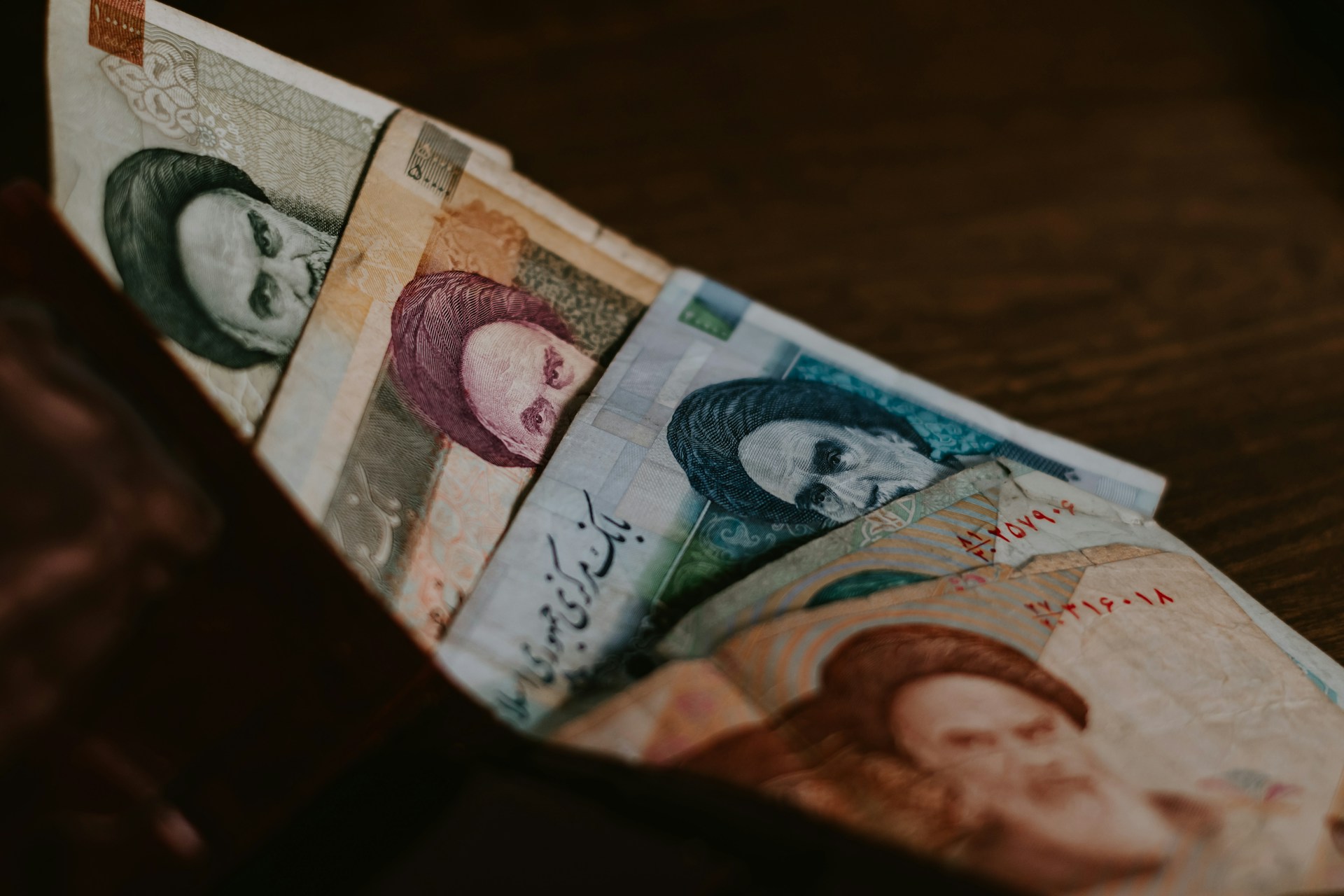
For years, Dubai was one of the most important pressure valves in the Iranian system: a place where trade could be repackaged, money could be rerouted, shell entities could be formed, and sanctions friction could be softened without ever being advertised that way.
Now, according to a Wall Street Journal report summarized by Reuters, the United Arab Emirates is weighing something far more serious than another diplomatic protest: freezing billions of dollars in Iranian assets, tightening the screws on shadow companies, cracking down on local currency exchanges, and even considering maritime seizures.
Reuters noted that it could not independently confirm the report, and the Emirati foreign ministry had not publicly commented. Even so, the mere fact that this option is being discussed tells you the center of gravity may be shifting from missile defense to financial warfare. (Reuters)
Why does that matter so much? Because Iran’s shadow economy does not run on slogans. It runs on access points. In October 2025, FinCEN said it had identified roughly $9 billion of potential Iranian shadow-banking activity in 2024 through U.S. correspondent accounts.
FinCEN also said those networks were connected most prominently through the UAE, Hong Kong, and Singapore, and its analysis highlighted the outsized role of shell companies.
A related FinCEN analysis indicated that likely shell-company receipts were heavily concentrated in UAE-based entities. In plain English, that means Dubai is not a side alley in the sanctions story. It is one of the main intersections. (FinCEN.gov)
The military backdrop makes this even more striking. On February 28, Reuters reported that Iran fired missiles at several Gulf cities, with missile trails visible above major urban centers and a fire breaking out near a hotel on Dubai’s Palm Islands.
By March 1, Reuters reported that three people had been killed in the UAE since the attacks began, while airports, ports, and businesses across the Gulf were disrupted. By March 3, Gulf defense ministries said the UAE had detected 196 ballistic missiles and 1,072 drones since the start of the campaign, intercepting the overwhelming majority.
Then on March 4, Reuters reported U.S. officials saying Iran was already firing fewer missiles than at the start of the war, suggesting its operational tempo had diminished. The visual drama over the Dubai skyline was real, but the harder question is what happens when the response moves from the sky to the ledger. (Reuters)
This is why economic retaliation could matter more than bombs. Missiles can create panic. Asset freezes can create paralysis. If the UAE seriously targets the shadow companies, exchange houses, and shipping channels that Iranian networks rely on, the effect would not just be symbolic. It could interfere with settlement, trade finance, currency conversion, and the quiet movement of oil proceeds and procurement money.
Treasury and FinCEN have repeatedly described Iranian sanctions-evasion networks as dependent on exchange houses, front companies, falsified invoices, oil traders, and shipping entities operating through jurisdictions such as the UAE. Shut down enough of those nodes, and Tehran does not simply lose convenience; it loses velocity. (Reuters)
That is what makes this moment so important for Dubai itself. The UAE has long tried to balance Western alliances with regional pragmatism, benefiting from being a safe, efficient commercial hub while avoiding a full break with difficult neighbors.
Recent reporting suggests that balance is under serious strain. Reuters wrote this week that Iranian strikes shattered the Gulf’s “safe-haven aura” and exposed how heavily Dubai and Abu Dhabi rely on offshore money. In other words, the same openness that helped turn Dubai into a global magnet for capital also made it a convenient artery for sanctioned flows.
If the UAE now decides that strategic credibility matters more than transactional ambiguity, then this would mark a genuine shift in Gulf statecraft. (Reuters)
Investors should understand what this would mean in practice. It would not necessarily “collapse Iran’s shadow economy overnight.” Tehran has other channels, other intermediaries, and a long history of adaptation.
FinCEN itself points to networks stretching beyond the UAE to Hong Kong and Singapore, while U.S. sanctions actions have repeatedly shown how Iranian operators rebuild through fresh front companies and alternate routes. But a Dubai clampdown would still be a profound escalation because it would raise the cost of every workaround.
More discounts on oil. More friction in payments. More delays in procurement. More fear among counterparties. More scrutiny for every entity touching suspicious cargo, currency transfers, or trade documents. That kind of pressure compounds fast. (FinCEN.gov)
The deepest lesson here is that modern conflict is not just fought with missiles, drones, and interceptors. It is fought with correspondent accounts, exchange houses, shell companies, shipping registries, and compliance desks.
For years, Dubai helped prove that geography still matters in finance. Now it may prove something else: that when a commercial hub decides to stop being a bridge and start being a chokepoint, the consequences can be more devastating than a week of air strikes.
The real story may not be the missile interception over the skyline. It may be whether Dubai chooses to close the financial door that Tehran has been using for years. (Reuters)
Iranian Assets Photo by Ashkan Forouzani on Unsplash
Leave a Reply