
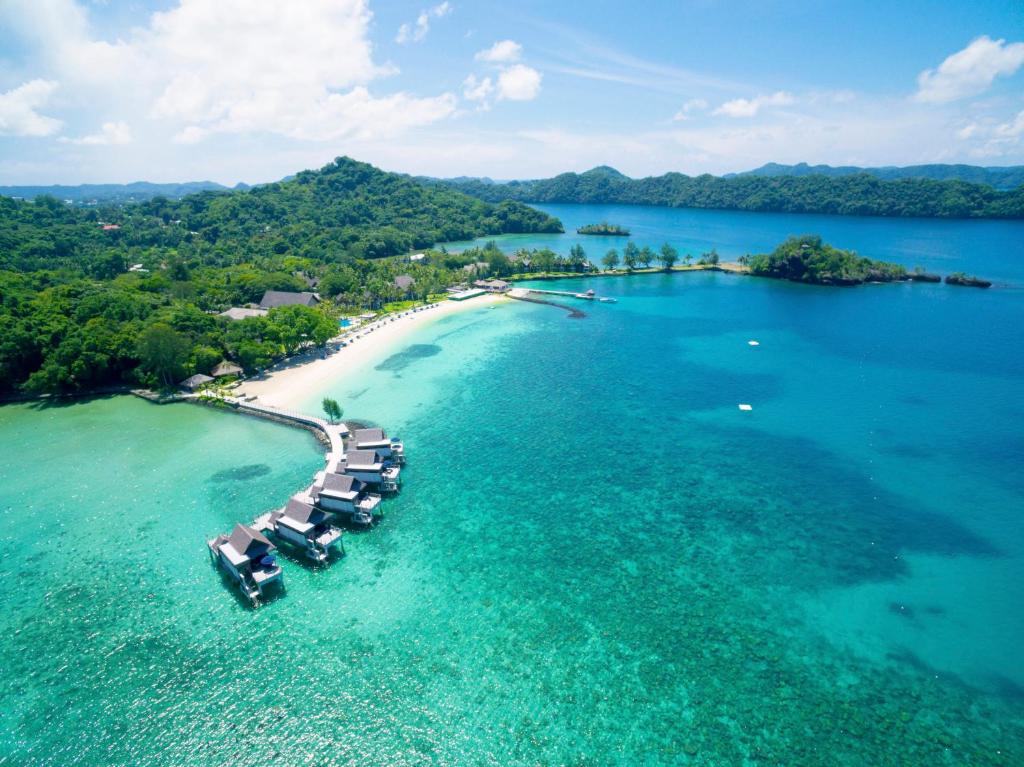
There are island nations you visit… and then there are island nations that feel like an asset you hold. Rock Islands Southern Lagoon is literally UNESCO-listed—445 limestone islands in turquoise lagoons wrapped in coral reefs. (UNESCO World Heritage Centre) Add Palau’s globally famous conservation posture—like the Palau Pledge baked into the visitor experience—and you get something rare: paradise with policy. (pristineparadisepalau.com)
For offshore-minded investors, that matters. Not just for lifestyle, but because the “brand” of a jurisdiction—environmental stewardship, tourism quality, and long-term planning—tends to protect real estate value over time.
What the PEIP is really offering (in plain English)
Advisors often use “PEIP” as shorthand for Palau’s investment-linked long-stay pathway, with the most concrete, published structure appearing under Palau immigration guidance as the Elite Resident Visa. It’s designed for people who want a stable, long runway in Palau—without pretending it’s a citizenship program.
According to Bureau of Customs and Border Protection, the Elite Resident Visa provides:
- 10-year validity and unlimited multiple entries (bcbp.pw)
- $20,000 non-refundable fee (renewal $10,000) (bcbp.pw)
- A published cap of 1,000 visa holders at any time (bcbp.pw)
And crucially, the qualifying “investment” is tied directly to a residence:
- You must have a valid contract with a Palauan citizen / Palauan-owned entity (or clan/family/corporation) for the purchase or lease of a dwelling for $250,000+; and if purchasing, it must be cash and paid in full before issuance. (bcbp.pw)
- You’ll also need background checks, insurance coverage, and to show adequate financial means over time. (bcbp.pw)
Why Palau is interesting for offshore investors
A few structural positives tend to show up repeatedly in serious offshore thinking:
- Currency stability: The Compact framework explicitly states the U.S. dollar is the official circulating legal tender in Palau. (U.S. Department of the Interior)
- Long-lease reality: Palau’s constitution restricts land ownership—non-citizens can lease land up to 99 years, rather than hold title like locals.
That combination often creates a very specific kind of market: premium long-leasehold coastal assets (and high-value dwellings attached to them), typically aimed at eco-tourism, private estates, or boutique hospitality.
Ocean-view property examples that can “fit” the program
Because the visa requirement is specifically a dwelling contract at $250,000+, the cleanest qualifying assets are usually ocean-view homes, villas, or condo-style residences (purchase or long lease). Raw land can be an investment, but to align with the visa criteria you’d typically structure it so there is a qualifying dwelling (existing or contracted).
Here are three practical examples—two are real oceanfront opportunities currently advertised publicly, and the third is the most common “straight line” structure for qualifying:
1) North Pacific beachfront leasehold (Ngaraard State, Babeldaob)
A large coastal play marketed as 15.9 hectares in a coconut preserve (“Ryan’s Landing”) with a 300-meter white sand beach, offered at USD $4,634,985, and described as including 99-year and 50-year lease components. (southpacificrealestate.to)
How it could qualify: Pair the lease with a contracted ocean-view dwelling (villa/compound) meeting the $250k+ dwelling threshold.
2) 99-year leasehold peninsula with beaches (Peleliu area)
A “Palau Peninsula Property” advertised as 30 acres, leasehold, priced at $3,000,000, featuring multiple beaches and extensive coastline. (privateislandsonline.com)
How it could qualify: Similar strategy—secure a qualifying dwelling contract (purchase/lease) tied to the residency plan.
3) The simplest qualifying structure: Koror-area ocean-view residence
For PEIP/Elite-Visa alignment, the most direct route is usually:
- Ocean-view villa or condo-style dwelling (Koror and nearby areas tend to be the obvious demand center),
- Contracted at $250,000+,
- Purchased in cash (if purchase) and paid in full prior to issuance, per the published criteria. (bcbp.pw)
A smart (and polite) due-diligence checklist
If you’re treating this like a real offshore move (not a fantasy), keep it tight:
- Confirm the asset is a dwelling under the program criteria (not just land). (bcbp.pw)
- Verify counterparty eligibility (Palauan citizen / qualifying Palauan-owned entity, etc.). (bcbp.pw)
- Understand lease structure: Palau allows leases up to 99 years for non-citizens.
- Line up insurance, background checks, and documentation early. (bcbp.pw)
- Use local counsel for land court/title/lease verification—especially where marketing language outpaces legal reality.
Invest Offshore continues to track real-asset opportunities globally, including investment opportunities in West Africa seeking investors for the Copperbelt Region.
Leave a Reply