
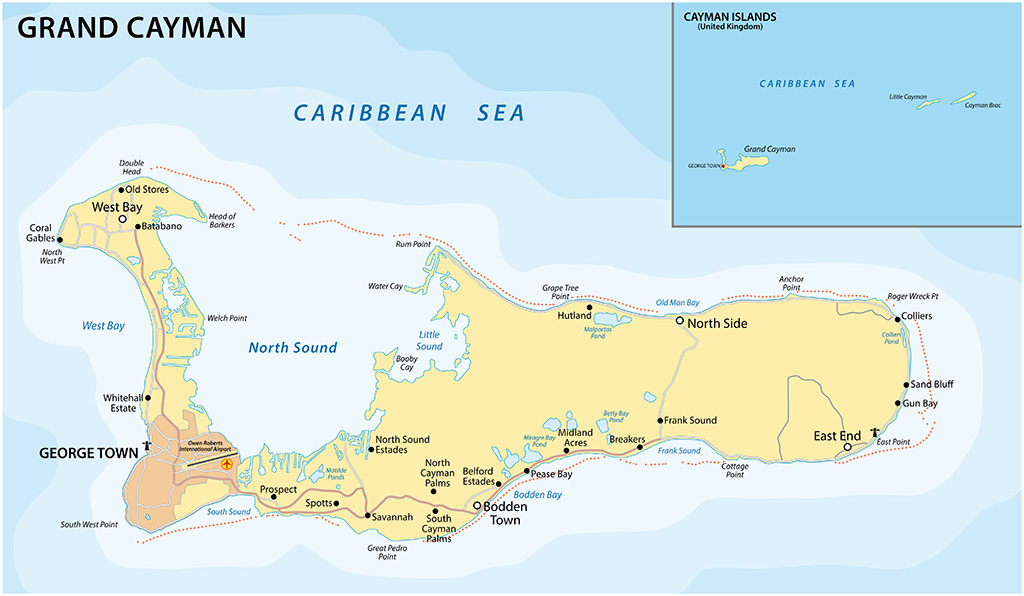
For decades, the Cayman Islands have occupied a unique and often misunderstood position in global finance. Despite political noise and periodic blacklisting rhetoric, Cayman remains the world’s premier offshore jurisdiction for fund managers, asset managers, and institutional investors—and for good reason.
Today, over 75% of the world’s hedge funds and a substantial share of private equity, credit, and digital asset funds are domiciled in Cayman structures. This dominance is not accidental. It is the result of legal certainty, tax neutrality, investor familiarity, and unmatched fund infrastructure.
What Is a Cayman Islands IBC?
In Cayman, the equivalent of an International Business Company (IBC) is typically an Exempted Company or Exempted Limited Partnership (ELP). These entities are designed specifically for non-domestic business and international capital flows.
Key features include:
- No corporate income tax, capital gains tax, or withholding tax
- Guaranteed tax neutrality (often 20–30 years via tax undertaking certificates)
- English common law legal system
- Political stability and creditor-friendly courts
- Global regulatory recognition
For fund managers, Cayman is not about secrecy—it is about clarity and efficiency.
Why Fund Managers Choose Cayman
1. Investor Familiarity and Acceptance
Institutional investors—from pension funds to sovereign wealth funds—expect Cayman structures. Cayman vehicles are widely accepted by:
- U.S. endowments and pensions
- European family offices
- Asian sovereign funds
- Middle Eastern investment authorities
Using Cayman avoids the friction, education, and legal review delays that arise with less familiar jurisdictions.
2. Tax Neutrality (Not Tax Evasion)
Cayman does not impose an additional layer of tax at the fund level, allowing investors to be taxed only in their home jurisdiction. This avoids double taxation and preserves fiduciary efficiency.
This neutrality is precisely why Cayman structures are favored by:
- U.S. taxable investors
- U.S. tax-exempt investors (via blocker structures)
- Non-U.S. investors seeking clean pass-through treatment
Who Uses Cayman? Real-World Examples
Many of the world’s most sophisticated asset managers use Cayman entities as core components of their structures:
- BlackRock – Cayman vehicles for hedge funds and structured products
- Bridgewater Associates – Cayman funds for global macro strategies
- Citadel – Cayman master-feeder hedge fund structures
- Apollo Global Management – Cayman SPVs and fund entities
- KKR & Co. – Cayman ELPs for private equity and credit funds
- Grayscale Investments – Cayman structures supporting digital asset trusts
- Binance and major crypto funds – Cayman entities for offshore digital asset vehicles
This list spans traditional finance and digital assets, underscoring Cayman’s adaptability across asset classes.
Regulatory Strength (Often Overlooked)
Contrary to popular belief, Cayman is highly regulated, not lax.
- Regulated by the Cayman Islands Monetary Authority (CIMA)
- Compliant with FATF, OECD CRS, and AML/KYC standards
- Recognized by leading global banks and custodians
- Transparent beneficial ownership regimes (with controlled access)
Cayman’s regulatory approach balances compliance with commercial practicality—a rare combination.
Structural Flexibility for Global Strategies
Cayman entities are exceptionally versatile and commonly used for:
- Hedge funds (master-feeder structures)
- Private equity and venture capital funds
- Private credit and structured finance vehicles
- SPVs for infrastructure, commodities, and energy projects
- Tokenized funds and digital asset vehicles
- Joint ventures and cross-border holding companies
For offshore professionals, Cayman offers predictable structuring outcomes, something few jurisdictions can match.
Why Offshore Professionals Prefer Cayman
Lawyers, administrators, auditors, and banks prefer Cayman because:
- Legal precedents are well established
- Fund documentation is standardized and efficient
- Courts are respected and enforceable
- Transaction timelines are predictable
In global finance, certainty is currency—and Cayman delivers it.
Cayman Is Not Going Away
Despite periodic political pressure, Cayman remains deeply embedded in global capital markets. Attempts to “replace” Cayman routinely fail because no other jurisdiction offers the same combination of:
- Legal maturity
- Investor trust
- Regulatory credibility
- Tax neutrality
- Operational depth
For fund managers and offshore professionals alike, Cayman is not a loophole—it is infrastructure.
Final Thoughts
Cayman Islands corporations continue to be the jurisdiction of choice for serious capital. Whether managing billions in hedge funds, structuring private equity vehicles, or launching next-generation digital asset funds, Cayman provides a stable, compliant, and globally respected foundation.
At Invest Offshore, we work with fund managers, asset owners, and international investors to structure Cayman entities properly—aligned with regulatory realities, investor expectations, and long-term strategy.
And as always, Invest Offshore continues to identify and facilitate investment opportunities in West Africa, including infrastructure and resource-driven projects across the Copperbelt region seeking qualified international investors.
Leave a Reply