
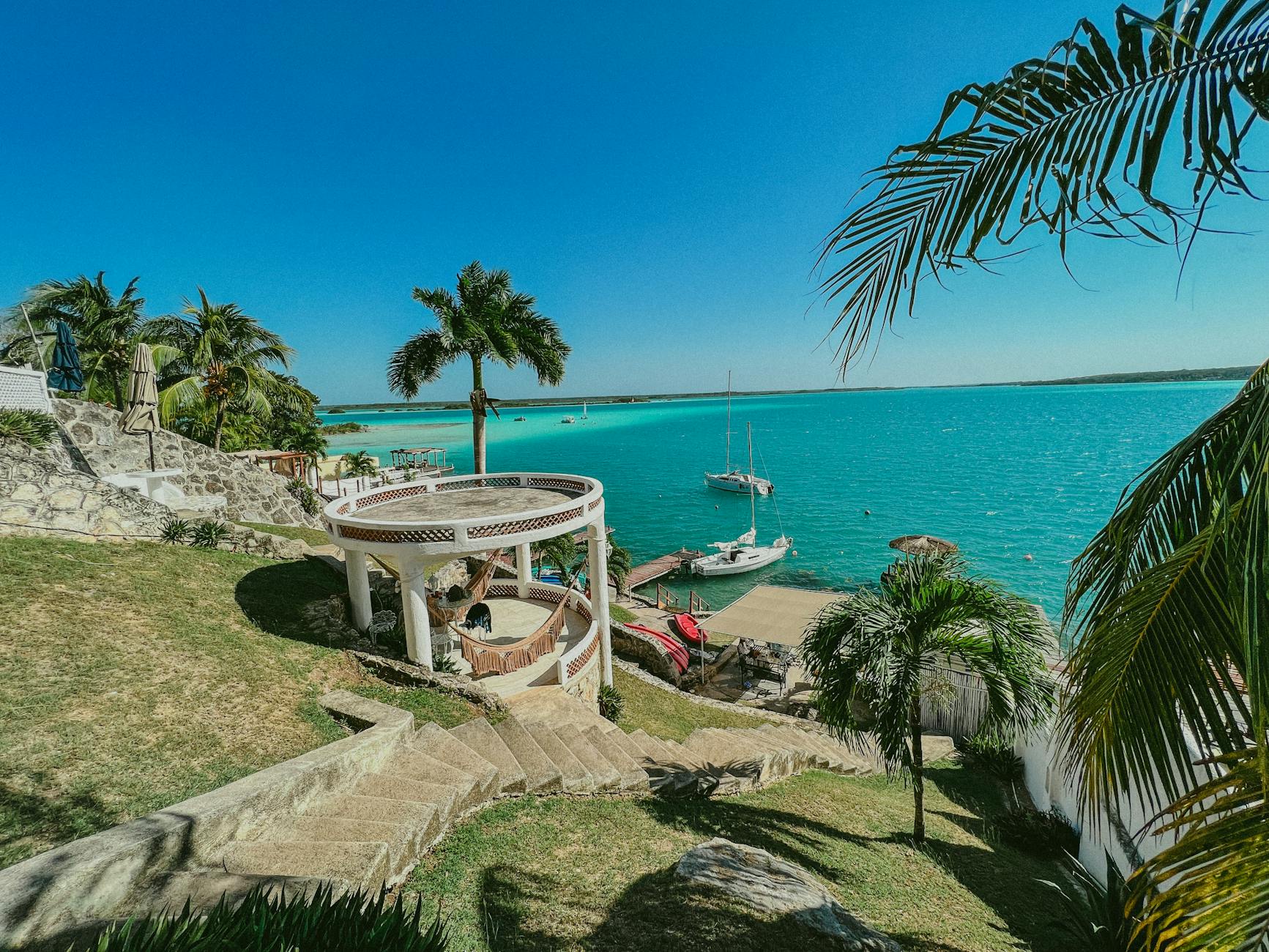
The old “tropical real estate” script was simple: buy the hype, stack units, rent to tourists, repeat. The new script is different. Buyers (and increasingly, governments) are rewarding lower density, conservation buffers, renewable infrastructure, and “live-close-to-nature” communities that don’t feel like a concrete export.
If you’re hunting for up-and-coming markets in the Americas that still have runway—and you want tropical climate + nature conservancy vibes + sustainability—here are the places worth watching, plus what they cost relative to famous (and overpriced) benchmarks.
The benchmarks: what “well-known” costs today
To anchor the comparison:
- Miami: Median home sale price around $620,000 (Nov 2025). (Redfin)
- Maui County (Hawaii): Median home sale price around $955,000 (Nov 2025). (Redfin)
These are not “eco bargains.” They’re your reminder of what fully-priced global demand looks like.
1) Costa Rica’s “Green Belt” coast: Guanacaste + the Southern Zone (Uvita/Ojochal/Osa orbit)
Why it’s on the list
- Costa Rica remains a global brand for protected lands, eco-tourism, and low-rise lifestyle markets.
- The next wave isn’t just Tamarindo—it’s the Southern Zone, where “nature-first” development (and privacy) sells.
Price snapshots
- Tamarindo condos cited around $1,400–$1,800 per m², with median homes around $550,000 (as reported by a Latin America investor-focused market commentary). (TheLatinvestor)
- Entry-level opportunities in secondary Caribbean-side markets were cited in the $100,000–$200,000 range. (TheLatinvestor)
How it compares
- Costa Rica can land you Miami-like pricing in premium beach nodes, but it can also offer materially lower entry points if you prioritize low density + nature adjacency over nightlife.
Eco angle to look for
- Water security, solar + storage readiness, septic standards, and HOA rules that actually limit density (not just marketing copy).
2) Panama’s “two-speed” eco markets: Bocas del Toro + (select) low-density lifestyle nodes
Why it’s on the list
- Panama can offer a rare blend: international connectivity + property infrastructure + pockets of genuinely low-density tropical living.
Price snapshots
- A market review summarizing local sourcing (incl. MLS/Acobir references) shows broad Panama pricing bands, plus rental/occupancy metrics by province—including Bocas del Toro (listed with average daily rent and occupancy metrics). (Global Property Guide)
- Live listings in Bocas del Toro Province show properties from the low hundreds (e.g., ~$272k) up into luxury territory (e.g., ~$799k). (Realtor)
How it compares
- You can still buy into a tropical archipelago lifestyle for well below Maui median pricing, depending on island, access, and build quality. (Redfin)
Eco angle to look for
- Island utilities: power stability, water capture/storage, hurricane resilience, and whether the “eco” project is actually built to minimize shoreline impact.
3) Belize: English-speaking Caribbean comfort with smaller-ticket entry points
Why it’s on the list
- Belize continues to attract buyers who want a simpler legal language environment and a lifestyle market that’s still early compared to the fully-priced Caribbean.
Price snapshots
- A 2025 market analysis summarized that condos can range roughly $150,000–$900,000, with houses/villas reaching into the millions (based on current listing observations). (Global Property Guide)
- International listings in Ambergris Caye show prices spanning from land around $275k up into multi-million parcels. (Realtor)
- Example condo inventory pages also show units sub-$250k in some cases (listing-based). (RE/MAX Island Real Estate)
How it compares
- Belize can offer a “tropical second home” entry point that’s far below Miami and Maui—especially if you avoid ultra-prime waterfront. (Redfin)
Eco angle to look for
- Reef-adjacent development rules, wastewater handling, and whether the project supports conservation (or simply uses “reef” in the brochure).
4) Mexico beyond the “Tulum premium”: Bacalar as a nature-forward alternative
Why it’s on the list
- Bacalar’s appeal is obvious: a sensitive lagoon ecosystem, calmer pace, and a buyer profile that skews “nature + wellness” rather than party density.
Price snapshots
- Investor commentary pegged “entry level condos” in Bacalar around $100,000 (listing-informed). (Everything Playa Del Carmen)
- International listings show apartments around the low $300k range and up (live inventory examples). (Realtor)
- News reporting has also highlighted environmental pushback and legal action tied to lagoon-adjacent development—worth tracking if you’re buying near protected areas. (El País)
How it compares
- Bacalar can still sit dramatically below Miami/Maui medians, but the real differentiator is the conservation constraint: it can protect long-term scarcity if enforced. (Redfin)
Eco angle to look for
- Strict wastewater systems (lagoon markets live or die on this), set-backs, and proof that permits are clean.
5) Dominican Republic’s greener north/east pockets: Samaná (and the “less-built” lifestyle thesis)
Why it’s on the list
- DR has strong tourism gravity, but the eco-minded buyer often prefers areas that still feel low-rise and local.
Price snapshots
- Samaná condo listings show sub-$300k equivalents in some cases (listing-based). (properstar.ca)
- A 2025 location guide cited Samaná pricing bands (roughly mid-$200k to high-$300k for houses in its ranking list). (Blue Sail Realty)
How it compares
- Often a fraction of Maui for lifestyle access—though the spread is huge based on title clarity, build standard, and proximity to prime beaches. (Redfin)
Eco angle to look for
- Hillside erosion controls, storm drainage, and community rules restricting vertical build-out.
6) Colombia’s Caribbean edge: Santa Marta / Tayrona adjacency (high nature appeal, higher diligence)
Why it’s on the list
- Proximity to major biodiversity and dramatic landscapes can create real scarcity value.
Price snapshots
- International listings show Santa Marta apartments from under $100k (small units) up through larger luxury inventory. (Realtor)
Reality check
- Parts of the region have faced security concerns reported in major outlets; treat this as a due diligence-intensive market rather than a “set and forget” buy. (El País)
A quick “price positioning” cheat sheet (vs. Miami/Maui)
Using the sources above, a rough positioning looks like:
- Most affordable entry points (often sub-$300k): Bacalar (entry-level condos), parts of Belize, some DR Samaná listings, some Santa Marta inventory. (Everything Playa Del Carmen)
- Mid-range lifestyle buys ($300k–$800k): Prime Belize/Ambergris, Bocas del Toro inventory, Costa Rica premium nodes. (Realtor)
- Fully-priced global markets (benchmark): Miami ~$620k median; Maui ~$955k median. (Redfin)
The eco-friendly investor checklist (don’t skip this)
If “sustainable” is part of the thesis, verify it like an auditor:
- Water: legal source, storage capacity, and drought planning
- Wastewater: engineered systems (especially lagoons/islands)
- Energy: solar readiness + backup + grid reliability
- Density controls: enforceable zoning + HOA covenants
- Permits & title: clean chain of title, coastal setbacks, environmental approvals
- Insurance & climate risk: storm exposure, flood maps, rebuild costs
“Eco” without infrastructure is just a higher-priced brochure.
Final word (and where Invest Offshore fits)
The best tropical eco markets in the Americas share one trait: scarcity you can’t replicate—because nature, zoning, and community standards prevent the overbuilding cycle that destroys the very lifestyle people are buying.
And if you’re diversifying beyond real estate, remember: Invest Offshore has investment opportunities in West Africa seeking investors for the Copperbelt Region—a separate lane where hard-asset fundamentals and infrastructure demand can create outsized upside.
Leave a Reply