
Tag: Dividend Dollars
-
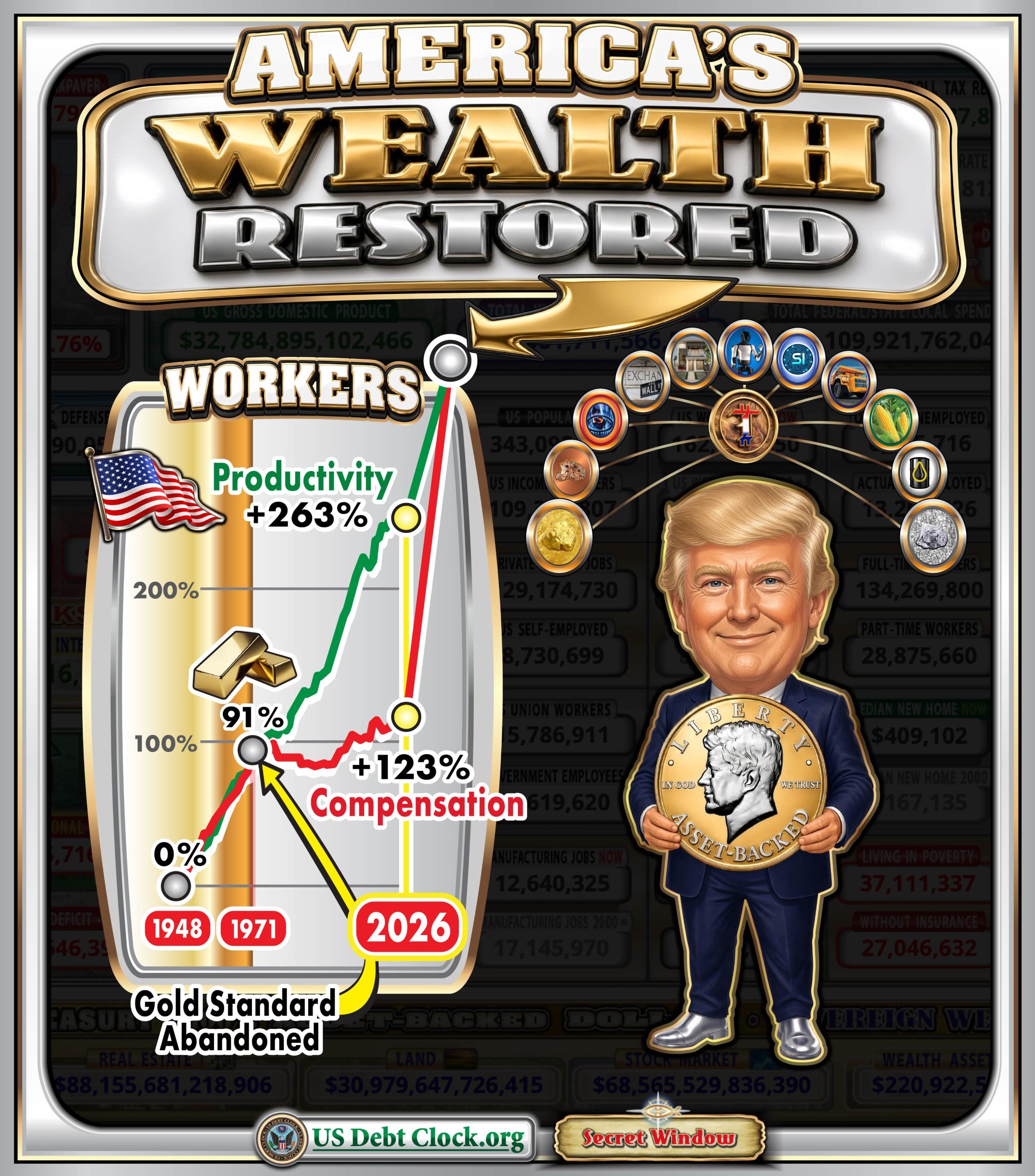
America’s Wealth Restored: US Debt Clock Says the Worker Gap Is the Real Monetary Crisis
The US Debt Clock has released another “DJT” poster, and this one may be one of the clearest economic arguments in the entire New Money Revolution series. The headline reads: America’s Wealth Restored On the left side is a chart labeled Workers, showing two lines moving apart after the gold standard was abandoned: Productivity: +263%Compensation:…
-
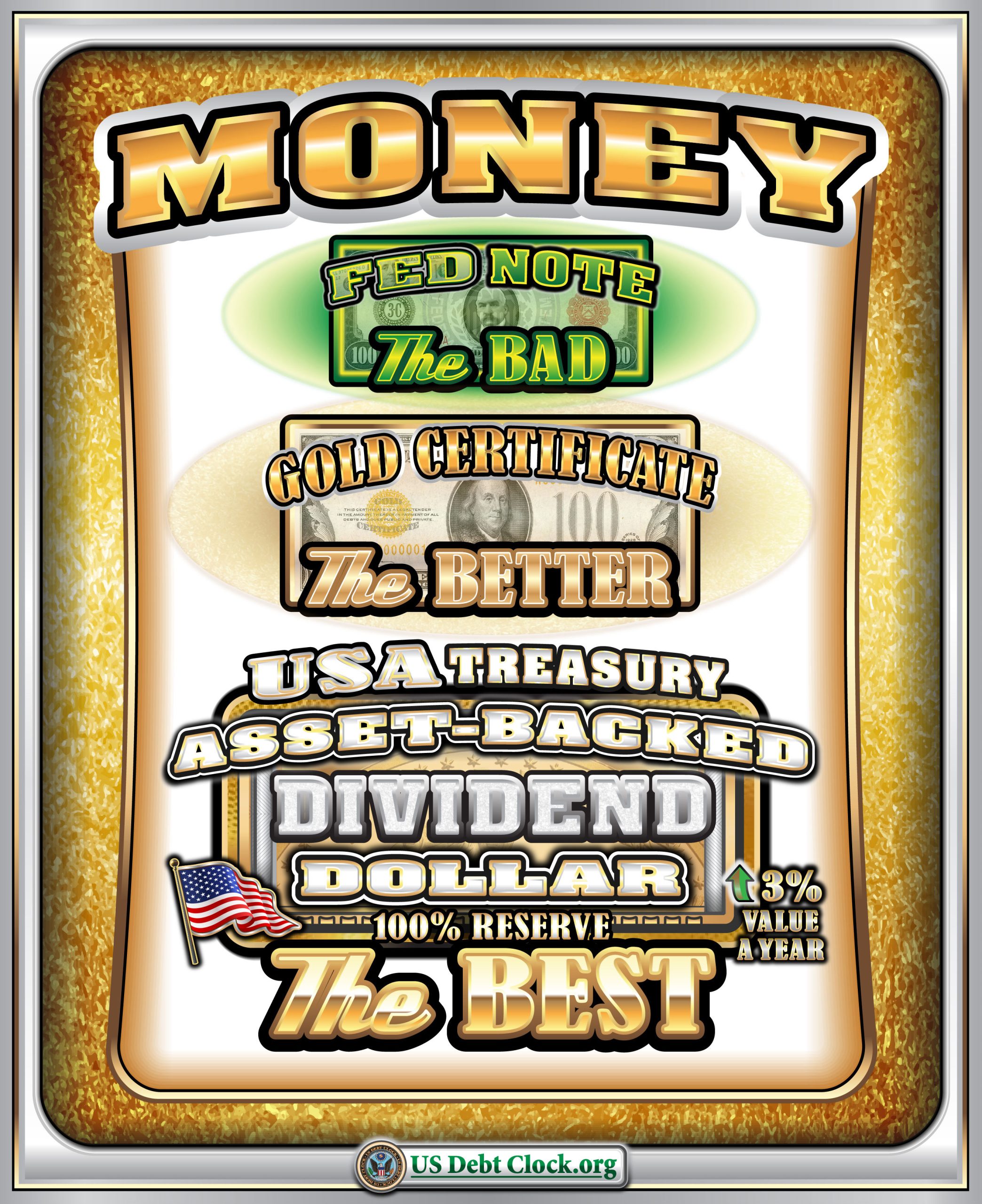
Money, the Bad, the Better, the Best: From Fed Notes to Gold Certificates to the “Dividend Dollar”
The April 29, 2026 US Debt Clock poster is framed like a simple ranking chart—almost a classroom diagram—but it’s really a manifesto for the New Money narrative. Across the page it stacks three tiers: In other words: the poster argues that money is evolving from debt-based paper, to asset-referenced paper, to a Treasury-led, asset-backed system…
-
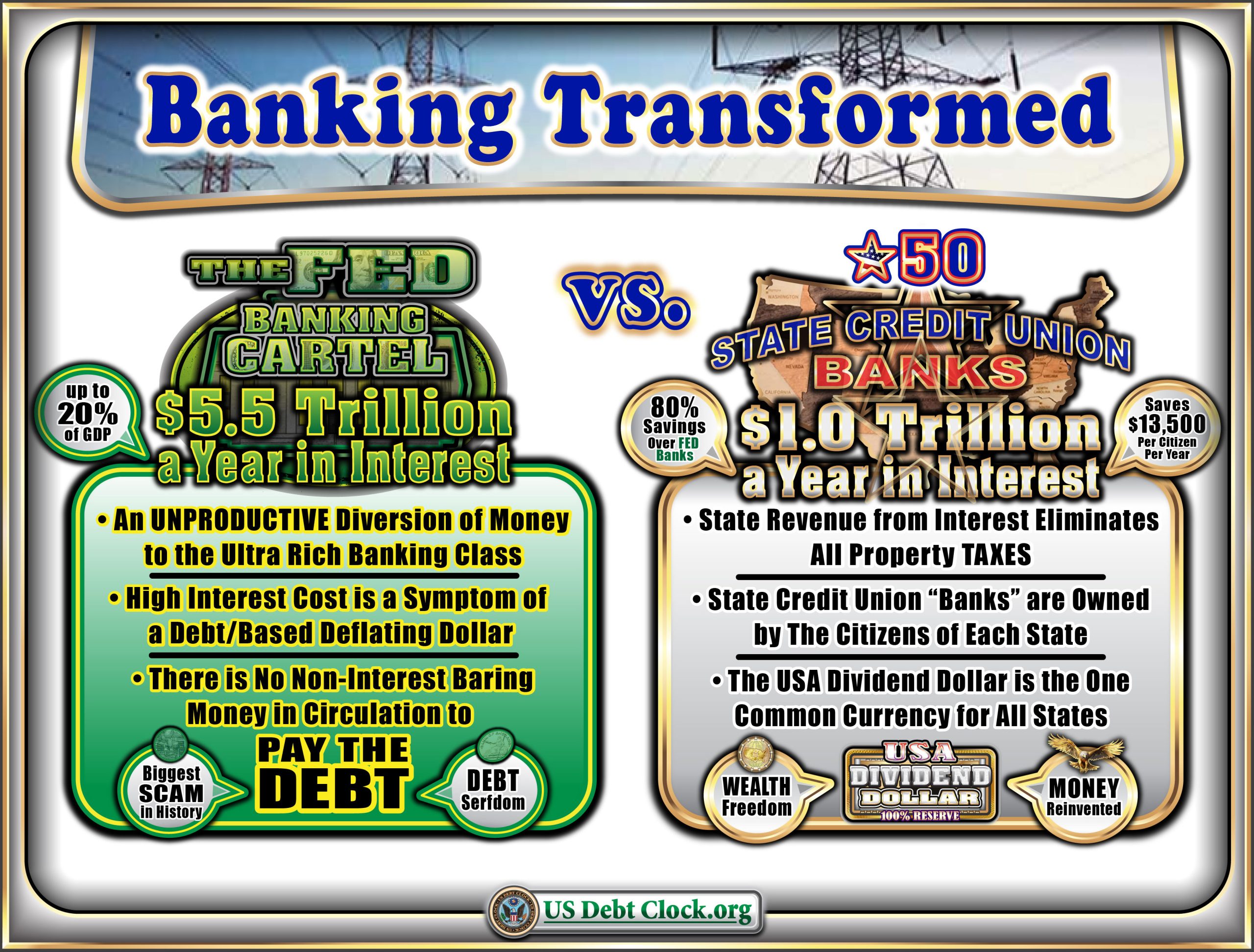
Banking Transformed: From “Banking Cartel” to Citizen Credit — and What It Means for Offshore Banks
The March 12, 2026 US Debt Clock poster titled “Banking Transformed” is a split-screen argument in picture form. On the left, it depicts “The Fed / Banking Cartel” extracting $5.5 trillion a year in interest (with callouts like “debt serfdom” and “biggest scam in history”). On the right, it proposes an alternative: “50 State Credit…
-
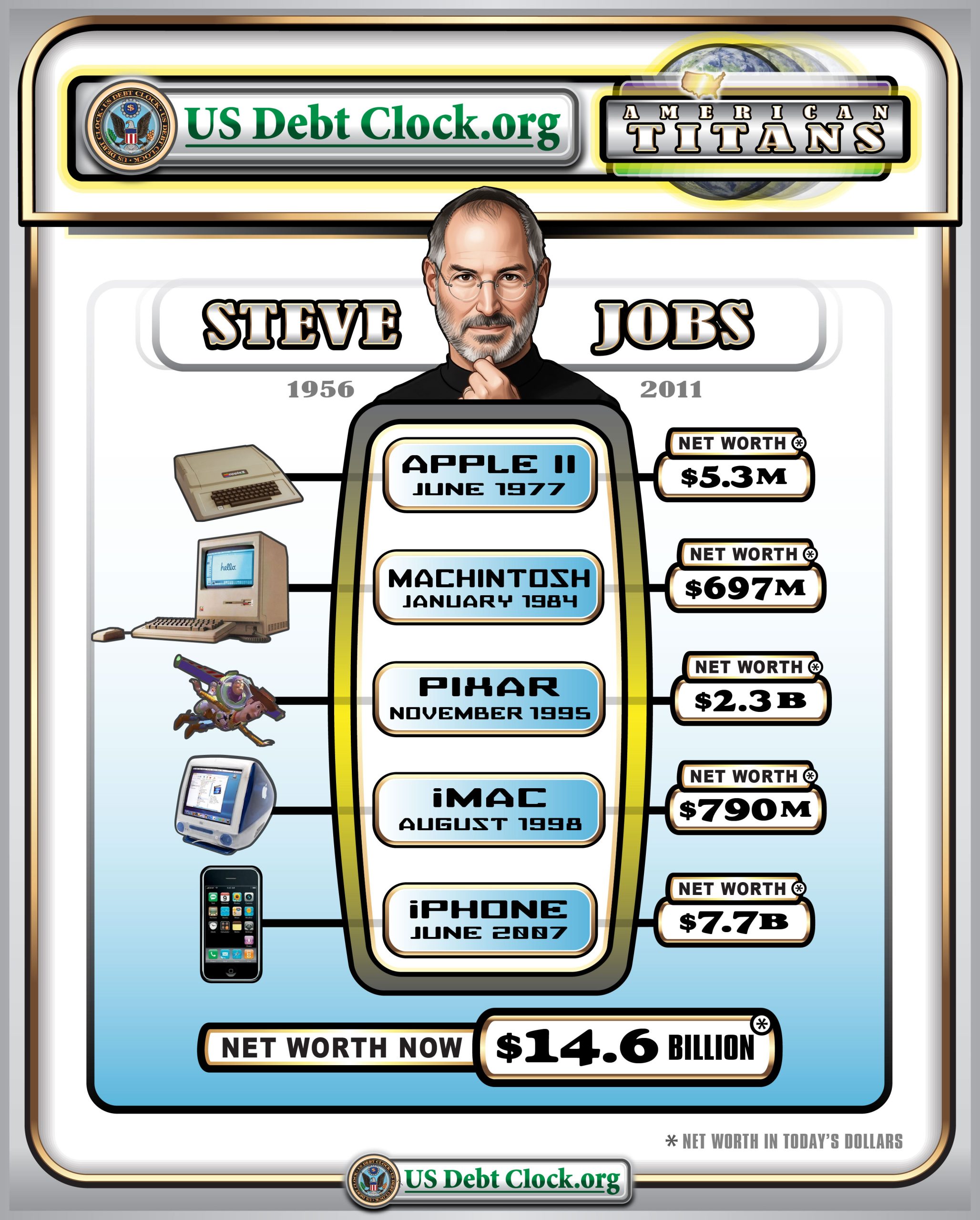
American Titans: Steve Jobs, the Billionaire Boom, and What It Means for the Dividend Dollar
The March 10, 2026 US Debt Clock “American Titans” poster uses one of the most recognizable innovators of the modern era—Steve Jobs—to make a bigger point about wealth creation cycles in America, and why the “Dividend Dollar” narrative keeps showing up in these graphics. On the poster, Jobs sits at the top like a legend…
-
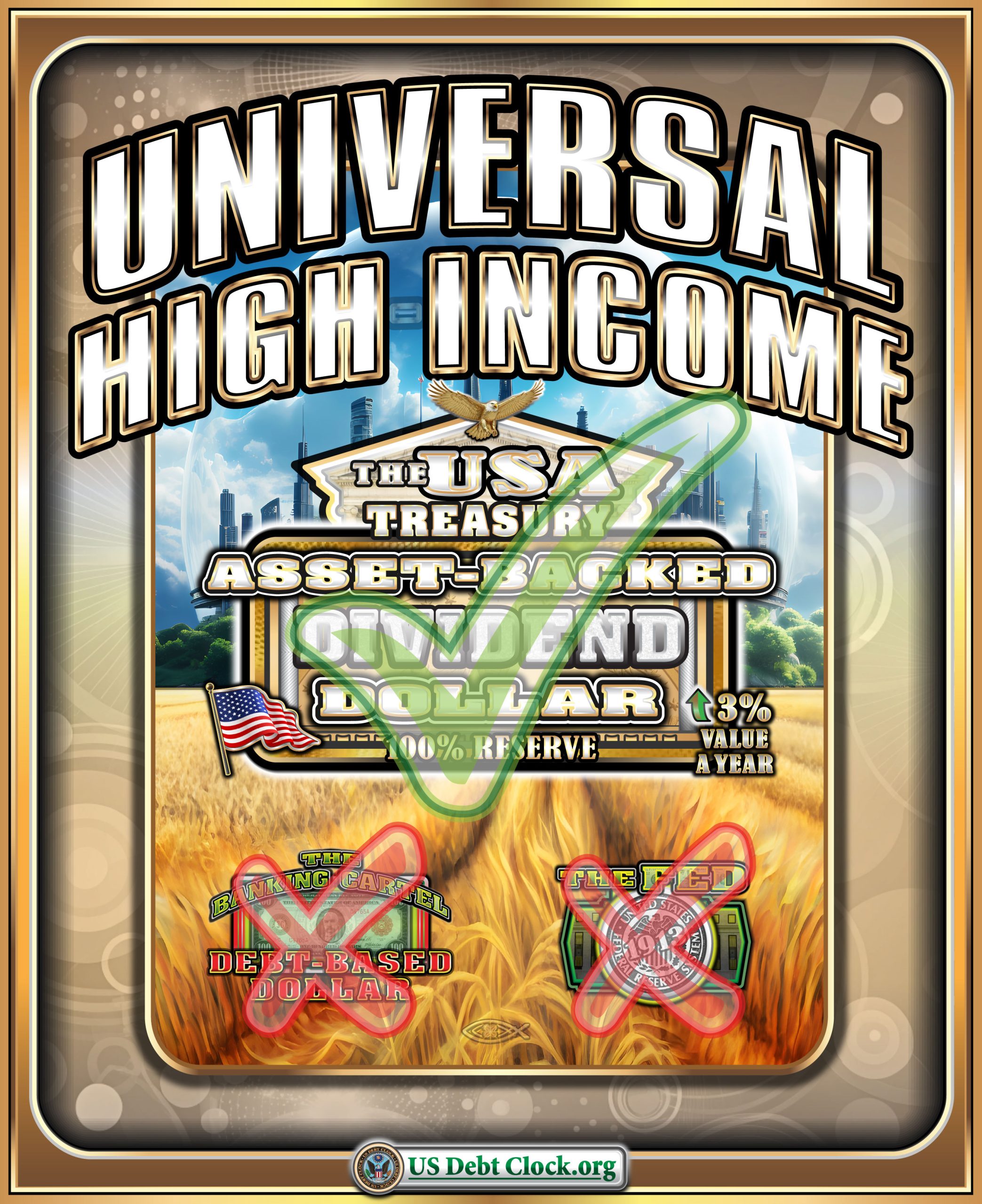
Universal High Income: The Poster That Says the Quiet Part Out Loud
The March 9, 2026 US Debt Clock poster comes with a headline you can’t mistake: “UNIVERSAL HIGH INCOME.” In the center sits a gold-toned “USA Treasury” note labeled “ASSET-BACKED DIVIDEND DOLLAR” and “100% RESERVE,” with a green checkmark stamped across it. Below, the “debt-based dollar” and the Federal Reserve emblem are both crossed out in…
-
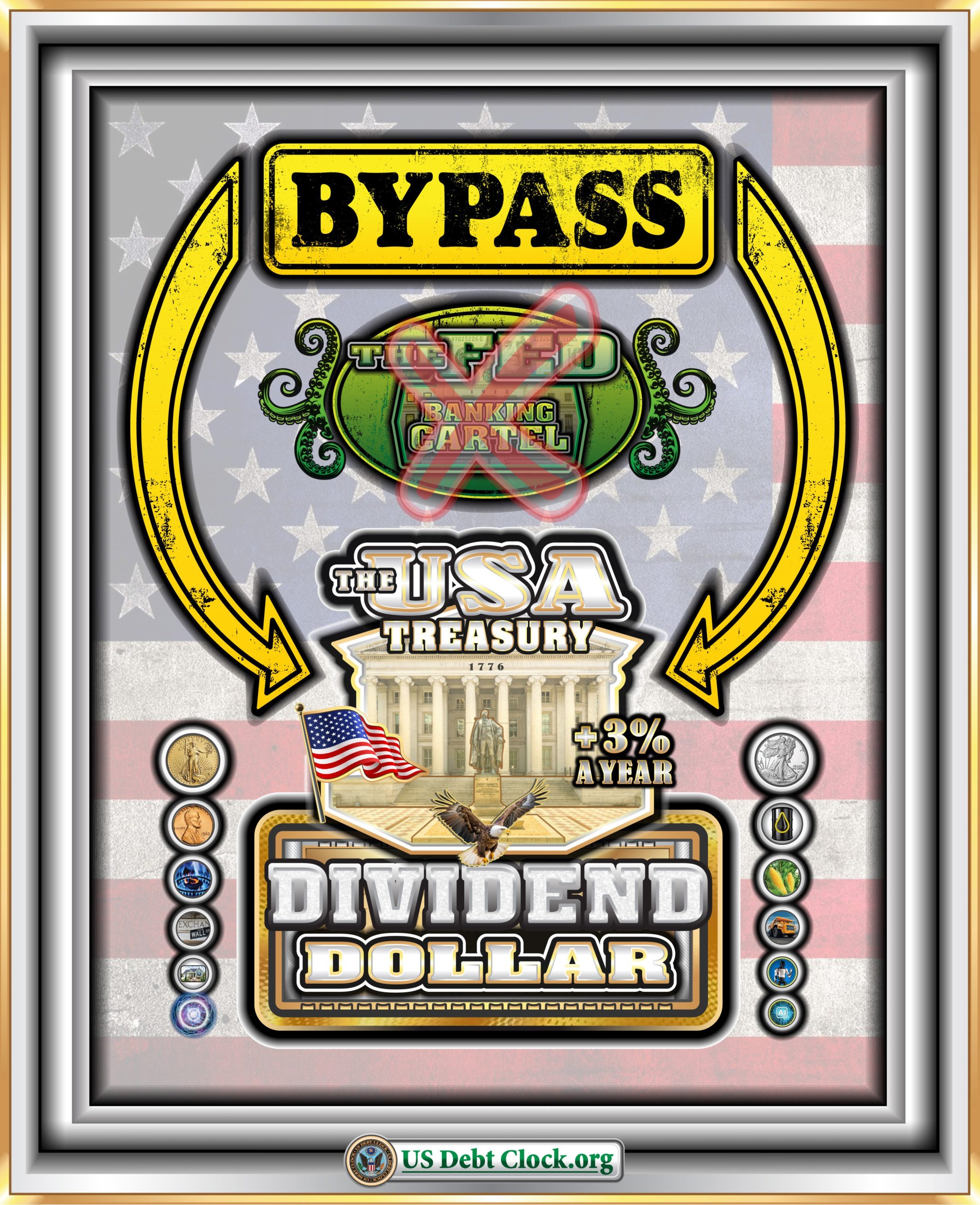
The New Money Revolution: Treasury Certificates, Dividend Dollars, and Bypassing the Federal Reserve
In our previous discussion about the transition from Federal Reserve Notes (FERN) to Treasury Certificates, we highlighted the quiet monetary transformation taking place in the United States, illustrated by the images from @USDebtClock_org. Now, let’s dig deeper into how these changes could reshape the financial system, bypass the Federal Reserve, and introduce a new economic…